Harrisburg in Saline County, Illinois — The American Midwest (Great Lakes)
The Poor House
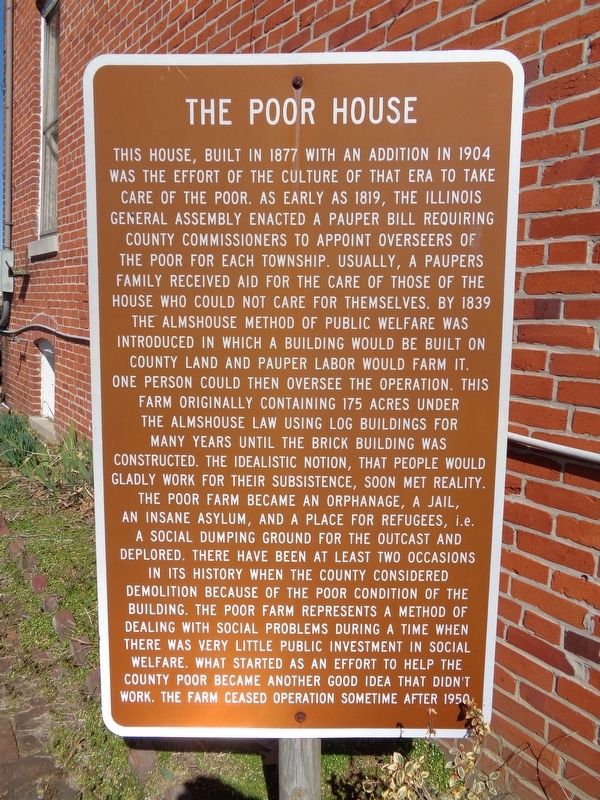
Photographed by Jason Voigt, March 5, 2020
1. The Poor House Marker
this page online
Erected by Saline County Historical Society.
Topics. This historical marker is listed in these topic lists: Agriculture • Charity & Public Work.
Location. 37° 43.13′ N, 88° 33.146′ W. Marker is in Harrisburg, Illinois, in Saline County. It can be reached from South Feazel Street just north of Bauman Lane, on the right when traveling north. It is in front of the Saline County Area Museum, which is part of Saline Creek Pioneer Village. Touch for map. Marker is at or near this postal address: 1600 S Feazel St, Harrisburg IL 62946, United States of America. Touch for directions.

Regionally, this marker is in Southern Illinois — Little Egypt, in Shawnee Hills, and in the Tri-State Region. It is also in the American Midwest and in the Corn Belt. Globally, it is in North America, the Western Hemisphere, the Western World, and the Anglosphere.
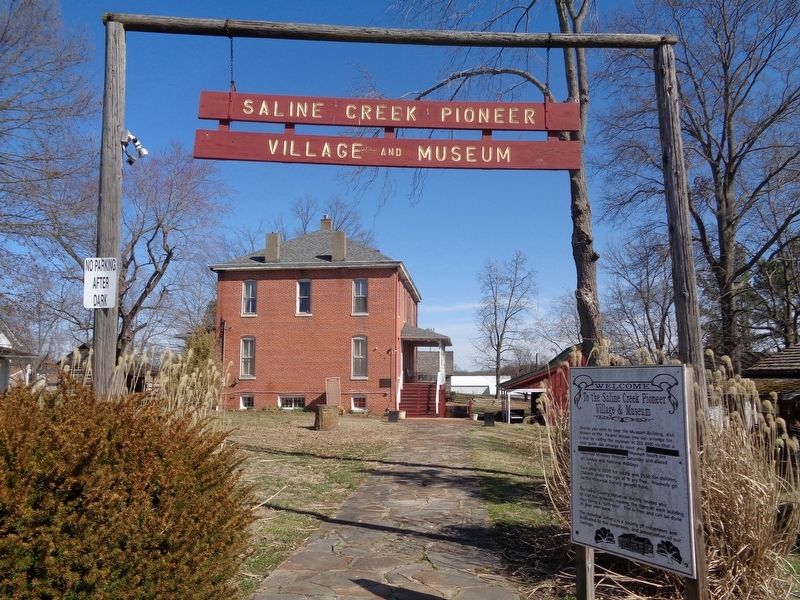
Photographed by Jason Voigt, March 5, 2020
2. Saline County Pioneer Village entrance
Marker for The Poor House is seen in front of the house
Other nearby markers. At least 8 other markers are within walking distance of this marker: The Pauper House (a few steps from this marker); Guard and Chossier Salt Kettles (a few steps from this marker); Hog Scalding Kettle (a few steps from this marker); Chenault School (a few steps from this marker); Cain Church (within shouting distance of this marker); Aydolette Cabin (within shouting distance of this marker); The Pauper Cemetery (within shouting distance of this marker); Aydolette Barn and Thrashing Floor (within shouting distance of this marker). Touch for a list and map of all markers in Harrisburg.
Also see . . . Saline County Poor Farm on Wikipedia. (Submitted on March 13, 2020, by Jason Voigt of Glen Carbon, Illinois.)
Credits. This page was last revised on March 13, 2020. It was originally submitted on March 13, 2020, by Jason Voigt of Glen Carbon, Illinois. This page has been viewed 1,124 times since then and 123 times this year. Photos: 1, 2. submitted on March 13, 2020, by Jason Voigt of Glen Carbon, Illinois. • Devry Becker Jones was the editor who published this page.
