Schenectady in Schenectady County, New York — The American Northeast (Mid-Atlantic)
Early Frontier/ Schenectady
Photographed by Howard C. Ohlhous, March 13, 2020
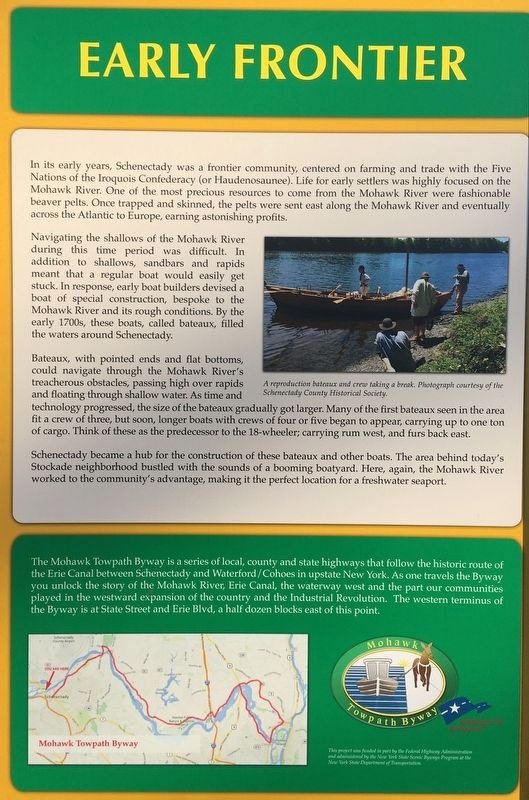
1. Early Frontier Marker
In its early years, Schenectady was a frontier community, centered on farming and trade with the Five Nations of the Iroquois Confederacy (or Haudenosaunee). Life for early settlers was highly focused on the Mohawk River. One of the most precious resources to come from the Mohawk River were fashionable beaver pelts. Once trapped and skinned, the pelts were sent east along the Mohawk River and eventually across the Atlantic to Europe, earning astonishing profits.
Navigating the shallows of the Mohawk River during this time period was difficult. In addition to shallows, sandbars and rapids meant that a regular boat would easily get stuck. In response, early boat builders devised a boat of special construction, bespoke to the Mohawk River and its rough conditions. By the early 1700s, these boats, called bateau, filled the waters around Schenectady.
Bateaux, with pointed ends and flat bottoms, could navigate through the Mohawk River's treacherous obstacles, passing high over rapids and floating through shallow water. As time and technology progressed, the size of the bateaux gradually got larger. Many of the first bateaux seen in the area fit a crew of three, but soon, longer boats with crews of four or five began to appear, carrying up to one ton of cargo. Think of these as the predecessor to the 18-wheeler; carrying rum west, and furs back east. Schenectady became a hub for the construction of these bateaux and other boats. The area behind today's Stockade neighborhood bustled with the sounds of a booming boatyard. Here, again, the Mohawk River worked to the community's advantage, making it the perfect location for a freshwater seaport.
The Mohawk Towpath Byway is a series of local, county and state highways that follow the historic route of the Erie Canal between Schenectady and Waterford/Cohoes in upstate
this page online
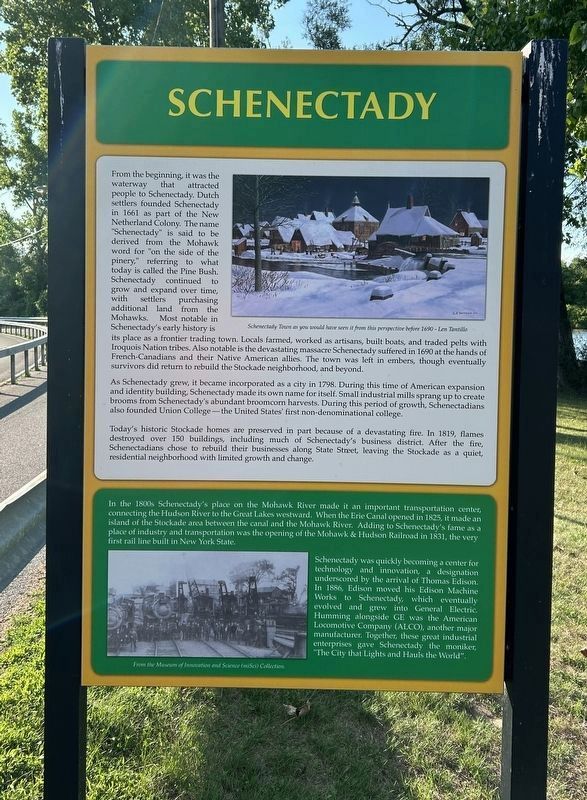
Schenectady
From the beginning, it was the waterway that attracted people to Schenectady. Dutch settlers founded Schenectady in 1661 as part of the New Netherland Colony. The name "Schenectady” is said to be derived from the Mohawk word for "on the side of the pinery, referring to what today is called the Pine Bush. Schenectady continued to grow and expand over time, with settlers purchasing additional land from the Mohawks. Most notable in Schenectady's early history is Schenectady you would have seen it from this perspective before 160-Len Tanni its place as a frontier trading town. Locals farmed, worked as artisans, built boats, and traded pelts with Iroquois Nation tribes. Also notable is the devastating massacre Schenectady suffered in 1690 at the hands of French-Canadians and their Native American allies.
Photographed by Steve Stoessel, July 25, 2024
2. Early Frontier Marker
In the 1800s Schenectady's place on the Mohawk River made it an important transportation center, connecting the Hudson River to the Great Lakes westward. When the Erie Canal opened in 1825, it made an island of the Stockade area between the canal and the Mohawk River. Adding to
Photographed by Howard C. Ohlhous, March 13, 2020
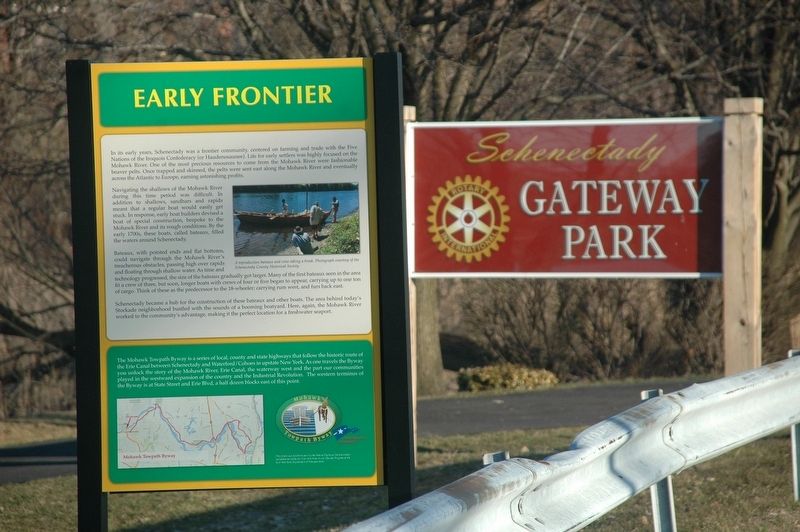
3. Early Frontier Marker
Erected 2019.
Topics. This historical marker is listed in these topic lists: Industry & Commerce • Settlements & Settlers • Waterways & Vessels. A significant historical year for this entry is 1661.
Location. 42° 49.058′ N, 73° 57.132′ W. Marker is in Schenectady, New York, in Schenectady County. It is on Cucumber Alley, on the right. Touch for map. Marker is in this post office area: Schenectady NY 12306, United States of America.
Photographed by Howard C. Ohlhous, March 13, 2020
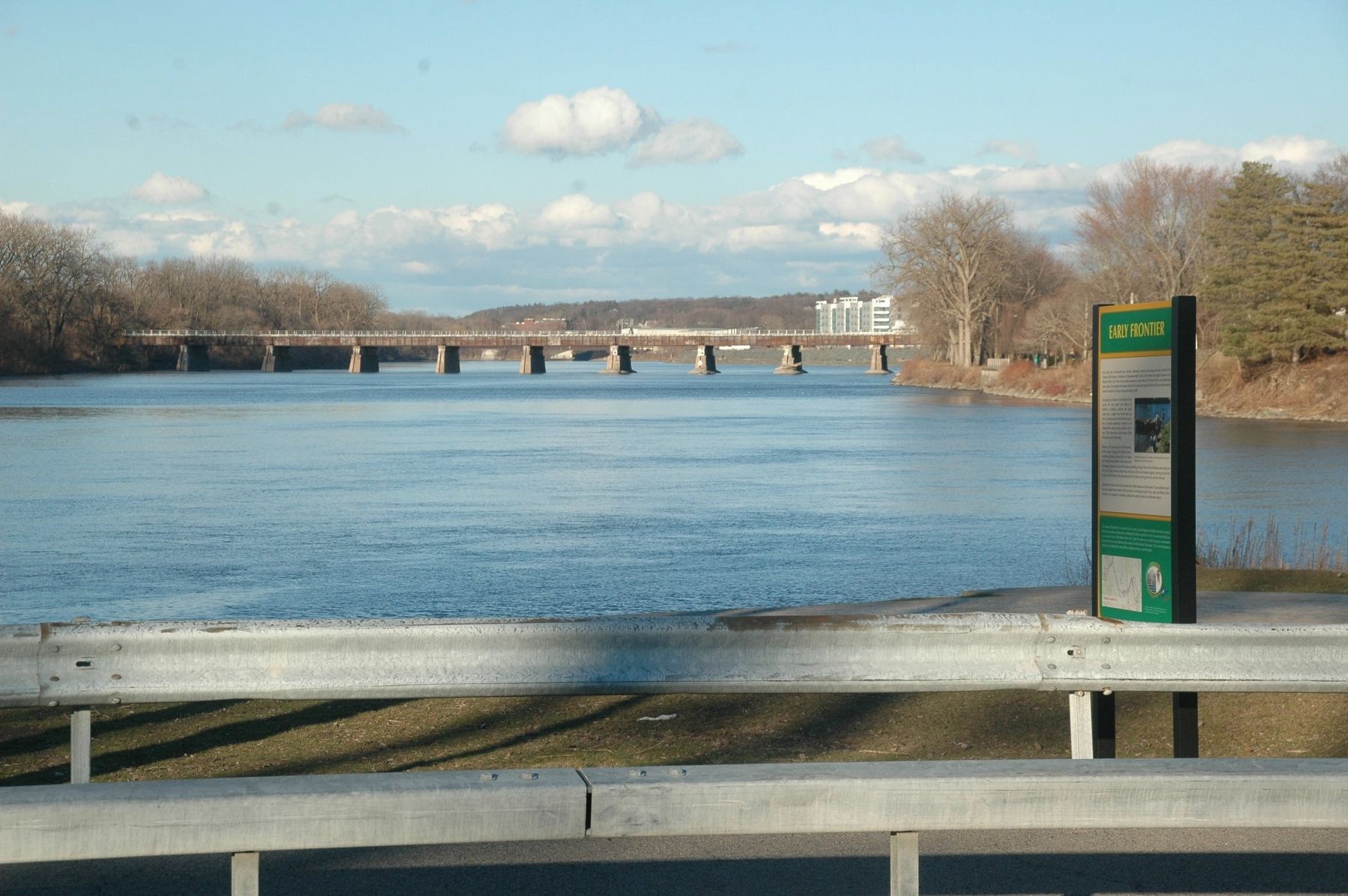
4. Early Frontier Marker with a view down the Mohawk River

Regionally, this marker is in Upstate New York, in the Capital District, and in the Albany Metropolitan Area. It is also in the American Northeast and in the Mid-Atlantic. Globally, it is in North America, the Western Hemisphere, the Western World, and the Anglosphere. Historically, it finds itself in what was once New Netherland and also one of the original Thirteen Colonies.
Other nearby markers. At least 8 other markers are within walking distance of this marker: Schenectady (here, next to this marker); George S. Haswell III (within shouting distance of this marker); Gateway Landing (within shouting distance of this marker); Schenectady County Vietnam Veterans Memorial (about 700 feet away, measured in a direct line); Site of Island Park Stadium (about 800 feet away); Circa 1824 (approx. 0.2 miles away); Campbell Row (approx. 0.2 miles away); Home of Aaron Dickinson (approx. 0.2 miles away). Touch for a list and map of all markers in Schenectady.
More about this marker. The Early Frontier marker, "kiosk," was funded in part by the Federal Highway Administration and administered by the New
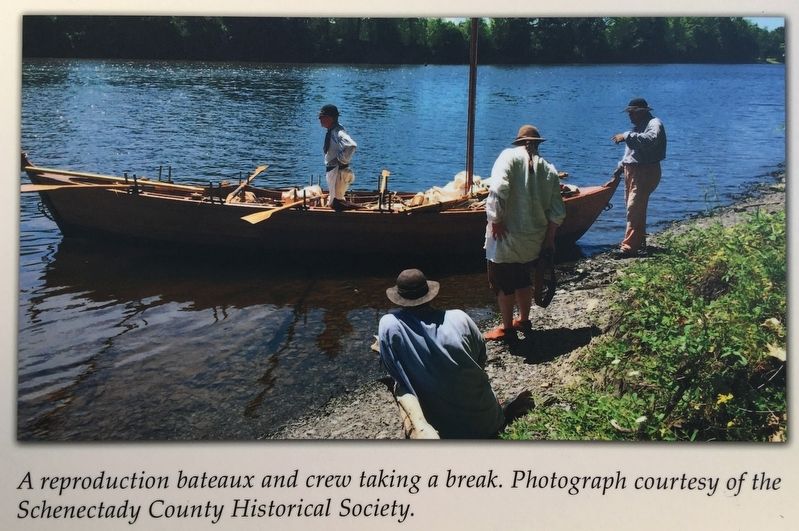
Photographed by Howard C. Ohlhous, March 13, 2020
5. Early Frontier Marker - Detail
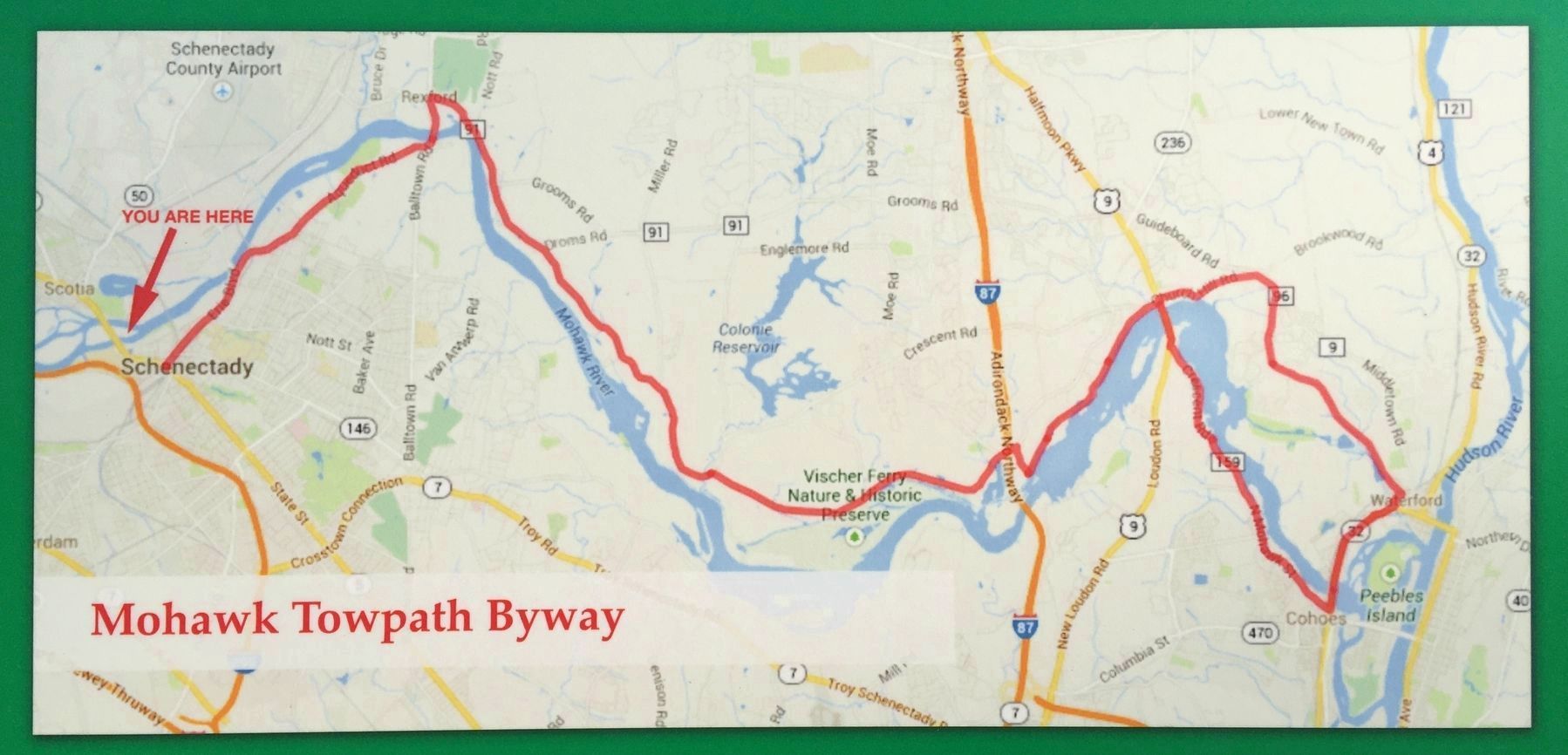
Photographed by Howard C. Ohlhous, March 13, 2020
6. Early Frontier Marker - Detail; "You Are Here" Map
Credits. This page was last revised on July 27, 2024. It was originally submitted on March 19, 2020, by Howard C. Ohlhous of Duanesburg, New York. This page has been viewed 510 times since then and 31 times this year. Photos: 1. submitted on March 19, 2020, by Howard C. Ohlhous of Duanesburg, New York. 2. submitted on July 25, 2024, by Steve Stoessel of Niskayuna, New York. 3, 4, 5, 6. submitted on March 19, 2020, by Howard C. Ohlhous of Duanesburg, New York. • Michael Herrick was the editor who published this page.
