Near Franklin in Williamson County, Tennessee — The American South (East South Central)
Fight at Hollow Tree Gap
Hood's Retreat from Nashville
Photographed by Duane and Tracy Marsteller, May 9, 2020
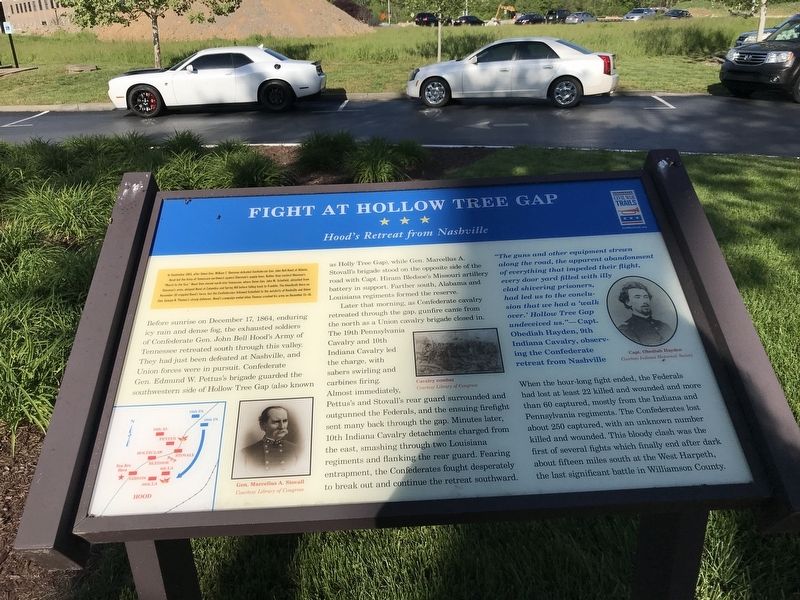
1. Fight at Hollow Tree Gap Marker
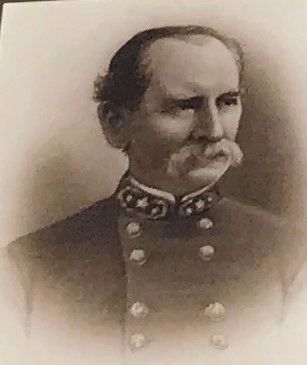
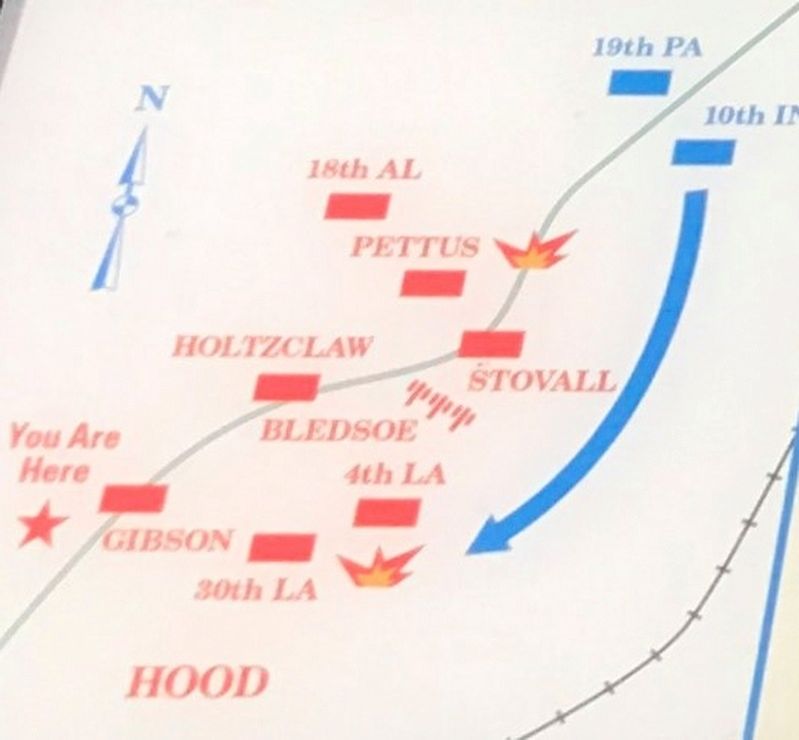
(Main text) Before sunrise on December 17, 1864, enduring icy rain and dense fog, the exhausted soldiers of Confederate Gen. John Bell Hood's Army of Tennessee retreated south through this valley. They had just been defeated at Nashville, and Union forces were in pursuit. Confederate Gen. Edmund W. Pettus's brigade guarded the southwestern side of Hollow Tree Gap (also known as Holly Tree Gap), while Gen. Marcellus A. Stovall's brigade stood on the opposite
this page online
,br> Later that morning, as Confederate cavalry retreated through the gap, gunfire came from the north as a Union cavalry brigade closed in. The 19th Pennsylvania Cavalry and 10th Indiana Cavalry led the charge, with sabers swirling and carbines firing. Almost immediately, Pettus's and Stovall's rear guard surrounded and outgunned the Federals, and the ensuing firefight sent many back through the gap. Minutes later, 10th Indiana Cavalry detachments charged from the east, smashing through two Louisiana regiments and flanking the rear guard. Fearing entrapment, the Confederates fought desperately to break out and continue the retreat southward.
When the hour-long fight ended, the Federals had lost at least 22 killed and wounded and more than 60 captured, mostly from the Indiana and Pennsylvania regiments. The Confederates lost about 250 captured, with an unknown number killed and wounded. This bloody clash was the first of several fights which finally end after dark about fifteen miles
Photographed by Duane and Tracy Marsteller, May 9, 2020
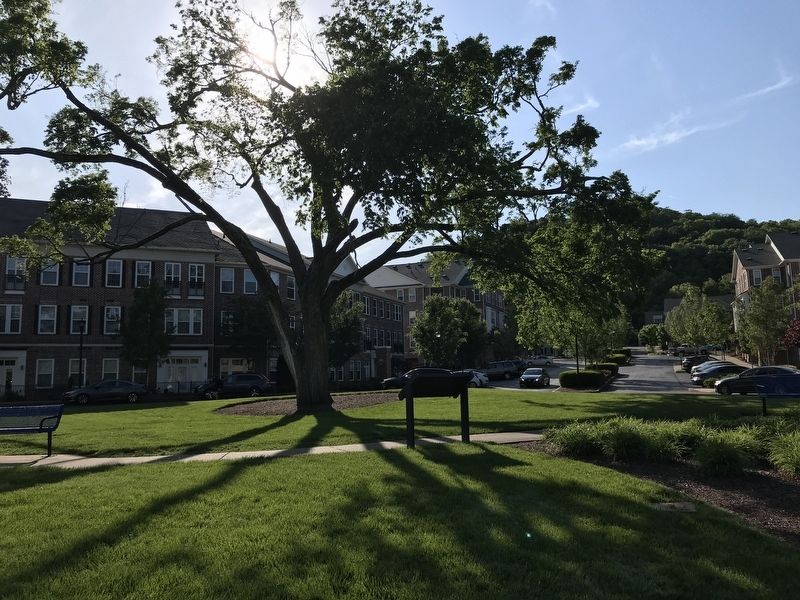
2. Fight at Hollow Tree Gap Marker
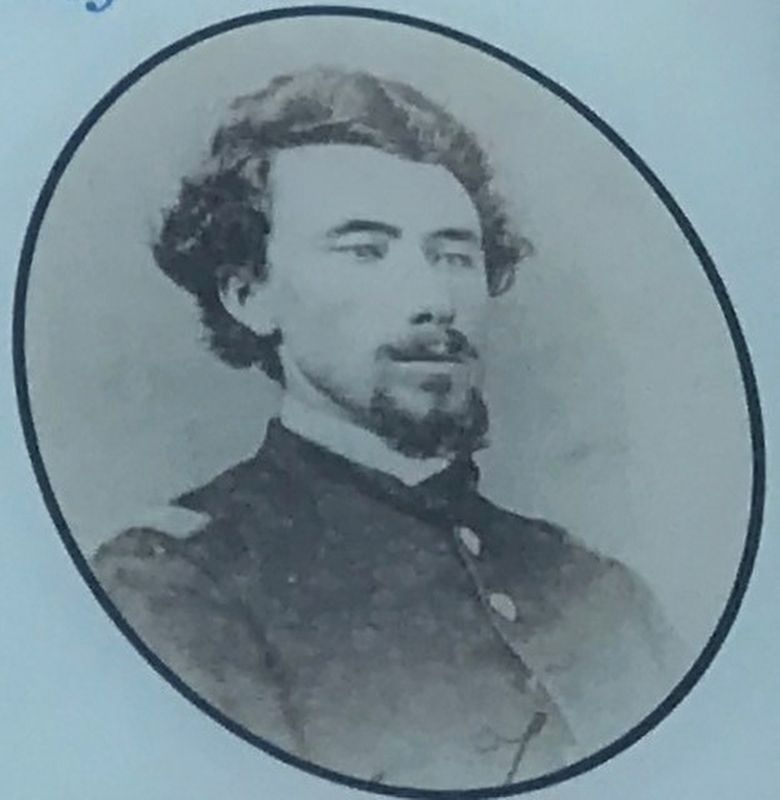
"The guns and other equipment strewn along the road, the apparent abandonment of everything that impeded their flight, every door yard filled with illy clad shivering prisoners, had led us to the conclusion that we had a 'walk over.' Hollow Tree Gap undeceived us." —Capt. Obediah Hayden, 9th Indiana Cavalry, observing the Confederate retreat from Nashville
Erected by Tennessee Civil War Trails.
Topics and series. This historical marker is listed in this topic list: War, US Civil. In addition, it is included in the Tennessee Civil War Trails series list. A significant historical date for this entry is December 17, 1864.
Location. 35° 58.319′ N, 86° 50.152′ W. Marker is near Franklin, Tennessee, in Williamson County. It is at the intersection of Davenport Boulevard and Danton Boulevard, in the median on Davenport Boulevard. Marker located inside traffic circle. Touch for map. Marker is in this post office area: Franklin TN 37069, United States of America. Touch for directions.

Regionally, this marker is in Middle Tennessee and in Greater Nashville. It is
Courtesy Library of Congress
3. Gen. Marcellus A. Stovall, C.S.A.
Other nearby markers. At least 8 other markers are within 2 miles of this marker, measured as the crow flies: Ida Allen McKay (approx. half a mile away); Mallory Cemetery (approx. 1.4 miles away); McEwen Cemetery (approx. 1.7 miles away); Franklin Interurban (approx. 1.7 miles away); Tennessee Baptist Children's Home / David Johnston Cemetery (approx. 1.7 miles away); First Presbyterian Church (approx. 1.7 miles away); Legacy Walk (approx. 1.9 miles away); Glen Echo (approx. 1.9 miles away). Touch for a list and map of all markers in Franklin.
Courtesy Indiana Historical Society
4. Capt. Obediah Hayden, 9th Indiana Calvary
Photographed by Duane and Tracy Marsteller, May 9, 2020
5. Overview of Hollow Tree Gap skirmish
Credits. This page was last revised on May 12, 2020. It was originally submitted on May 11, 2020, by Duane and Tracy Marsteller of Murfreesboro, Tennessee. This page has been viewed 1,921 times since then and 143 times this year. Photos: 1, 2, 3, 4, 5. submitted on May 11, 2020, by Duane and Tracy Marsteller of Murfreesboro, Tennessee. • Bernard Fisher was the editor who published this page.
