Downtown Ottawa , Ontario — Central Canada (North America)
Office of the Prime Minister and Privy Council
Bureau du Premier Ministre et du Conseil Privé
Photographed by Cosmos Mariner, August 10, 2019
1. Office of the Prime Minister and Privy Council Marker

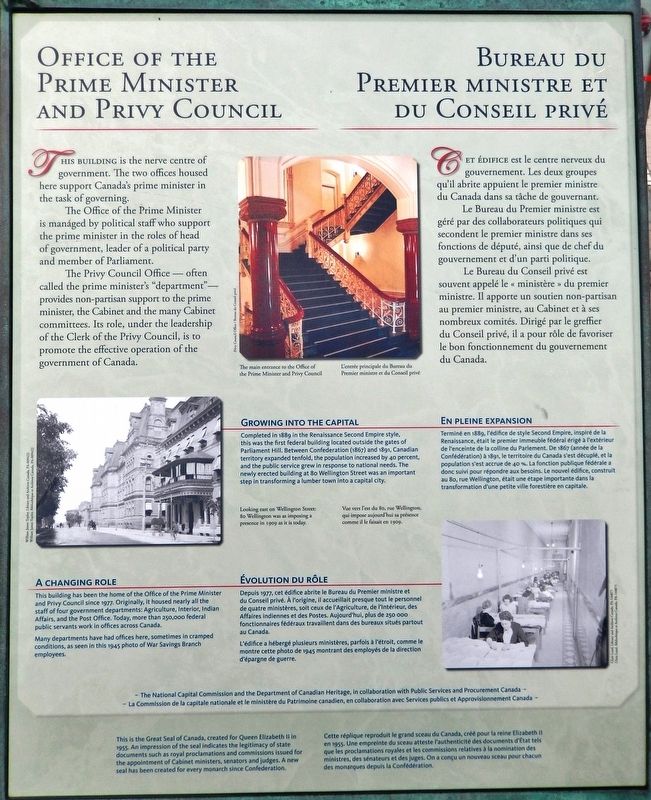
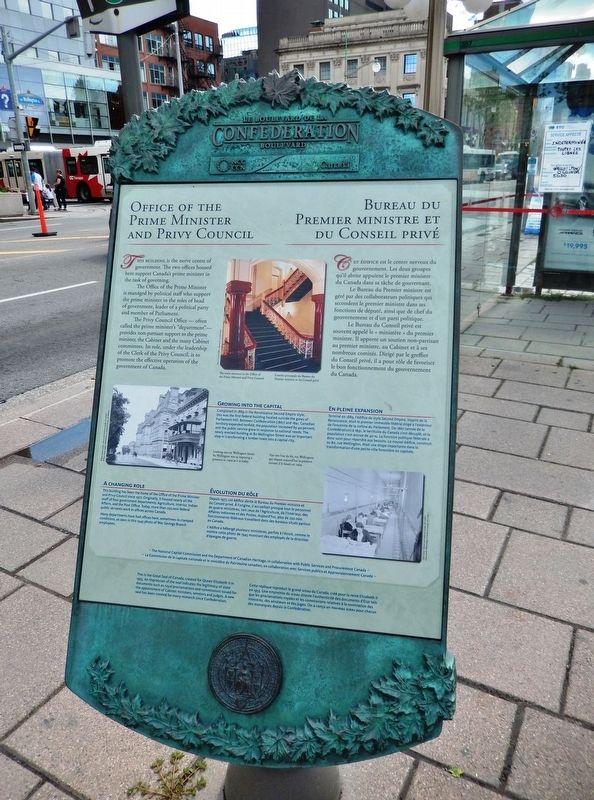
This building is the nerve centre of government. The two offices housed here support Canada's prime minister in the task of governing.
The Office of the Prime Minister is managed by political staff who support the prime minister in the roles of head of government, leader of a political party and member of Parliament.
The Privy Council Office — often called the prime minister's "department" — provides non-partisan support to the prime minister, the Cabinet and the many Cabinet committees. Its role, under the leadership of the Clerk of the Privy Council, is to promote the effective operation of the government of Canada.
Growing into the Capital
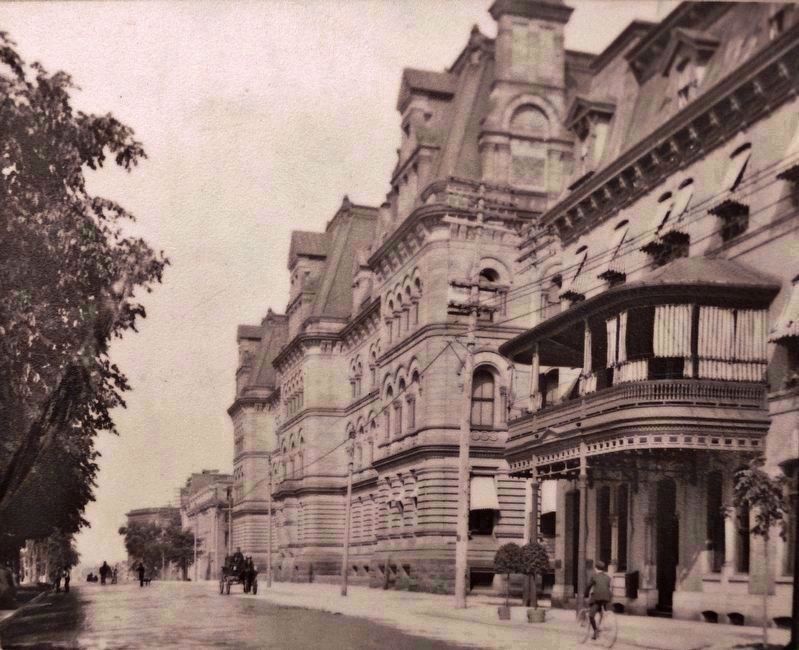
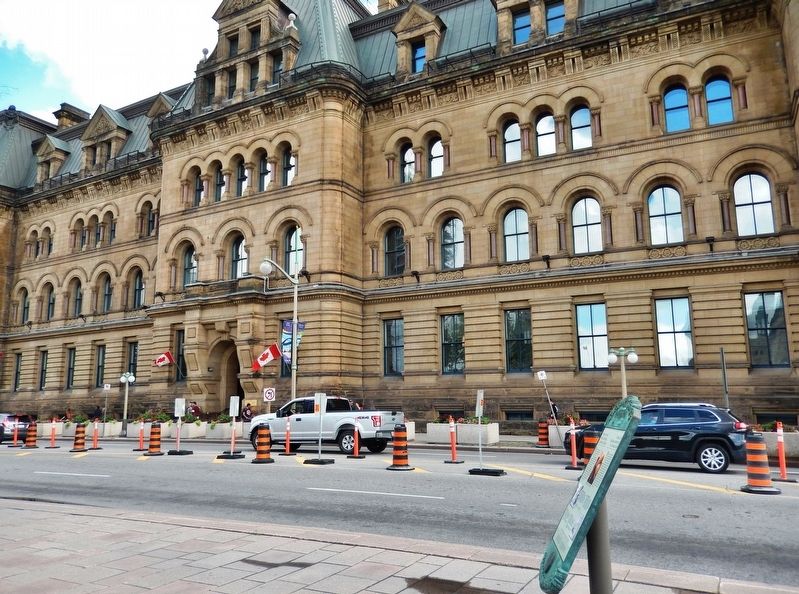
Completed in 1889 in the Renaissance Second Empire style, this was the first federal building located outside the gates of Parliament Hill. Between Confederation (1867) and 1891, Canadian territory expanded tenfold, the population increased by 40 percent, and the public service grew in response to national needs. The newly erected building at 80 Wellington Street was an important step in transforming a lumber town into a capital city.
A Changing Role
This building has been
this page online
The National Capital Commission and the Department of Canadian Heritage, in collaboration with Public Services and Procurement Canada
Cet édifice est le centre nerveux du gouvernement. Les deux groupes qu'il abrite appuient le premier ministre du Canada dans sa tâche de gouvernant.
Le Bureau du Premier ministre est géré par des collaborateurs politiques qui secondent le premier ministre dans ses fonctions de député, ainsi que de chef du gouvernement et d'un parti politique.
Le Bureau du Conseil privé est souvent appelé le « ministère » du premier ministre. Il apporte un soutien non-partisan au premier ministre, au Cabinet et à ses nombreux comités. Dirigé par le greffier du Conseil privé, il a pour rôle de favoriser le bon fonctionnement du gouvernement du Canada.
En pleine expansion
Terminé en 1889, l'édifice de style Second Empire, inspiré de
Courtesy Privy Council Office
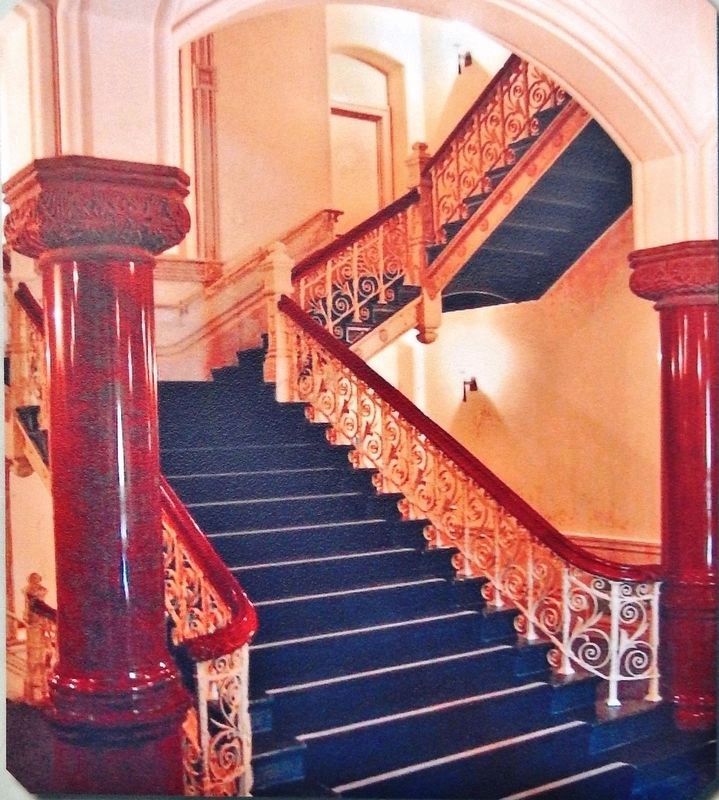
2. Marker detail: Main Entrance
• • •
L'entrée principale du Bureau du Premier ministre et du Conseil privé
Évolution du rôle
Depuis 1977, cet édifice abrite le Bureau du Premier ministre et du Conseil privé. À l'origine, il accueillait presque tout le personnel de quatre ministères, soit ceux de l'Agriculture, de l'Intérieur, des Affaires indiennes et des Postes. Aujourd'hui, plus de 250 000 fonctionnaires fédéraux travaillent dans des bureaux situés partout au Canada.
La Commission de la capitale nationale et le ministère du Patrimoine canadien, en collaboration avec Services publics et Approvisionnement Canada
Erected by The National Capital Commission / La Commission de la capitale nationale.
Topics. This historical marker is listed in this topic list: Architecture. A significant historical year for this entry is 1889.
Location. 45° 25.422′ N,
William James Topley, Library and Archives Canada, PA-009422
3. Marker detail: Office of the Prime Minister
• • •
Vue vers l'est du 80, rue Wellington, qui impose aujourd'hui sa présence comme il le faisait en 1909.

Regionally, this marker is in Eastern Ontario. It is also in Central Canada. Globally, it is in North America, the Western Hemisphere, the Western World, and the Anglosphere. Historically, it finds itself in what was once a British colony, the Viceroyalty of New France, the Haudenosaunee (Iroquois) Confederacy, and Rupert’s Land.
Other nearby markers. At least 8 other markers are within walking distance of this marker: Canada’s Capital (within shouting distance of this marker); Henry Albert Harper (within shouting distance of this marker); Terry Fox 1958 -1981 (within shouting distance of this marker); 100 Wellington Street / 100, Rue Wellington (about 90 meters away,
Chris Lund, Library and Archives Canada, PA-144871
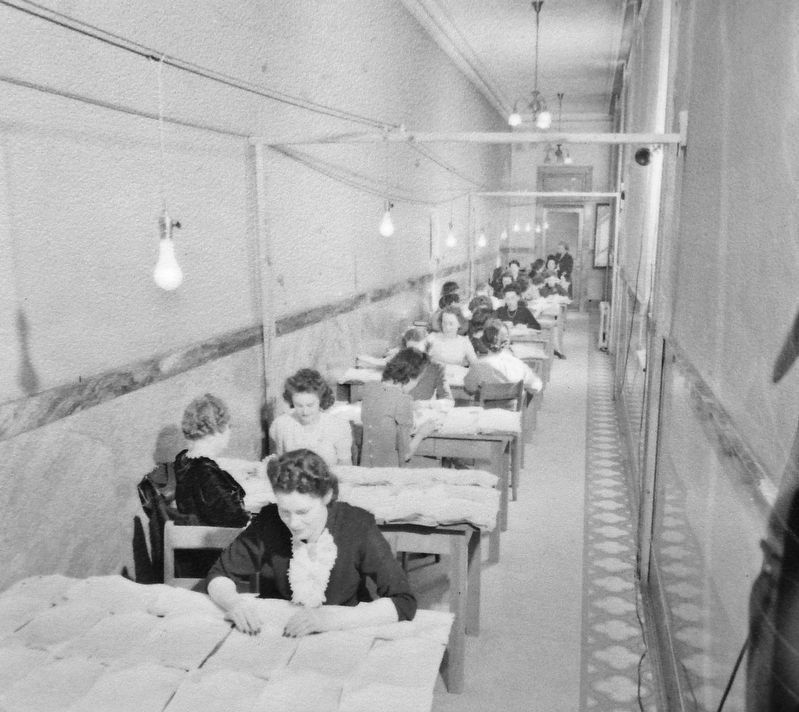
4. Marker detail: 1945 photo of War Savings Branch
• • •
L'édifice a hébergé plusieurs ministères, parfois à l'étroit, comme le montre cette photo de 1945 montrant des employés de la direction d'épargne de guerre.
Another marker is no longer nearby. Nicholas Sparks (was about 120 meters away but has been confirmed missing).
Related markers. Click here for a list of markers that are related to this marker. Confederation Boulevard / Boulevard de la Confédération
Also see . . . Office of the Prime Minister and Privy Council (Wikipedia). While the offices of senior Privy Council Office officials remain in the building, its use is now largely limited to the Prime Minister's Office, in addition to his or her office in the Centre Block of the Parliament Buildings. It is built of sandstone obtained from a New Brunswick quarry, and was the first federal government office building constructed outside the Parliament Hill precinct. The structure is distinctive in Ottawa for its Second Empire Style design because most government buildings
Photographed by Cosmos Mariner, August 10, 2019
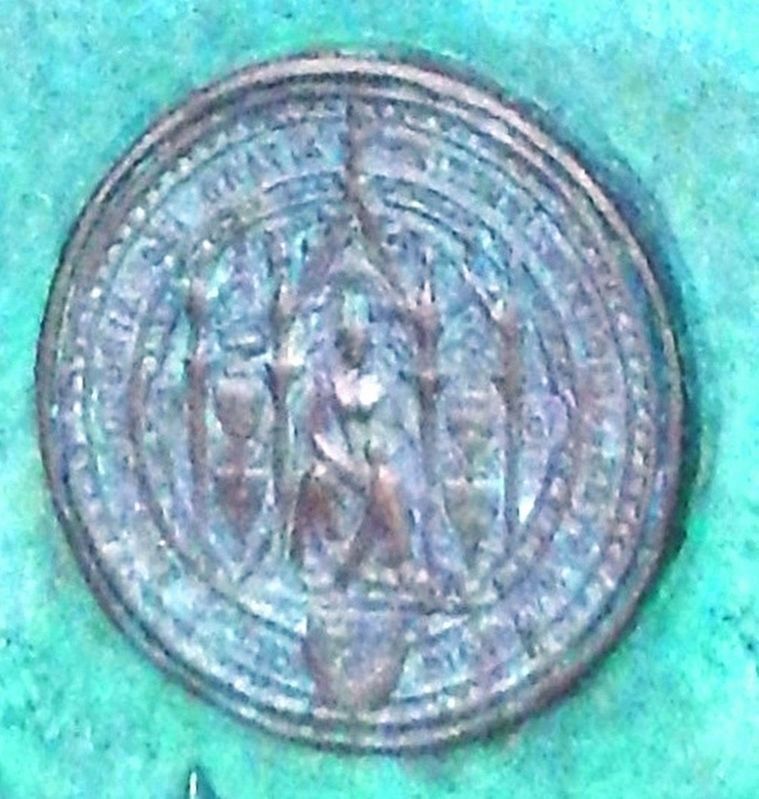
5. Marker detail: Great Seal of Canada
(at bottom center of marker)
(at bottom center of marker)
• • •
Cette réplique reproduit le grand sceau du Canada, créé pour la reine Elizabeth Il en 1955. Une empreinte du sceau atteste l'authenticité des documents d'État tels que les proclamations royales et les commissions relatives à la nomination des ministres, des sénateurs et des juges. On a conçu un nouveau sceau pour chacun des monarques depuis la Confédération.
Photographed by Cosmos Mariner, August 10, 2019
6. Office of the Prime Minister and Privy Council Marker
Photographed by Cosmos Mariner, August 10, 2019
7. Office of the Prime Minister and Privy Council Marker
Photographed by Robert Rusaw, April 18, 2022
8. Office of the Prime Minister and Privy Council Marker
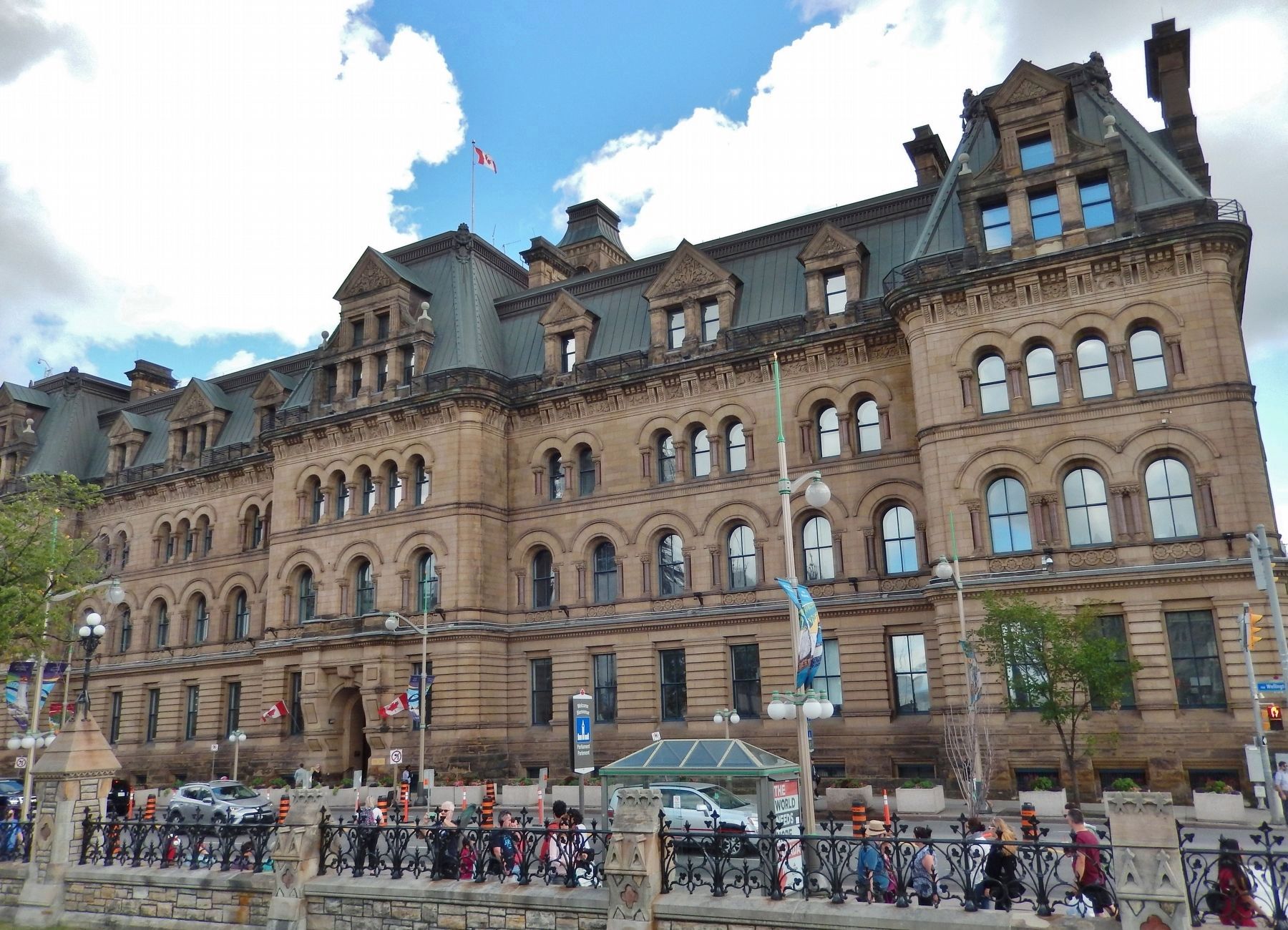
Photographed by Cosmos Mariner, August 10, 2019
9. Office of the Prime Minister and Privy Council
Credits. This page was last revised on April 21, 2022. It was originally submitted on May 29, 2020, by Cosmos Mariner of Cape Canaveral, Florida. This page has been viewed 642 times since then and 65 times this year. Photos: 1, 2, 3, 4, 5, 6, 7. submitted on May 31, 2020, by Cosmos Mariner of Cape Canaveral, Florida. 8. submitted on April 20, 2022, by Robert Rusaw of Massena, New York. 9. submitted on May 31, 2020, by Cosmos Mariner of Cape Canaveral, Florida.
