A Frigid Crossing
"Traveled 12 miles to Waynesville on Roberdeou Creek, a branch of the Gasconade—clear and present day..."
Dr. W. I. Morrow's diary, March 5, 1839
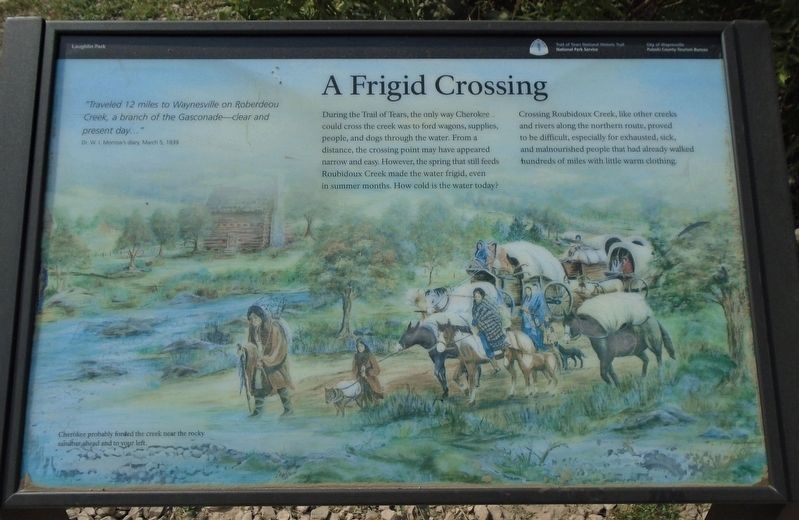
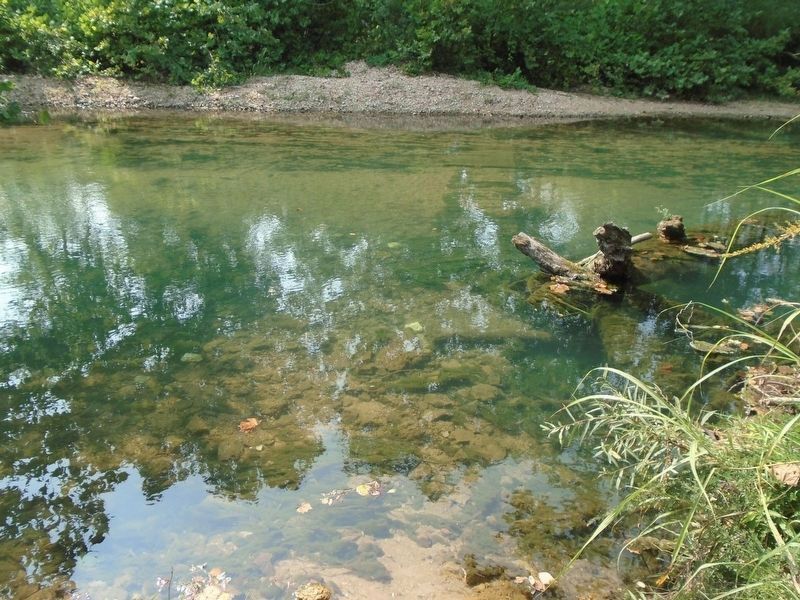
During the Trail of Tears, the only way Cherokee could cross the creek was to ford wagons, supplies, people, and dogs through the water. From a distance, the crossing point may have appeared narrow and easy. However, the spring that still feeds Roubidoux Creek made the water frigid, even in summer months. How cold is the water today?
Crossing Roubidoux Creek, like other creeks and rivers along the northern route, proved to be difficult, especially for exhausted, sick, and malnourished people that had already walked hundreds of miles with little warm clothing.
[Background photo caption reads]
Cherokee probably forded the creek near the rocky sandbar ahead and to your left.
Erected 2015 by National Park Service, City of Waynesville, and Pulaski County Tourism Bureau.
Topics and series. This historical marker is listed in these topic lists: Disasters • Indigenous Peoples and Communities • Waterways & Vessels. In addition, it is included in the Trail of Tears
this page online
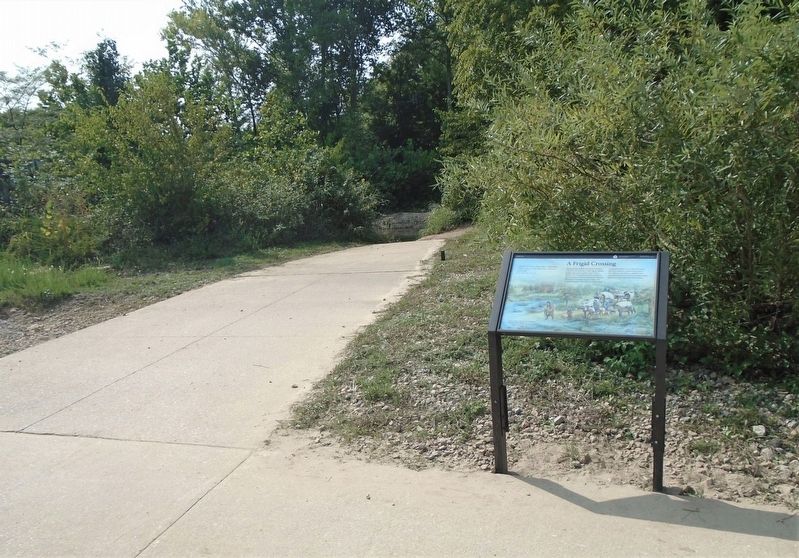
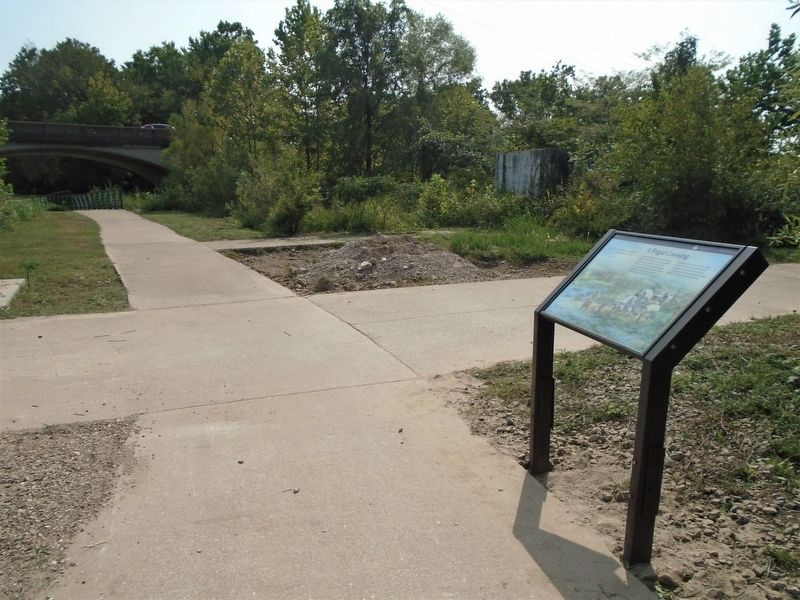
Location. 37° 49.709′ N, 92° 12.321′ W. Marker is in Waynesville, Missouri, in Pulaski County. It can be reached from U.S. Route 66. Marker is along the walking path along Roubidoux Creek, in Roy Laughlin Park, about 200 feet north of the Old Route 66 bridge. Touch for map. Marker is in this post office area: Waynesville MO 65583, United States of America. Touch for directions.

Regionally, this marker is in South-Central Missouri. It is also in the American Ozarks, in the Lewis & Clark Corridor, and in the Corn Belt. Globally, it is in North America, the Western Hemisphere, the Western World, and the Anglosphere. Historically, it finds itself in what was once the territory of the Mississippian Culture, the Louisiana Purchase, and the Antebellum South.
Other nearby markers. At least 8 other markers are within walking distance of this marker: A Road Through History (about 500 feet away, measured in a direct line); Roubidoux Trail (about 800 feet away); James Richard Livingston (approx. 0.2 miles away); What is the Trail of Tears? (approx. 0.2 miles away); A Resting Place for the Weary
Also see . . .
1. Laughlin Park & Roubidoux Spring. City of Waynesville website entry (Submitted on February 9, 2025, by Larry Gertner of New York, New York.)
2. Trail Of Tears National Historic Trail. National Park Service website entry (Submitted on October 16, 2020, by William Fischer, Jr. of Reynoldsburg, Ohio.)
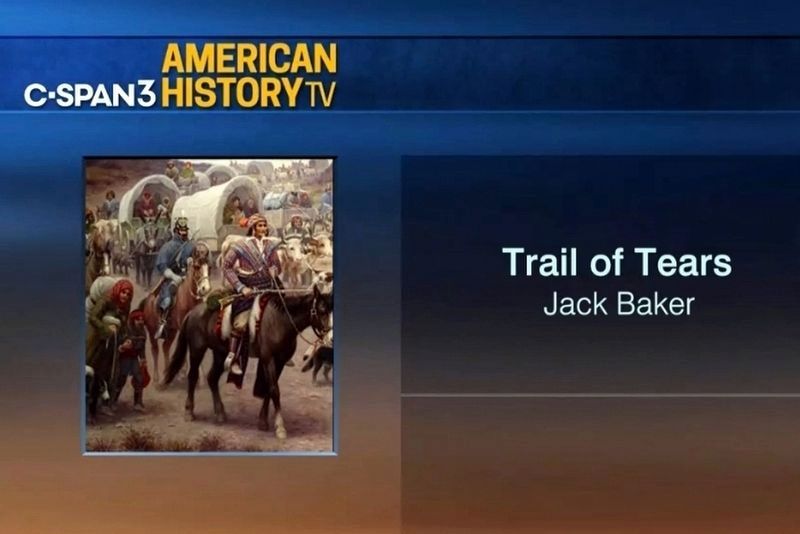
Trail of Tears Association president Jack Baker talked about the forced relocation of Native Americans in the early 19th century. Mr. Baker, a member of the Cherokee Nation, also discussed his own family's involuntary move to Oklahoma.
Click for more information.
Credits. This page was last revised on June 29, 2025. It was originally submitted on October 16, 2020, by William Fischer, Jr. of Reynoldsburg, Ohio. This page has been viewed 482 times since then and 29 times this year. Photos: 1, 2, 3, 4. submitted on October 16, 2020, by William Fischer, Jr. of Reynoldsburg, Ohio. 5. submitted on June 29, 2025, by Larry Gertner of New York, New York.
