Near Phelan in San Bernardino County, California — The American West (Pacific Coastal)
Camp Cajon Monument
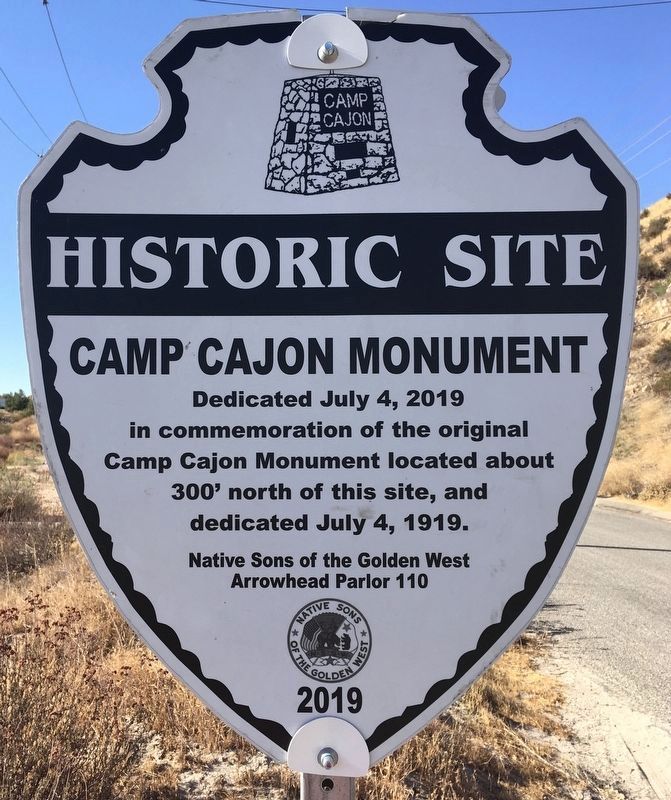
Historic Site
Photographed by Craig Baker, October 2, 2020
1. Camp Cajon Marker
Dedicated July 4, 2019 in commemoration of the original Camp Cajon Monument located about 300' north of this site, and dedicated July 4, 1919.
Erected 2019 by Native Sons of the Golden West Arrowhead Parlor 110.
Topics and series. This historical marker and monument is listed in these topic lists: Parks & Recreational Areas • Roads & Vehicles. In addition, it is included in the Native Sons/Daughters of the Golden West, and the U.S. Route 66 series lists. A significant historical date for this entry is July 4, 2019.
Location. 34° 18.398′ N, 117° 28.022′ W. Marker is near Phelan, California, in San Bernardino County. It is on Wagon Train Road half a mile south of Highway 138, on the right when traveling south. Touch for map. Marker is at or near this postal address: 3351 Wagon Train Rd, Phelan CA 92371, United States of America. Touch for directions.

Regionally, this marker and monument is in Greater Los Angeles, in the Peninsular Ranges, and in the Transverse Ranges. It is also in the American Southwest. Globally, it is in North America, on the Ring of Fire, on the Pacific Rim, in the Western Hemisphere,
this page online
Other nearby markers. At least 8 other markers are within 3 miles of this marker, measured as the crow flies: Camp Cajon (within shouting distance of this marker); Santa Fe and Salt Lake Trail (within shouting distance of this marker); Stoddard-Waite Monument (approx. 0.2 miles away); Mormon Pioneer Trail (approx. ¼ mile away); Hill 582 (approx. 2 miles away); Blue Cut (approx. 2.8 miles away); Summit Train Station (approx. 2.9 miles away); Elliot Ranch (approx. 2.9 miles away). Touch for a list and map of all markers in Phelan.
Regarding Camp Cajon Monument. Camp Cajon was built on National Old Trails Road, which became U.S. Route 66 in 1926, and Camp Cajon became famous as “the gateway into Southern California.” It was the brainchild of William Bristol, a local orange grower, author, and poet. In 1917, Bristol attended the dedication of the Santa Fe and Salt Lake Trail monument that was built to honor the early settlers who traveled through the Cajon Pass. It was at this dedication that
Photographed by Craig Baker, October 2, 2020
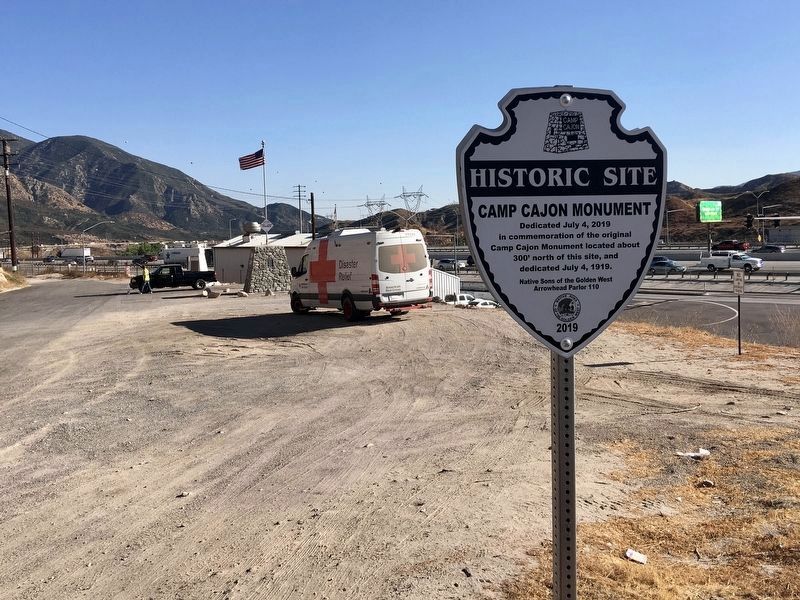
2. Camp Cajon Marker and Monument

Photographed by Charles Hepperle, September 15, 2019
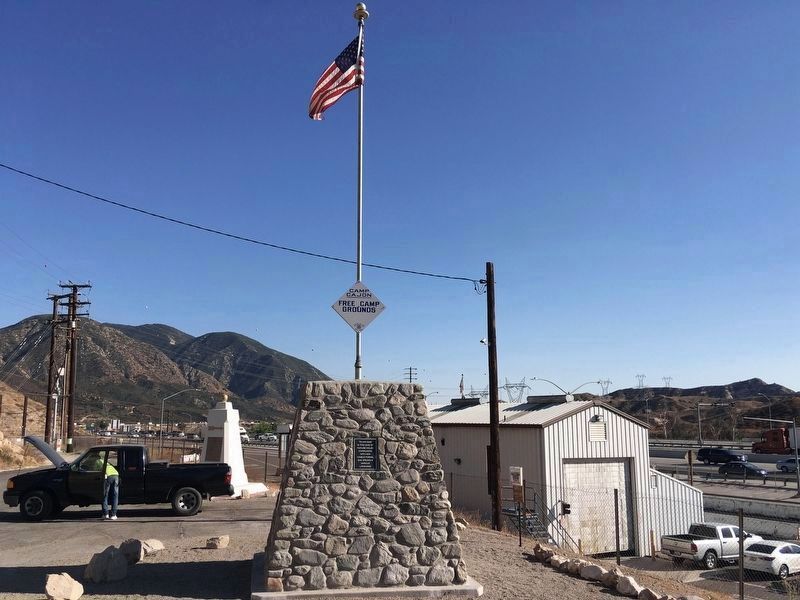
3. Camp Cajon Monument
The Santa Fe and Salt Lake Trail monument is on the left.
Photographed by Craig Baker, October 2, 2020
4. Camp Cajon Monument

Photographed by Adam Margolis, February 3, 2024
5. Camp Cajon Monument
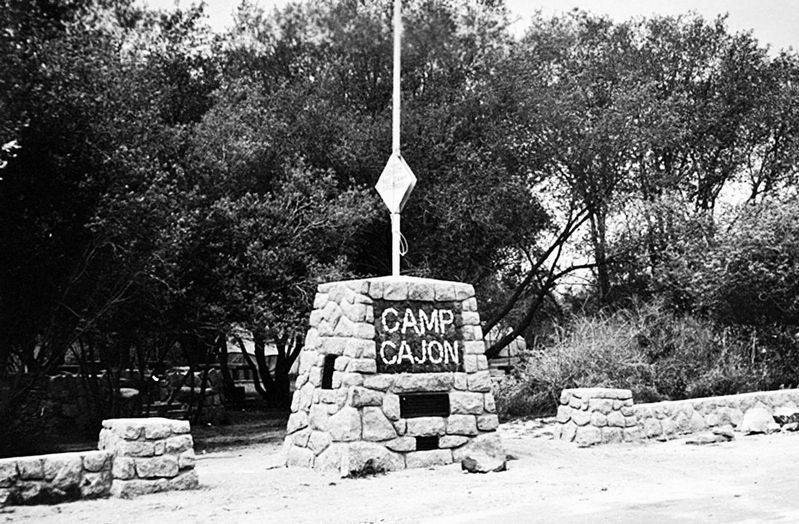
6. Original Camp Cajon Monument
This photo is courtesy of Mark Landis.
Photographed by Craig Baker, October 2, 2020
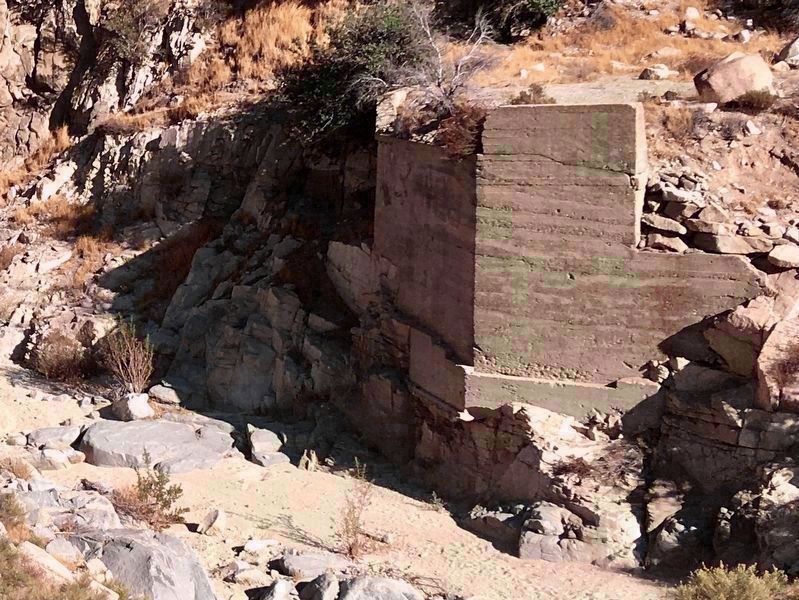
7. Route 66
The nearby hiking trail passes the bridge abutments of National Old Trails Road, which is also the old wagon road.
Credits. This page was last revised on March 17, 2025. It was originally submitted on October 10, 2020. This page has been viewed 3,238 times since then and 405 times this year. Last updated on October 16, 2020. Photos: 1, 2. submitted on October 10, 2020, by Craig Baker of Sylmar, California. 3. submitted on September 16, 2019, by Craig Baker of Sylmar, California. 4. submitted on October 10, 2020, by Craig Baker of Sylmar, California. 5. submitted on February 8, 2024, by Adam Margolis of Mission Viejo, California. 6, 7. submitted on October 10, 2020, by Craig Baker of Sylmar, California. • J. Makali Bruton was the editor who published this page.
