Atlacomulco, Mexico State, Mexico — The Central Highlands (North America)
Ambaro
Photographed by J. Makali Bruton, October 25, 2020
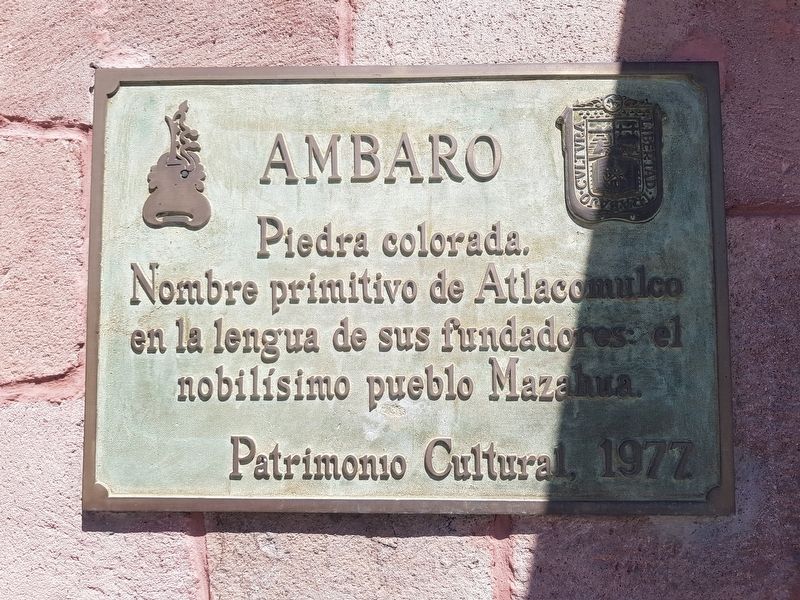
1. Ambaro Marker

Piedra colorada.
Nombre primitivo de Atlacomulco en la lengua de sus fundadores: el nobilísimo pueblo Mazahua.
Patrimonio Cultural. 1977.
Ambaro
Red stone.
Primitive name of Atlacomulco in the language of its founders: the most noble Mazahua people.
Cultural Heritage. 1977.
Erected 1977 by Patrimonio Cultural.
Topics. This historical marker is listed in this topic list: Indigenous Peoples and Communities. A significant historical year for this entry is 1977.
Location. 19° 47.997′ N, 99° 52.454′ W. Marker is in Atlacomulco, Estado de Mexico (Mexico State). It is on Calle Lic. Isidro Fabela Alfaro just north of Antonio Vélez, on the left when traveling north. Touch for map. Marker is in this post office area: Atlacomulco MEX 50450, Mexico. Touch for directions.

Regionally, this marker is in Central Mexico and specifically in Mexico City Metropolitan Area. Globally, it is in North America, specifically in Mesoamerica, on the Ring of Fire, and in the Western Hemisphere. Historically, it finds itself in what was once New Spain, a Spanish colony, and the Aztec Empire.
Other nearby markers. At
this page online
Photographed by J. Makali Bruton, October 25, 2020
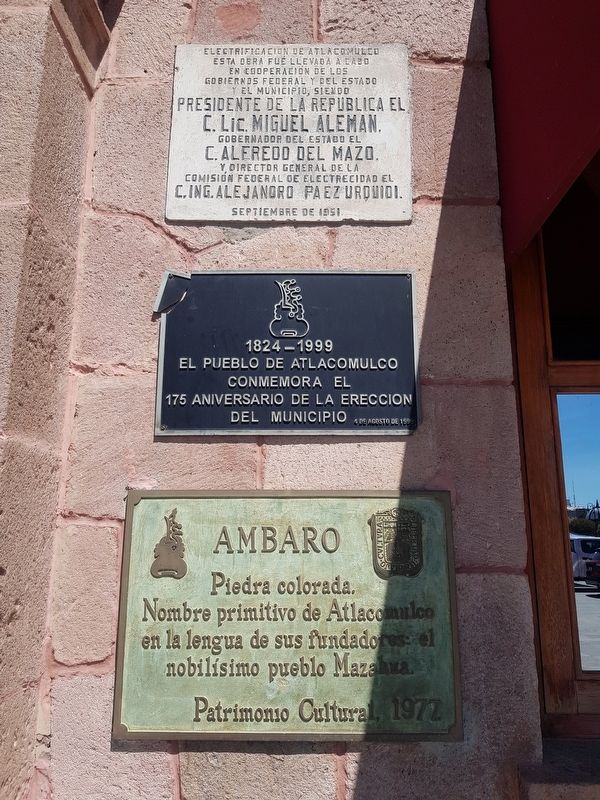
2. Ambaro Markers
The marker is accompanied by a 1951 marker on the town's electrification and a 1999 marker on the 175th anniversary of its elevation to municipality status.
Photographed by J. Makali Bruton, October 25, 2020
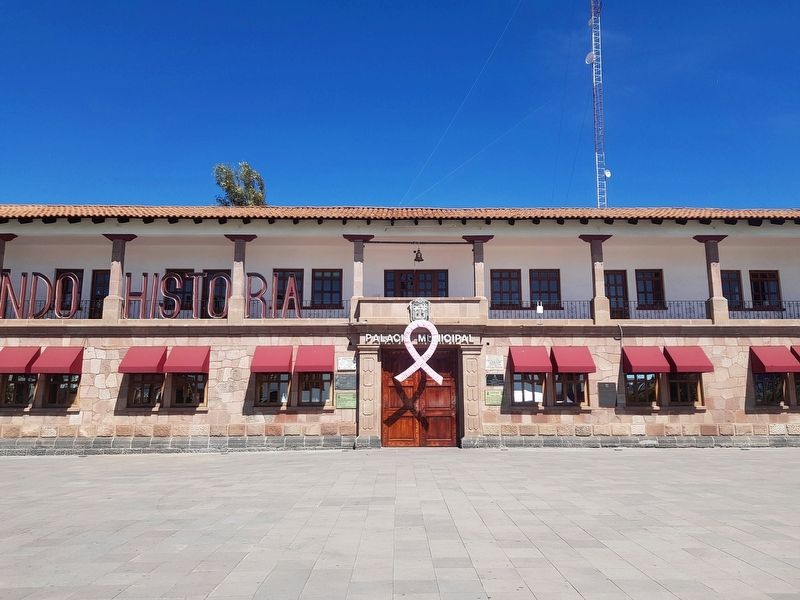
3. Ambaro Marker
The marker is to the right of the main entry to the Palacio Municipal of Atlacomulco.
Credits. This page was last revised on November 2, 2020. It was originally submitted on November 1, 2020, by J. Makali Bruton of Washington, District of Columbia. This page has been viewed 188 times since then and 24 times this year. Photos: 1, 2, 3. submitted on November 2, 2020, by J. Makali Bruton of Washington, District of Columbia.
