Furnace Creek in Death Valley National Park in Inyo County, California — The American West (Pacific Coastal)
Old Dinah
1894
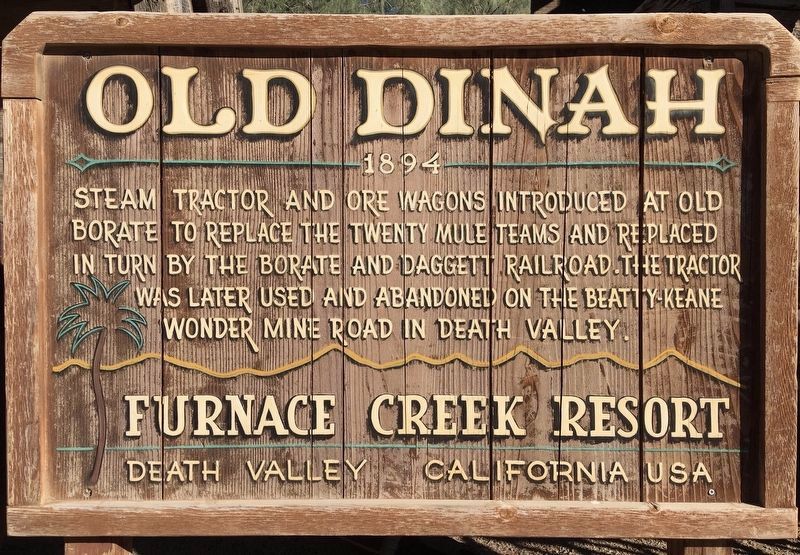
Photographed by Craig Baker, October 27, 2020
1. Old Dinah Marker
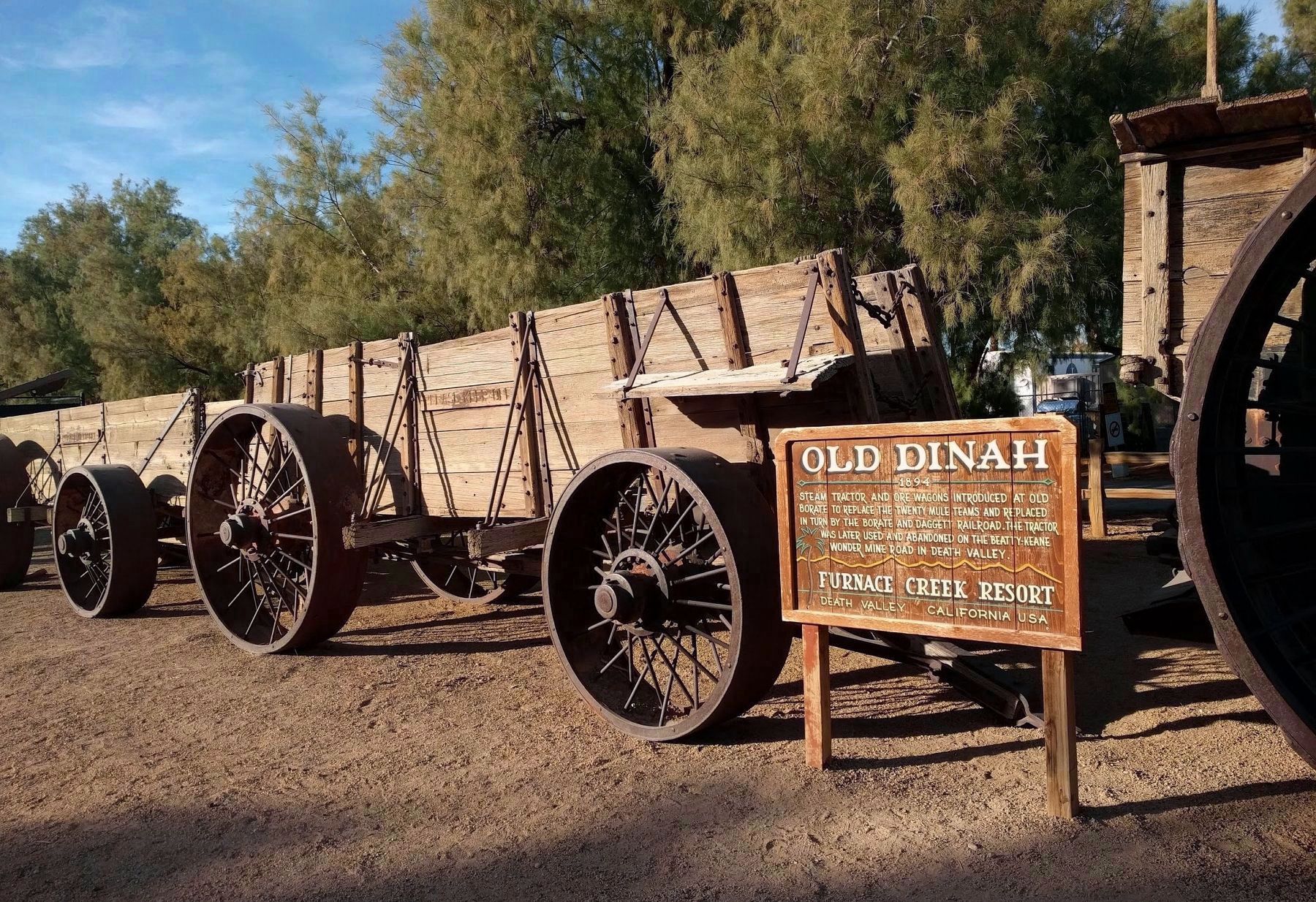
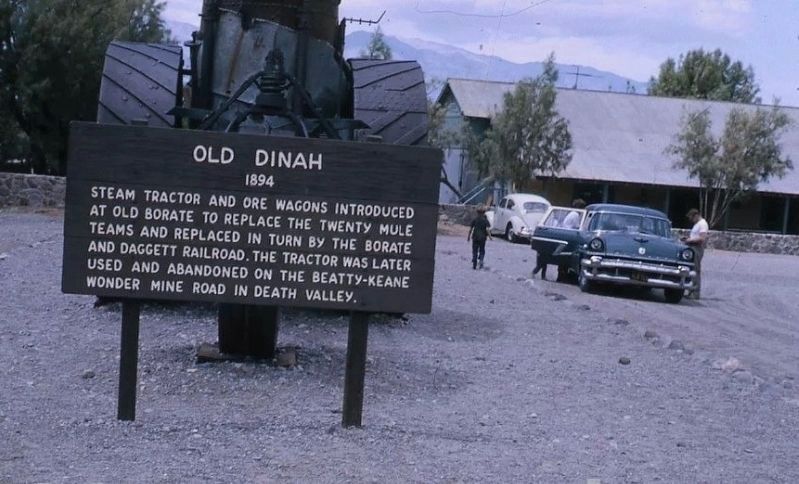
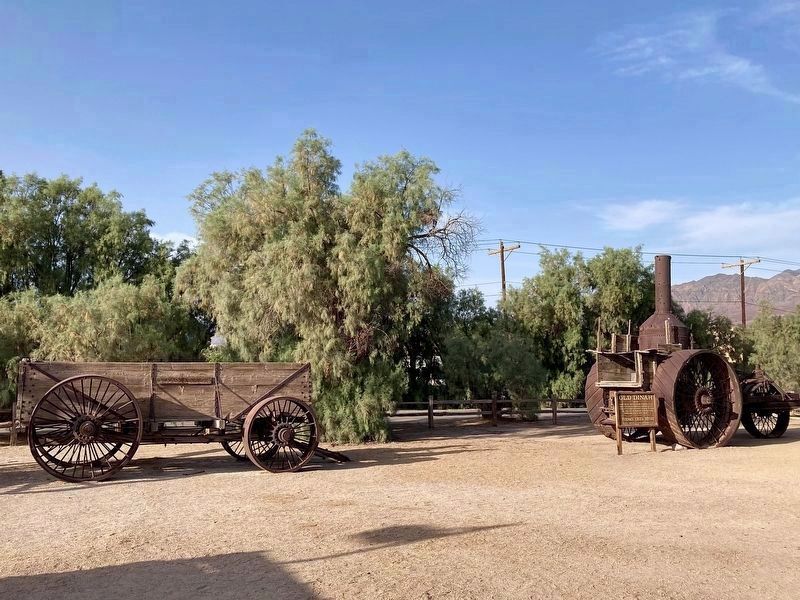
Steam tractor and ore wagons introduced at Old Borate to replace the twenty mule teams and replaced in turn by the Borate and Daggett Railroad. The tractor was later used and abandoned on the Beatty-Keane Wonder Mine Road in Death Valley.
Erected by Furnace Creek Resort.
Topics. This historical marker is listed in these topic lists: Industry & Commerce • Roads & Vehicles.
Location. 36° 27.419′ N, 116° 52.047′ W. Marker is in Death Valley National Park, California, in Inyo County. It is in Furnace Creek. It can be reached from California Route 190 one mile north of Badwater Road, on the left when traveling north. Located behind the ranch museum. Touch for map. Marker is in this post office area: Death Valley CA 92328, United States of America. Touch for directions.

Regionally, this marker is in the Sierra Nevada. It is also in the American Mountain West. Globally, it is in North America, on the Ring of Fire, on the Pacific Rim, in the Western Hemisphere, in the Western World, and in the Anglosphere. Historically, it finds itself in what was
this page online
Other nearby markers. At least 8 other markers are within 2 miles of this marker, measured as the crow flies: 20 Mule Team Wagon Train (within shouting distance of this marker); Borax Museum (within shouting distance of this marker); Furnace Creek Ranch, Death Valley (about 300 feet away, measured in a direct line); Vietnam Veterans Memorial (about 400 feet away); Stephen Tyng Mather (approx. 0.3 miles away); Death Valley 49ers Gateway (approx. one mile away); Old Harmony Borax Works (approx. 1.6 miles away); Borax (approx. 1.6 miles away). Touch for a list and map of all markers in Death Valley National Park.
Another marker is no longer nearby. 20 Mule Team Barn (was within shouting distance of this marker but has been permanently removed).
More about this marker. The name of Furnace Creek Ranch has been changed to The Ranch At Death Valley.
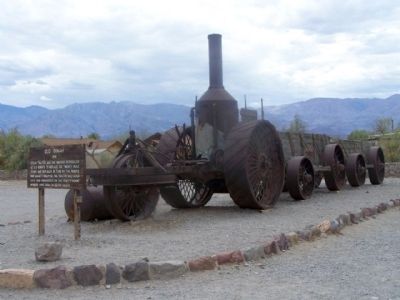
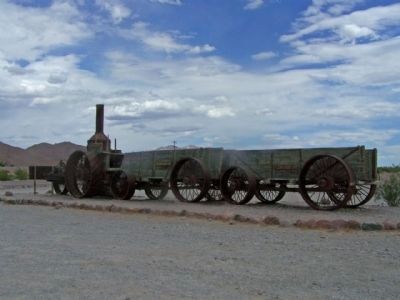
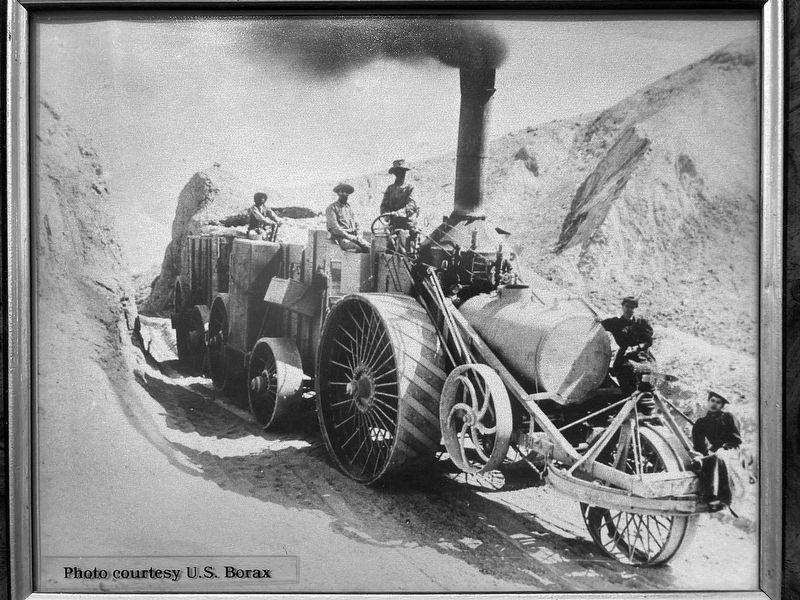
Regarding Old Dinah. "Old Dinah" was Borax Smith's experiment in transporting ore from the mines at Borate to the railroad at Daggett in 1894.
Dinah was a traction engine which burned coal - three and a half tons per day. Her
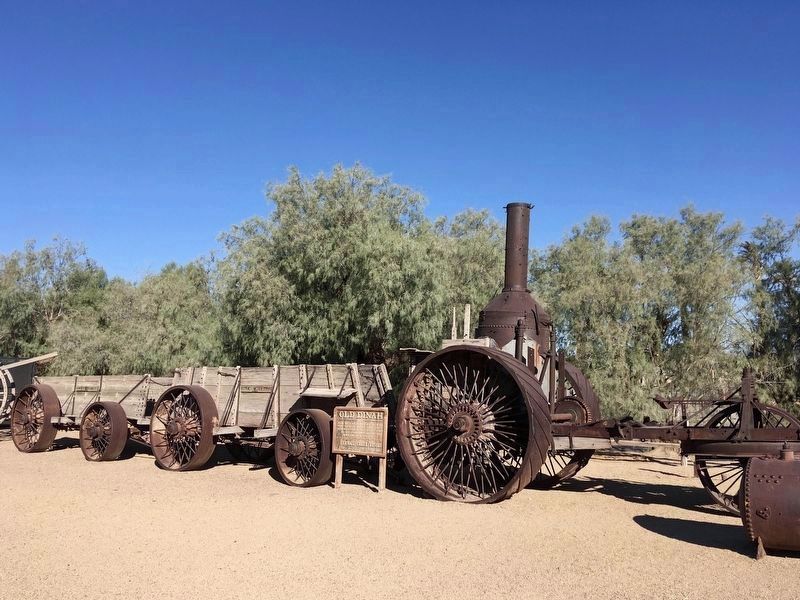
Photographed by Craig Baker, October 27, 2020
2. Old Dinah and Marker
Now located in the ranch museum outdoor collection.
It took four men to keep Dinah running: an engineer, a fireman, a brakeman and a mechanic who worked all night, every night to put her in shape for the next day's run.
After a year's struggle, Dinah was abandoned, and the 20-Mule Teams which had continued to haul alongside of her took over the entire job again. Dinah stands today at the entrance to Furnace Creek Ranch.
- from a display inside the museum
Additional commentary.
1. Old Dinah Moved to New Location
When the photographs were taken in June of 2010, Old Dinah was located next to State Route 190 near the entrance to Furnace Creek Ranch. She had been there since 1932.
On 16 September 2015, Xanterra Parks and Resorts moved Old Dinah from her prominent location to a new location on the property of Furnace Creek Ranch, now called The Ranch At Death Valley. Xanterra Parks and Resorts, a private company, now owns both Old Dinah and The Ranch.
— Submitted April 4, 2016, by Alvis Hendley of San Francisco, California.
2.
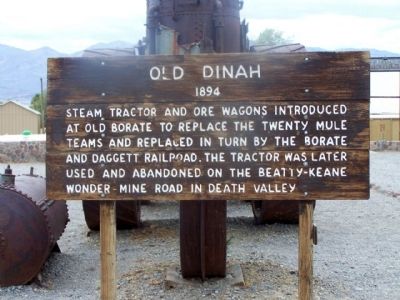
Photographed by Mike Stroud, 2010
3. Original Marker
In 2024 an arson fire destroyed one of the ore wagons.
— Submitted May 28, 2024, by Craig Baker of Sylmar, California.
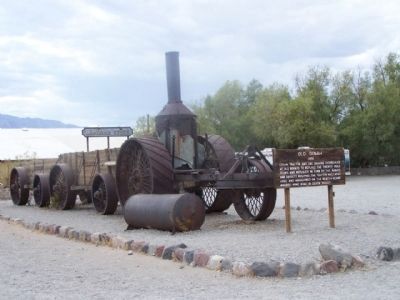
Photographed by Mike Stroud, June 12, 2010
4. Old Dinah and Marker
circa 2017
5. New Location and New Marker for Old Dinah, with same text.
6. Old Dinah Marker
Photographed by Mike Stroud, June 12, 2010
7. Old Dinah
Photographed by Mike Stroud, June 12, 2010
8. Old Dinah steam tractor and ore wagons
Photographed by Craig Baker, March 28, 2025
9. Ore Wagon Destroyed by Arson Fire
10. Display Inside the Museum
Credits. This page was last revised on August 18, 2026. It was originally submitted on June 20, 2010. This page has been viewed 2,372 times since then and 97 times this year. Last updated on November 12, 2020, by Craig Baker of Sylmar, California. Photos: 1, 2. submitted on November 12, 2020, by Craig Baker of Sylmar, California. 3, 4. submitted on June 20, 2010, by Mike Stroud of Bluffton, South Carolina. 5. submitted on March 16, 2018, by Craig Baker of Sylmar, California. 6. submitted on July 5, 2021, by Johnny Rock of Midlothian, Virginia. 7, 8. submitted on June 20, 2010, by Mike Stroud of Bluffton, South Carolina. 9, 10. submitted on March 28, 2025, by Craig Baker of Sylmar, California. • J. Makali Bruton was the editor who published this page.
