Bristol in Bucks County, Pennsylvania — The American Northeast (Mid-Atlantic)
Fueling the Economy
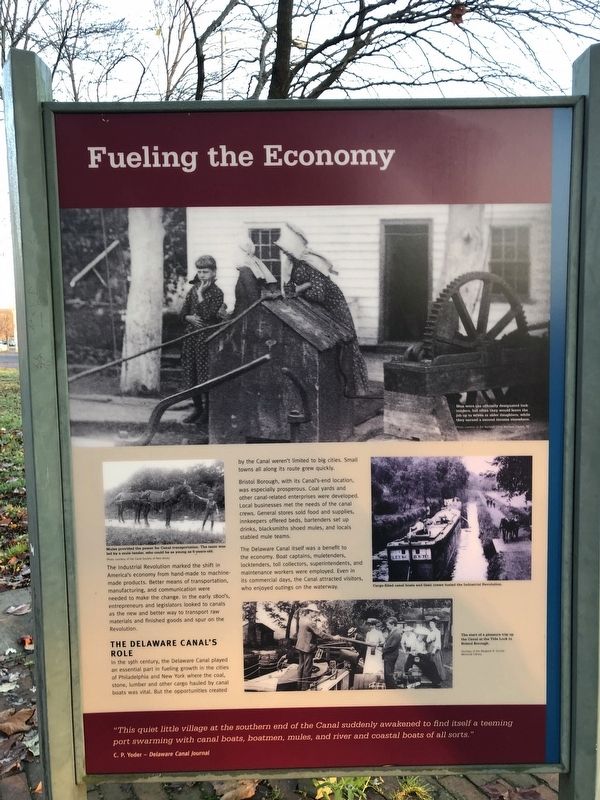
The Industrial Revolution marked the shift in America's economy from hand-made to machine-made products. Better means of transportation, manufacturing, and communication were needed to make change. In the early 1800's, entrepreneurs and legislators looked to canals as the new and better way to transport raw materials and finished goods and spur on the Revolution.
The Delaware Canal's Role
In the 19th century, the Delaware Canal played an essential part in fueling growth in the cities of Philadelphia and New York where the coal, stone, lumber and other cargo hauled by canal boats was vital. But the opportunities created by the Canal weren't limited to big cities. Small towns all along its route grew quickly.
Bristol Borough, with its Canal's-end location was especially prosperous. Coal yards and other canal-related enterprises were developed. Local businesses met the needs of the canal crews. General stores sold food and supplies, innkeepers offered beds, bartenders set up drinks, blacksmiths shoed mules, and locals stabled mule teams.
The Delaware Canal itself was a benefit to the economy. Boat captains, muletenders,
this page online
"This quiet little village at the southern end of the Canal suddenly awakened to find itself a port swarming with canal boats, boatmen, mules, and river and coastal boats of all sorts."
C.P. Yoder – Delaware Canal Journal
[Captions:]
Men were the officially designated locktenders, but often they would leave the job up to wives or older daughters, while they earned a second income elsewhere.
Mules provided the power for Canal transportation. The team was led by a mule tender, who could be as young as 6-years-old.
Cargo-filled canal boats and their crews fueled the Industrial Revolution.
The start of a pleasure trip up the Canal at the Tide Lock in Bristol Borough.
Topics and series. This historical marker is listed in these topic lists: Industry & Commerce • Waterways & Vessels. In addition, it is included in the Delaware Canal (AKA Delaware Division of the Pennsylvania Canal) series list.
Location. 40° 5.631′ N,
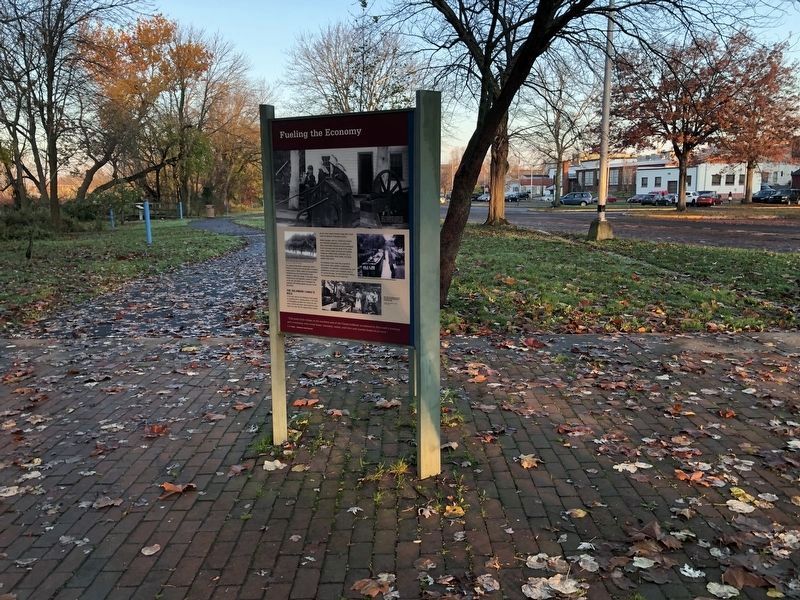

Regionally, this marker is in Southeast Pennsylvania and in Greater Philadelphia. It is also in the American Northeast and in the Mid-Atlantic. Globally, it is in North America, the Western Hemisphere, the Western World, and the Anglosphere. Historically, it finds itself in what was once the Haudenosaunee (Iroquois) Confederacy, New Netherland, and one of the original Thirteen Colonies.
Other nearby markers. At least 8 other markers are within walking distance of this marker: Working with the Tide (here, next to this marker); In the Basin (here, next to this marker); Marsh Ecology in an Urban Setting (within shouting distance of this marker); Where the Canal Met the River (within shouting distance of this marker); Harriet Ross Tubman (within shouting distance of this marker); The Puerto Rican Monument of Bristol (within shouting distance of this marker); Tidal Delaware Water Trail (within shouting distance of this marker); Columbus 500 Celebration (about 500 feet away, measured in a direct line). Touch for a list and map of all markers in Bristol.
Other markers no longer nearby. The Basin (was here, next to this marker but has been replaced with another marker now near it); The Tidal Lock (was here, next to this marker but has been replaced with another marker now near it); Canal Office (was here, next to this marker but has been replaced with another marker now near it); The Ring (was within shouting distance of this marker but has been replaced with another marker now near it).
Related marker. Click here for another marker that is related to this marker. This marker has replaced the linked marker.
Credits. This page was last revised on November 15, 2020. It was originally submitted on November 15, 2020, by Devry Becker Jones of Washington, District of Columbia. This page has been viewed 331 times since then and 32 times this year. Photos: 1, 2. submitted on November 15, 2020, by Devry Becker Jones of Washington, District of Columbia.
