Death Valley National Park in Inyo County, California — The American West (Pacific Coastal)
Shoreline Butte
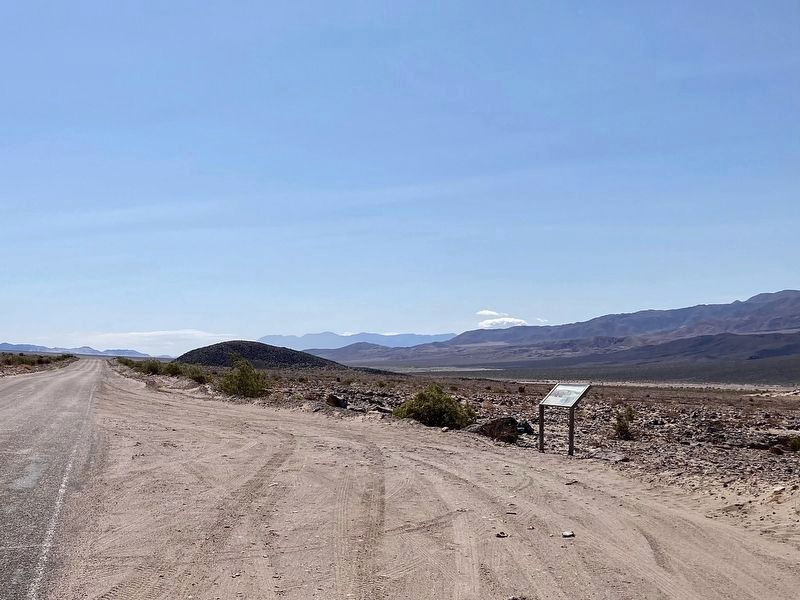
Prehistoric Shores
| — | Lake Manly | — |

Photographed by Craig Baker, March 30, 2025
1. Shoreline Butte Marker
Prehistoric Shores
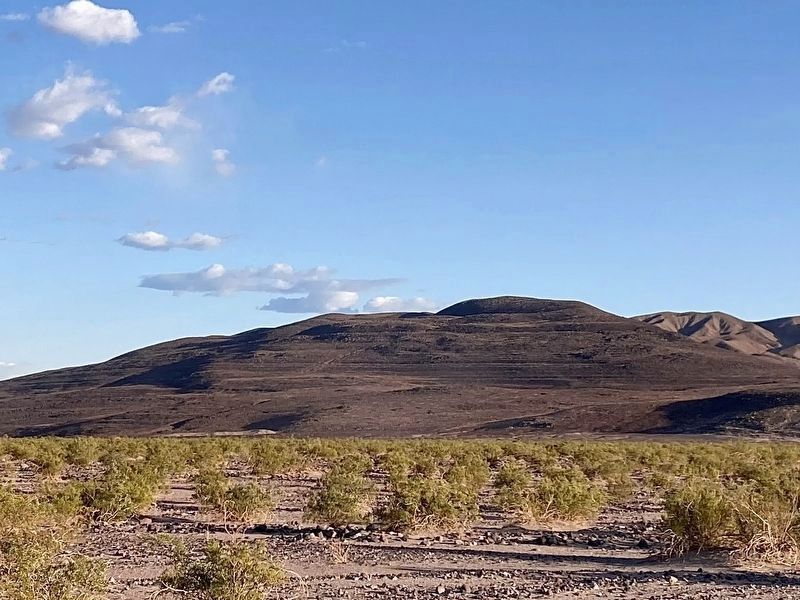
Prehistoric Lake Manly, fed by melting Sierra Nevada glaciers and surrounded by trees, would have looked very different from what you now see. With no exit from the valley, the lake grew to a depth of 500 to 600 feet and stretched for 100 miles, leaving Shoreline Butte as an island — and this spot was under 400 feet of water!
Today, ancient beach lines on Shoreline Butte mark the fluctuating levels of Lake Manly like rings around a bathtub. Wind-driven waves deposited sand and gravel or eroded cliffs along the water's edge, creating features known as strandlines. Geologists have identified more than 12 strandlines, which are best observed when the sun is at a low angle. At the base of Shoreline Butte is the Amargosa River, an intermittent waterway that flows underground for most of its 185-mile length, or after heavy rainstorms drain into the valley.
Runoff from cooler and wetter climatic conditions during the last Ice Age created five large lakes that gradually disappeared as average temperatures increased and moisture decreased.
original marker text:
this page online
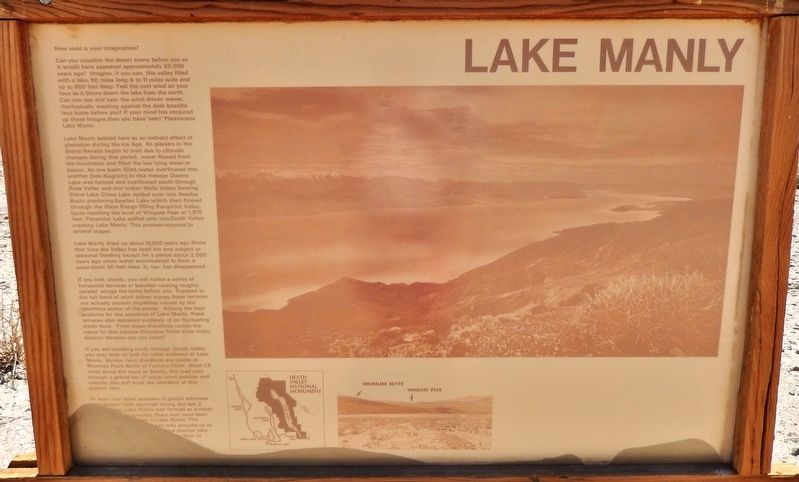
Lake Manly
How vivid is your imagination?
Can you visualize the desert scene before you as it would have appeared approximately 20,000 years ago? Imagine, if you can, this valley filled with a lake, 90 miles long, 6 to 11 miles wide and up to 600 feet deep. Feel the cool wind on your face as it blows down the lake from the north. Can you see and hear the wind driven waves, rhythmically washing against the dark basaltic lava butte before you? If your mind has conjured up these images, then you have "seen" Pleistocene Lake Manly.
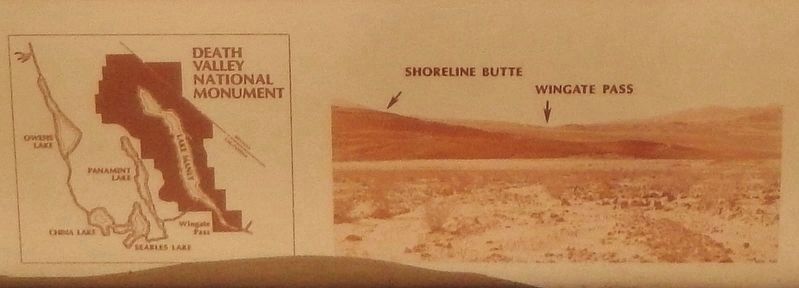
Lake Manly existed here as an indirect effect of glaciation during the Ice Age. As glaciers in the Sierra Nevada began to melt due to climatic changes during this period, water flowed from the mountains and filled the low lying areas or basins. As one basin filled, water overflowed into another (see diagram). In this manner Owens Lake was formed and overflowed south through Rose Valley and into Indian Wells Valley forming China Lake. China Lake spilled over into Searles Basin producing Searles Lake which then flowed through the Slate Range filling Panamint Valley. Upon reaching the level of Wingate

Photographed by Craig Baker, March 30, 2025
2. Shoreline Butte and Marker
Lake Manly dried up about 10,000 years ago. Since that time the Valley has been dry and subject to seasonal flooding except for a period about 2,000 years ago when water accumulated to form a pond about 30 feet deep. It, too, has disappeared.
If you look closely, you will notice a series of horizontal terraces or benches running roughly parallel across the butte before you. Exposed to the full force of wind driven waves, these terraces are actually ancient shorelines carved by the relentless action of the waves. Among the best evidence for the existence of Lake Manly, these terraces also represent evidence of its fluctuating water level. From these shorelines comes the name for this feature — Shoreline Butte. How many distinct terraces can you count?
If you are traveling north through Death Valley you may wish to look for other evidence of Lake Manly. Similar faint shorelines are visible at Mormon Point. North of furnace Creek, about 1.8 miles along the route to Beatty, the road cuts through a gravel bar of water
Photographed by Craig Baker, March 30, 2025
3. Shoreline Butte Marker
At least four other episodes of glacial advances and retreats have occurred during the last 2 million years. Lake Manly was formed as a result of one of these episodes. There may have been similar lakes here prior to Lake Manly. This recurring cycle of events can only provoke us to wonder if sometime in the future another lake of glacial origin will again cover the floor of Death Valley.
Erected by Death Valley National Park.
Topics. This historical marker is listed in this topic list: Natural Features.
Location. 35° 56.023′ N, 116° 41.956′ W. Marker is in Death Valley National Park, California, in Inyo County. It is on Badwater Road 3.4 miles north of Jubilee Pass Road (California Route 178), on the left when traveling north. Touch for map. Marker is in this post office area: Death Valley CA 92328, United States of America. Touch for directions.

Regionally, this marker is in California’s Sierra Nevada. It is also in the American Mountain West. Globally, it is in North America, on the Ring
Photographed by Craig Baker, April 4, 2025
4. Shoreline Butte
Other nearby markers. At least 2 other markers are within 2 miles of this marker, measured as the crow flies: West Side Road (approx. 0.4 miles away); Ashford Mill Ruins (approx. 1.3 miles away).
Also see . . .
1. Lake Manly (Wikipedia). The lake was named in honor of William Lewis Manly, who rescued his traveling party stranded in Death Valley in 1849. The name "Lake Manly" was coined in 1932. Parts of Death Valley are sometimes flooded during wet weather, causing parts of Lake Manly to reform. Severe flooding in March 2005 resulted in parts of Death Valley becoming submerged. (Submitted on November 24, 2020, by Cosmos Mariner of Cape Canaveral, Florida.)
2. What is Lake Manly?. Lake Manly is a lake that only exists when it’s cold and wet enough for Death Valley to fill with water. That might have started happening about 14 million years ago when the valley started to form. (Submitted on November 24, 2020, by Cosmos Mariner of Cape Canaveral, Florida.)
Photographed by Cosmos Mariner, June 22, 2014
5. Original Marker - Lake Manly

Photographed by Cosmos Mariner, June 22, 2014
6. Original Marker - Lake Manly
7. Marker detail: diagram & map

Photographed by Cosmos Mariner, June 22, 2014
8. Shoreline Butte
Credits. This page was last revised on June 20, 2025. It was originally submitted on November 24, 2020, by Cosmos Mariner of Cape Canaveral, Florida. This page has been viewed 1,326 times since then and 143 times this year. Photos: 1, 2, 3. submitted on March 30, 2025, by Craig Baker of Sylmar, California. 4. submitted on April 5, 2025, by Craig Baker of Sylmar, California. 5, 6, 7, 8. submitted on November 24, 2020, by Cosmos Mariner of Cape Canaveral, Florida.
