Heights in Little Rock in Pulaski County, Arkansas — The American South (West South Central)
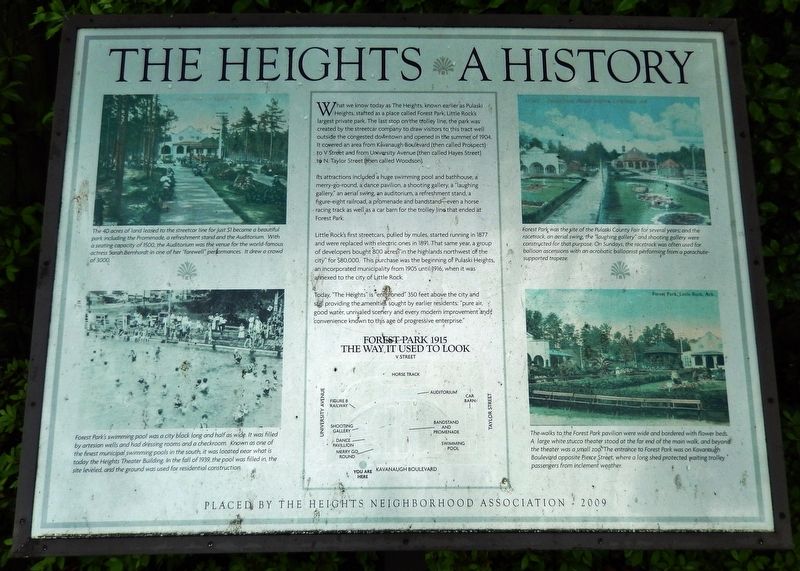
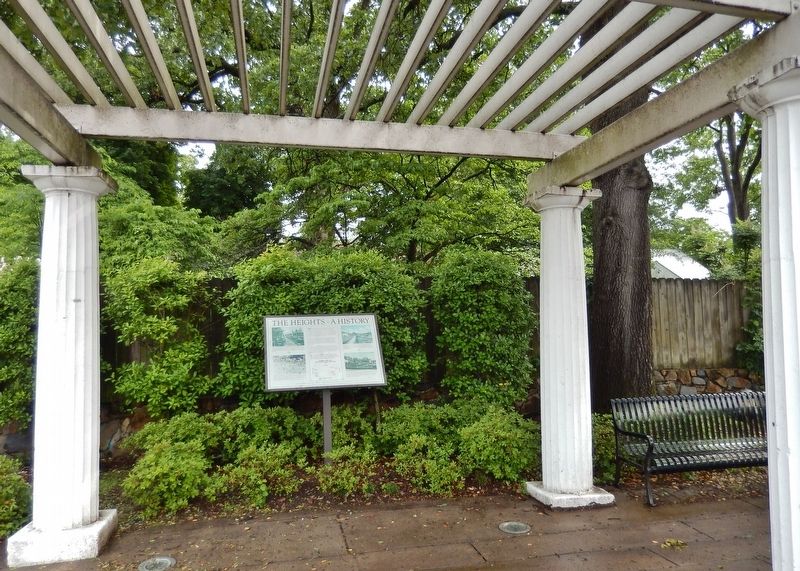
The Heights • A History
Photographed by Cosmos Mariner, May 17, 2015
1. The Heights • A History Marker
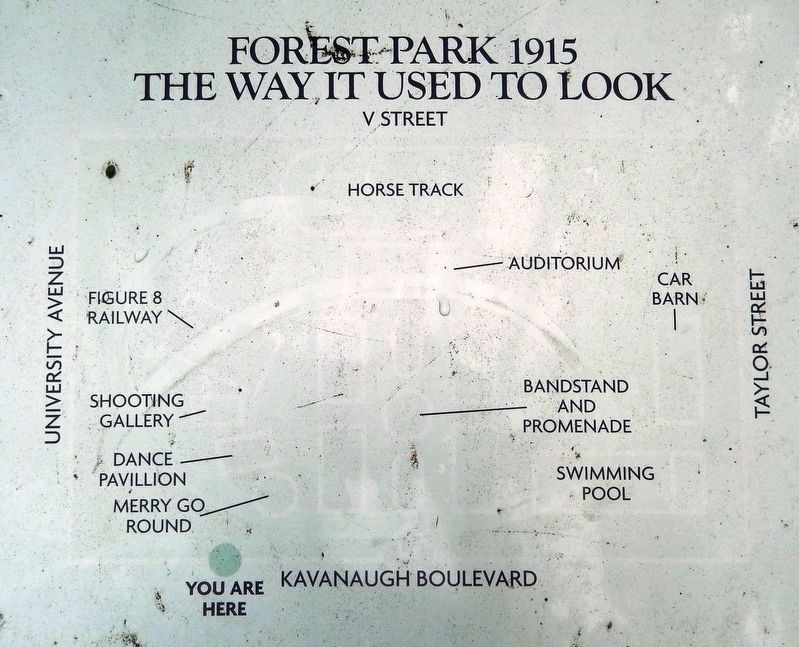
Its attractions included a huge swimming pool and bathhouse, a merry-go-round, a dance pavilion, a shooting gallery, a "laughing gallery," an aerial swing, an auditorium, a refreshment stand, a figure-eight railroad, a promenade and bandstand — even a horse racing track as well as a car barn for the trolley line that ended at Forest Park.
Little Rock's first streetcars, pulled by mules, started running in 1877 and were replaced with electric ones in 1891. That same year, a group of developers bought 800 acres "in the highlands northwest of the city" for $80,000. This purchase was the beginning of Pulaski Heights, an incorporated
this page online
Today, "The Heights" is "enthroned" 350 feet above the city and still providing the amenities sought by earlier residents: "pure air, good water, unrivaled scenery and every modern improvement and convenience known to this age of progressive enterprise."
Erected 2009 by The Heights Neighborhood Association.
Topics. This historical marker is listed in these topic lists: Entertainment • Industry & Commerce • Parks & Recreational Areas • Railroads & Streetcars. A significant historical year for this entry is 1904.
Location. 34° 46.224′ N, 92° 20.365′ W. Marker is in Little Rock, Arkansas, in Pulaski County. It is in Heights. It is at the intersection of Kavanaugh Boulevard and North Grant Street, on the left when traveling east on Kavanaugh Boulevard. Marker is located along the sidewalk on the north side of the street. Touch for map. Marker is in this post office area: Little Rock AR 72207, United States of America. Touch for directions.

Regionally, this marker is in the Quapaw Homeland. It is also in the American South and specifically
2. Marker detail: Promenade & Auditorium
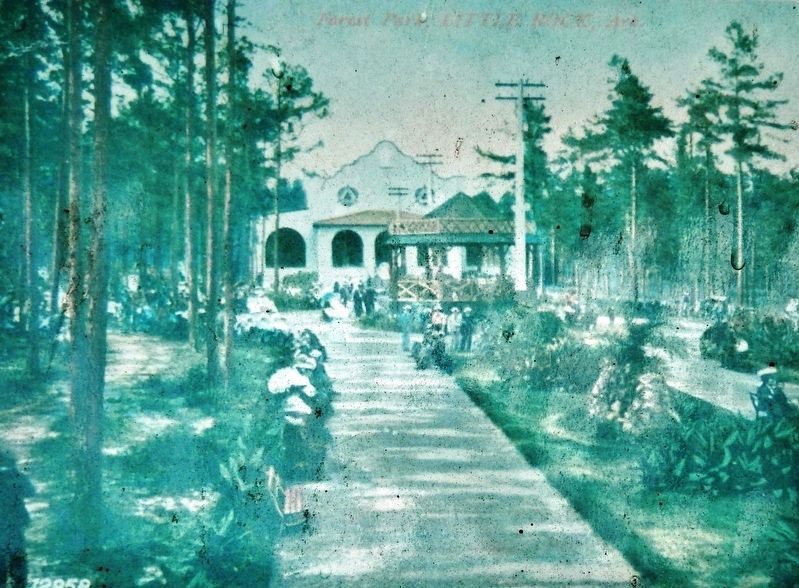
The 40 acres of land leased to the streetcar line for just $1 became a beautiful park including the Promenade, a refreshment stand and the Auditorium. With a seating capacity of 1500, the Auditorium was the venue for the world-famous actress Sarah Bernhardt in one of her "farewell" performances. It drew a crowd of 3000.
Other nearby markers. At least 8 other markers are within 2 miles of this marker, measured as the crow flies: Block Realty-Baker House (approx. 0.9 miles away); Bishop Hiram A. Boaz House (approx. one mile away); War Memorial Golf Course (approx. 1.3 miles away); Memorial Stadium (approx. 1½ miles away); The Story of the Big Dam Bridge Monoliths (approx. 1.6 miles away); The Farmers Home Cemetery (approx. 1.7 miles away); Over the Jumps (approx. 1.7 miles away); Wild Boar (approx. 1.7 miles away). Touch for a list and map of all markers in Little Rock.
Also see . . .
1. Pulaski Heights. Pulaski Heights was the project of Michigan industrialist Henry Franklin Auten, who settled in Little Rock by 1890 and later organized the Pulaski Heights Land Company, which was capitalized at $500,000. He purchased an initial 800
3. Marker detail: Forest Park Swimming Pool
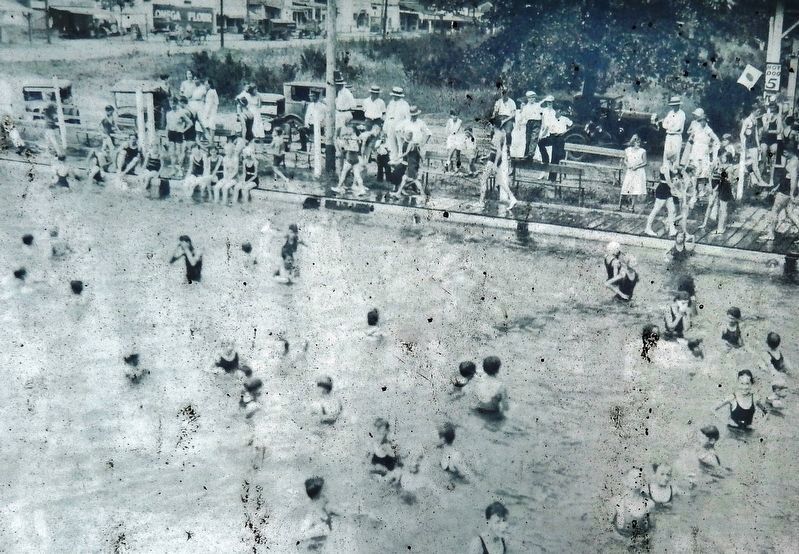
Forest Park's swimming pool was a city block long and half as wide. It was filled by artesian wells and had dressing rooms and a checkroom. Known as one of the finest municipal swimming pools in the south, it was located near what is today the Heights Theater Building. In the fall of 1939, the pool was filled in, the site leveled, and the ground was used for residential construction.
2. Pulaski Heights (Wikipedia). One early attraction of The Heights was Forest Park, developed in 1904 soon after the Little Rock Traction and Electric Company introduced streetcar service into Pulaski Heights in 1903. The park, located at the end of the Pulaski Heights streetcar line, was intended to increase ridership and income for the company, especially on weekends. In 1939, the park was closed and its land sold, although its name is preserved today by the neighborhood Forest Park Elementary School and the Forest Park Station of the United States Postal Service. (Submitted on December 1, 2020, by Cosmos Mariner of Cape Canaveral, Florida.)
4. Marker detail: Forest Park
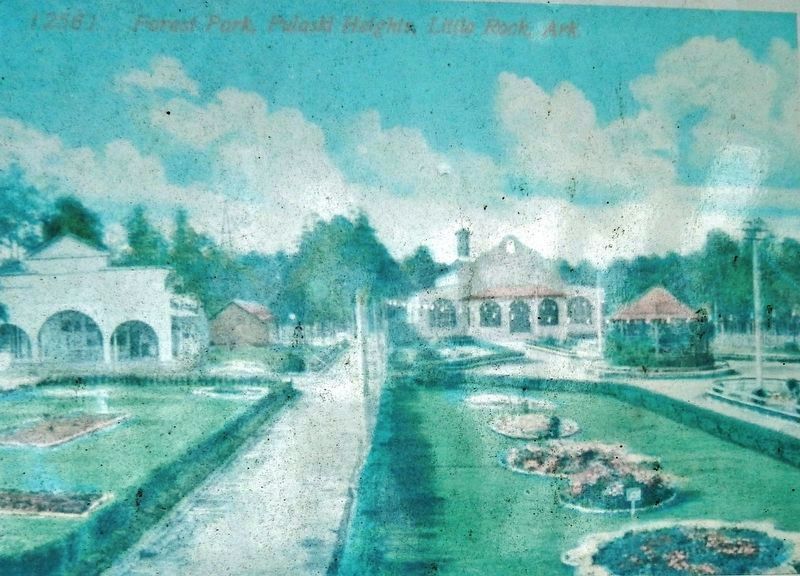
Forest Park was the site of the Pulaski County Fair for several years; and the racetrack, an aerial swing, the "laughing gallery" and shooting gallery were constructed for that purpose. On Sundays, the racetrack was often used for balloon ascensions with an acrobatic balloonist performing from a parachute-supported trapeze.
5. Marker detail: Forest Park Pavilion
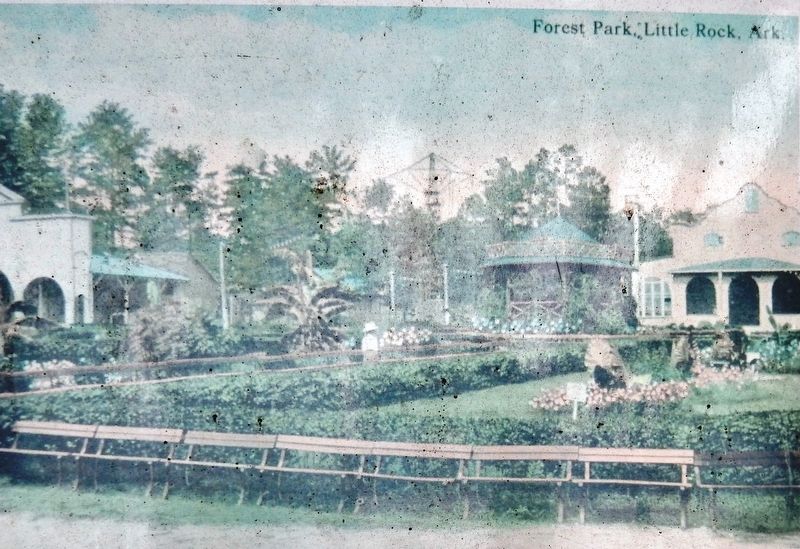
The walks to the Forest Park pavilion were wide and bordered with flower beds. A large white stucco theater stood at the far end of the main walk, and beyond the theater was a small zoo. The entrance to Forest Park was on Kavanaugh Boulevard opposite Pierce Street, where a long shed protected waiting trolley passengers from inclement weather.
6. Marker detail: Forest Park 1915
Photographed by Cosmos Mariner, May 17, 2015
7. The Heights • A History Marker

Photographed by Cosmos Mariner, May 16, 2015
8. Contemporary Electric Streetcar in Little Rock
Credits. This page was last revised on February 10, 2023. It was originally submitted on December 1, 2020, by Cosmos Mariner of Cape Canaveral, Florida. This page has been viewed 1,186 times since then and 139 times this year. Photos: 1, 2, 3, 4, 5, 6, 7, 8. submitted on December 1, 2020, by Cosmos Mariner of Cape Canaveral, Florida.
