
Downtown Los Angeles in Los Angeles County, California — The American West (Pacific Coastal)
Christine Sterling
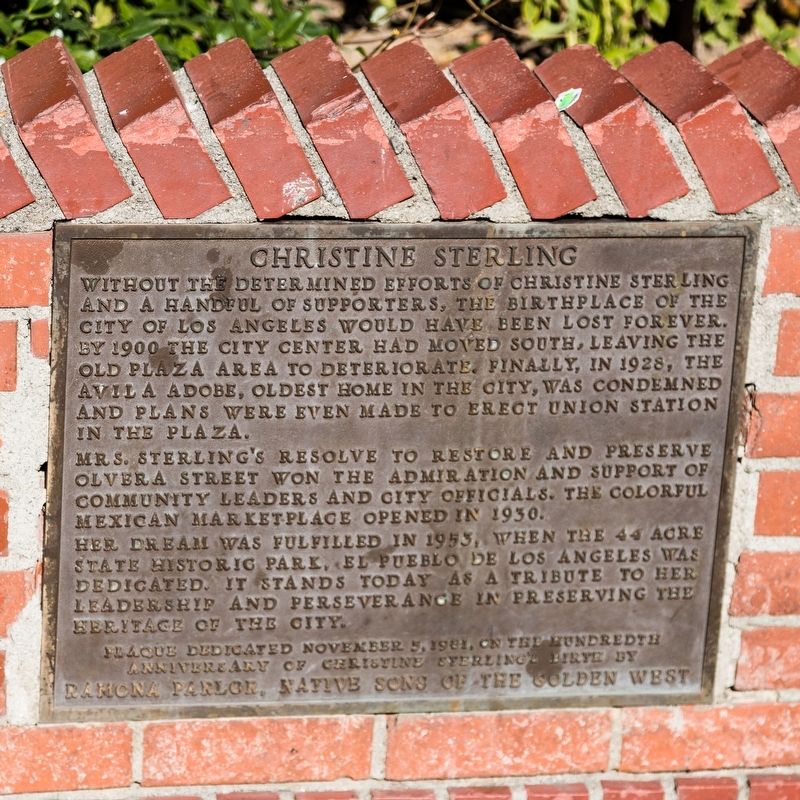
Photographed by J. J. Prats, December 4, 2018
1. Christine Sterling Marker
Mrs. Sterling’s resolve to restore and preserve Olvera Street won the admiration and support of community leaders and city officials. The colorful Mexican marketplace opened in 1930.
Her dream was fulfilled in 1953, when the 44 acre state historic park, El Pueblo de Los Angeles, was dedicated. It stands today as a tribute to her leadership and perseverance in preserving the heritage of the city.
Erected 1981 by the Ramona Parlor, Native Sons of the Golden West. Dedicated on November 5, 1981, on the hundredth anniversary of Christine Sterling’s birth.
Topics and series. This historical marker is listed in these topic lists: Charity & Public Work • Colonial Era • Landmarks • Settlements & Settlers. In addition, it is included
this page online
Location. 34° 3.404′ N, 118° 14.326′ W. Marker is in Los Angeles, California, in Los Angeles County. It is in Downtown Los Angeles. It can be reached from the intersection of Paseo de la Plaza and Olvera Street. It is in the plaza, facing the bandstand. Touch for map. Marker is in this post office area: Los Angeles CA 90012, United States of America. Touch for directions.

Regionally, this marker is in California’s Transverse Ranges. It is also on the American Pacific Coast. Globally, it is in North America, on the Ring of Fire, in the Pacific Rim, in the Western Hemisphere, in the Western World, and in the Anglosphere. Historically, it finds itself in what was once New Spain and also Mexico’s Alta California.
Other nearby markers. At least 8 other markers are within walking distance of this marker: The Original Pueblo of Los Angeles (a few steps from this marker); First Mayor of Los Angeles Under United States Rule (a few steps from this marker); Los Angeles Plaza (a few steps from this marker); Felipe de Neve, 1728–84
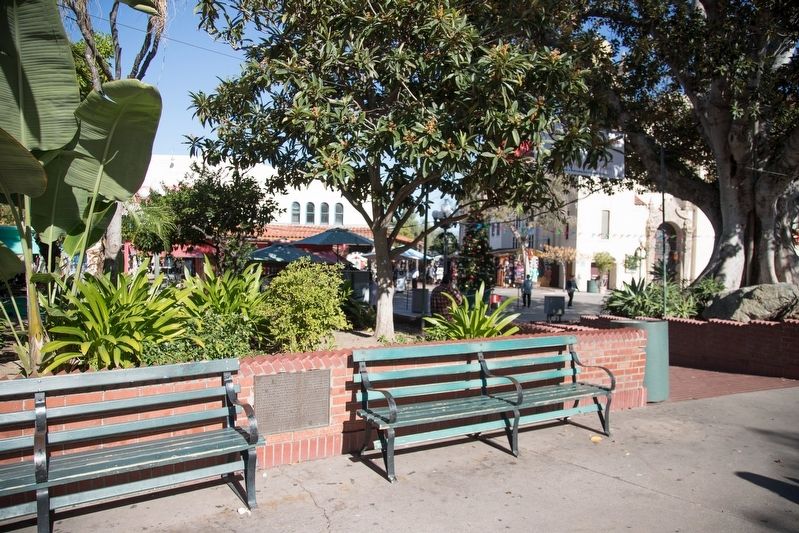
Photographed by J. J. Prats, December 4, 2018
2. Christine Sterling Marker
The Olvera Street shopping arcade begins in the distance.
Also see . . . Looking back at Christine Sterling, the Maternalistic, Problematic “Mother of Olvera Street". 2017 article by Hadley Meares in LA Weekly. Excerpt:
It was then that Sterling realized she should start small. Instead of focusing on saving the entire historic area, she would work toward saving just the Avila Adobe — for the time being. Taking a page out of the Martin Luther playbook, she had a proclamation 10 feet high and 12 feet long printed. She had it sent to the Avila Adobe by express wagon and nailed to its rotting door.(Submitted on December 15, 2020.)
“SHALL WE CONDEMN” touted the history of the Adobe and the importance of keeping its history alive: “If this old landmark is not worthy of preservation, then there is no sentiment, no patriotism, no country, no flag.Los Angeles will be forever marked a transient, orphan city if she allows her roots to rot in a soil impoverished by neglect.”Photographed by J. J. Prats, December 4, 20183. Southern End of Olvera StreetThe plaza is behind the photographer.
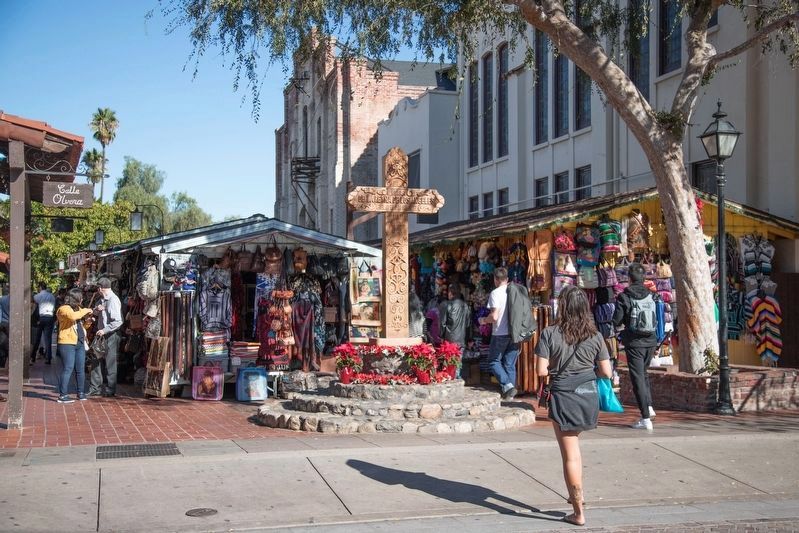
Photographed by J. J. Prats, December 4, 2018
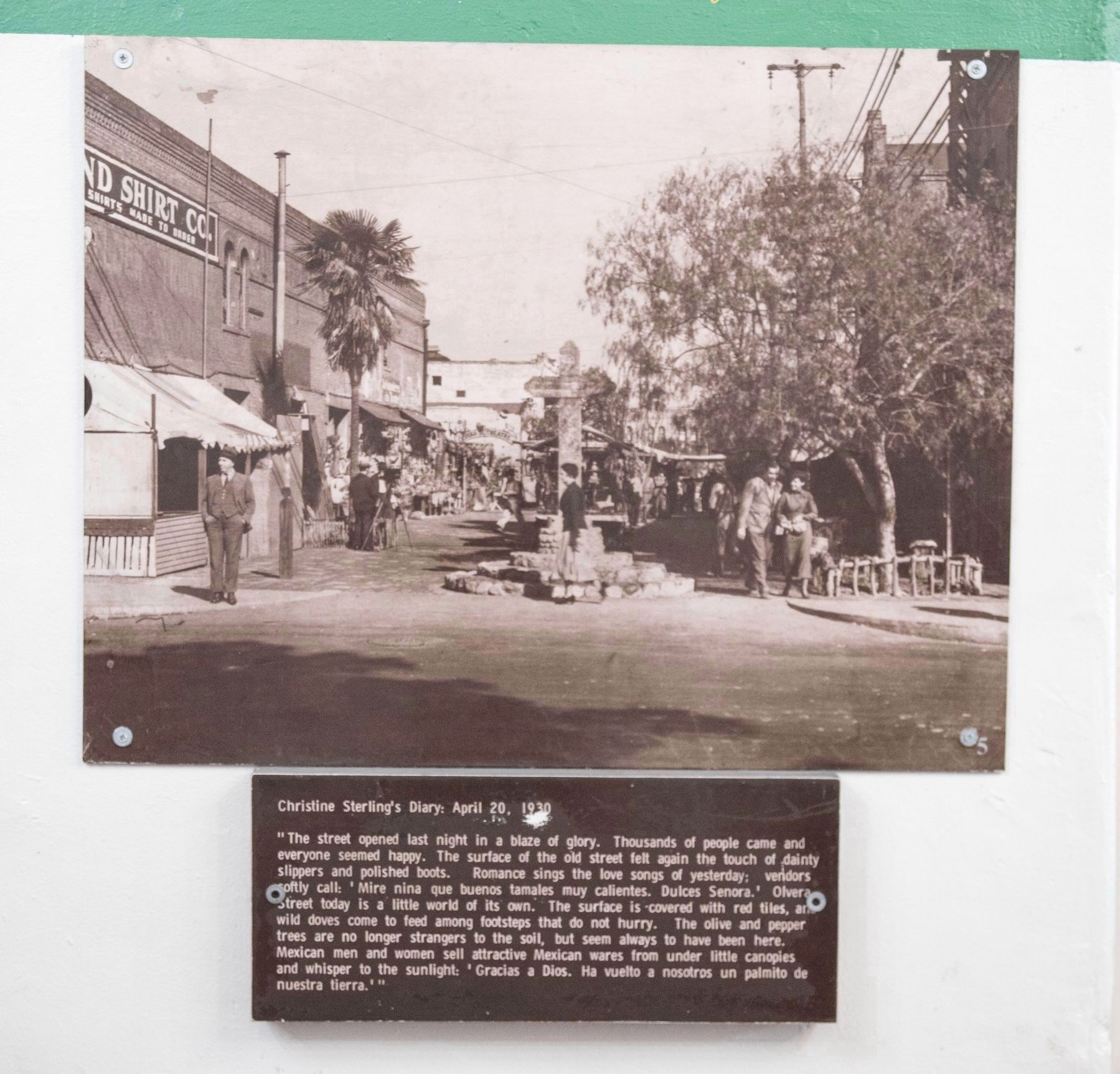
4. Southern End of Olvera Street in 1930
This and numerous other historic photos of Olvera Street and the plaza are in an installation on the hallways of the Old Winery, 12 Olvera Street, open to the public at no charge. The card below the photograph reads:
Christine Sterling’s Diary: April 20, 1930
“The street opened last night in a blaze of glory. Thousands of people came and everyone seemed happy. The surface of the old street felt again the touch of dainty slippers and polished boots. Romance sings the love songs of yesterday; vendors softly call: ‘Mire niña que buenos.’ ‘Tamales muy calientes.’ ‘Dulces Señora.’
“Olvera street today is a little world of its own. The surface is covered with red tiles, and wild doves come to feed among footsteps that do not hurry. The olive and pepper trees are no longer strangers to the soil, but seem always to have been there. Mexican men and women sell attractive Mexican wares from under little canopies and whisper to the sunlight: ‘Gracias a Dios. Ha vuelto a nosotros un palmito de nuestra tierra.’”
Credits. This page was last revised on January 30, 2023. It was originally submitted on December 15, 2020, by J. J. Prats of Powell, Ohio. This page has been viewed 695 times since then and 37 times this year. Photos: 1, 2, 3. submitted on December 15, 2020, by J. J. Prats of Powell, Ohio. 4. submitted on December 21, 2020, by J. J. Prats of Powell, Ohio.
