St. Charles in St. Charles County, Missouri — The American Midwest (Upper Plains)
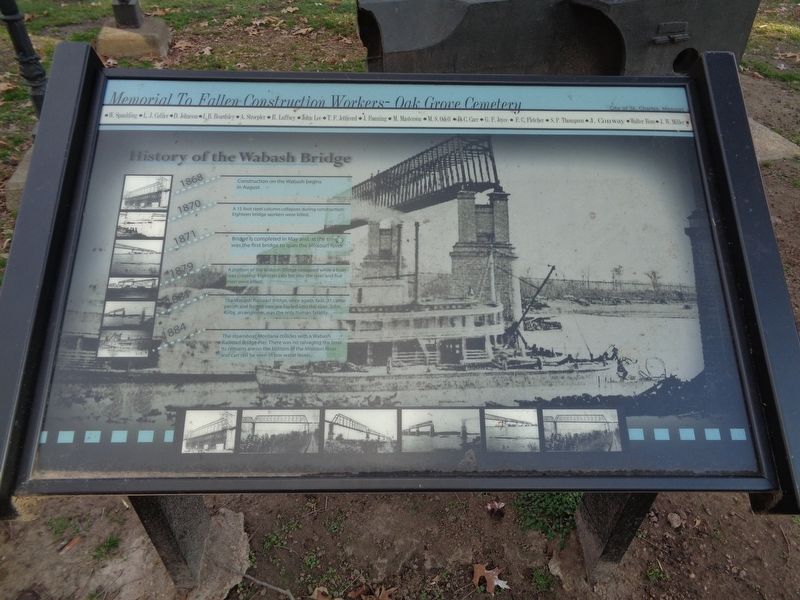
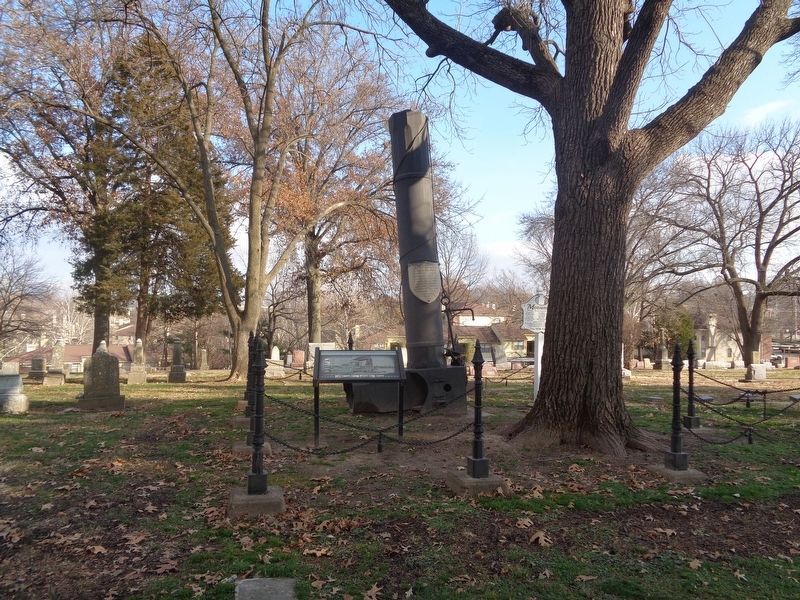
Memorial To Fallen Construction Workers - Oak Grove Cemetery
Photographed by Jason Voigt, December 16, 2020
1. Memorial To Fallen Construction Workers - Oak Grove Cemetery Marker
W Spaulding • L.J. Collier • D. Johnson • J. B. Beardsley • A. Stroepler • R. Luffsey • John Lee • T.F. Jetticord • J. Fanning • M. Masterson • M.S. Odell • D.C. Carr • G.F. Joyce • F.C. Fletcher • S.P. Thompson • J. Conway • Walter Ross • J.W. Miller
History of the Wabash Bridge
1868 - Construction on the Wabash begins in August.
1870 - A 15 foot steel column collapses during construction. Eighteen bridge workers were killed.
1871 - Bridge is completed in May and, at the time was the first bridge to span the Missouri River.
1879 - A portion of the Wabash Bridge collapsed while a train was crossing. Eighteen cars fell into the river and five men were killed.
1881 - The Wabash Railroad Bridge, once again, fails. 31 cattle perish and freight cars are hurled into the river. John Kirby, an engineer, was the only human fatality.
1884 - The steamboat Montana collides with a Wabash Railroad Bridge Pier. There was no salvaging the boat. Its remains are on the bottom of the Missouri River and can still be seen in low water levels.
Erected by City of St. Charles, Missouri.
Topics.
this page online
Location. 38° 47.145′ N, 90° 31.23′ W. Marker is in St. Charles, Missouri, in St. Charles County. It can be reached from Clay Street north of Westbury Court. The marker is located at Oak Grove Cemetery. Touch for map. Marker is at or near this postal address: 2700 W Clay Street, Saint Charles MO 63301, United States of America. Touch for directions.

Regionally, this marker is in the Missouri River Corridor and in Greater St. Louis. It is also in the American Midwest, in the Lewis & Clark Corridor, in the Corn Belt, and in the Great River Road Region. Globally, it is in North America, the Western Hemisphere, the Western World, and the Anglosphere. Historically, it finds itself in what was once the territory of the Mississippian Culture, the Louisiana Purchase, and the Antebellum South.
Other nearby markers. At least 8 other markers are within 2 miles of this marker, measured as the crow flies: Lou Brock Sports Complex (approx.
Photographed by Jason Voigt, December 16, 2020
2. Memorial To Fallen Construction Workers - Oak Grove Cemetery Marker
Another marker is no longer nearby. Fisher-Senden House (was approx. 1.3 miles away but has been confirmed missing).
Photographed by Jason Voigt, December 16, 2020
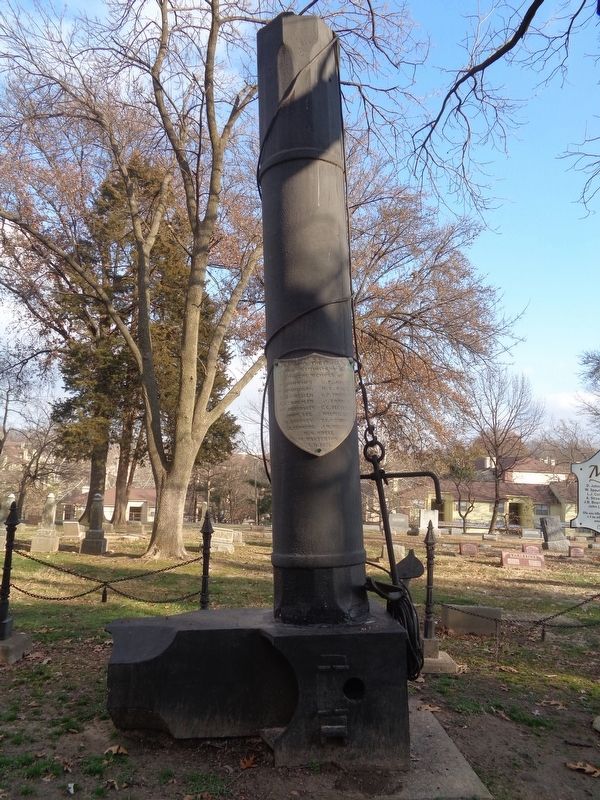
3. Memorial To Fallen Construction Workers - Oak Grove Cemetery Marker
Part of the memorial
Photographed by Jason Voigt, December 16, 2020
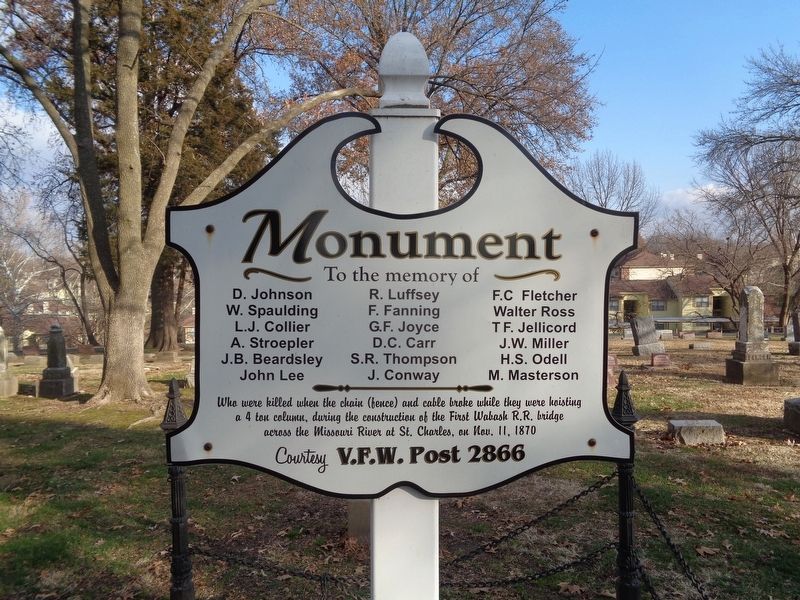
4. Memorial To Fallen Construction Workers
Lists all the victims on this sign
Credits. This page was last revised on March 25, 2024. It was originally submitted on December 31, 2020, by Jason Voigt of Glen Carbon, Illinois. This page has been viewed 1,080 times since then and 219 times this year. Photos: 1, 2, 3, 4. submitted on December 31, 2020, by Jason Voigt of Glen Carbon, Illinois.
