Moore Haven in Glades County, Florida — The American South (South Atlantic)
"Lone Cypress" and Everglades Drainage
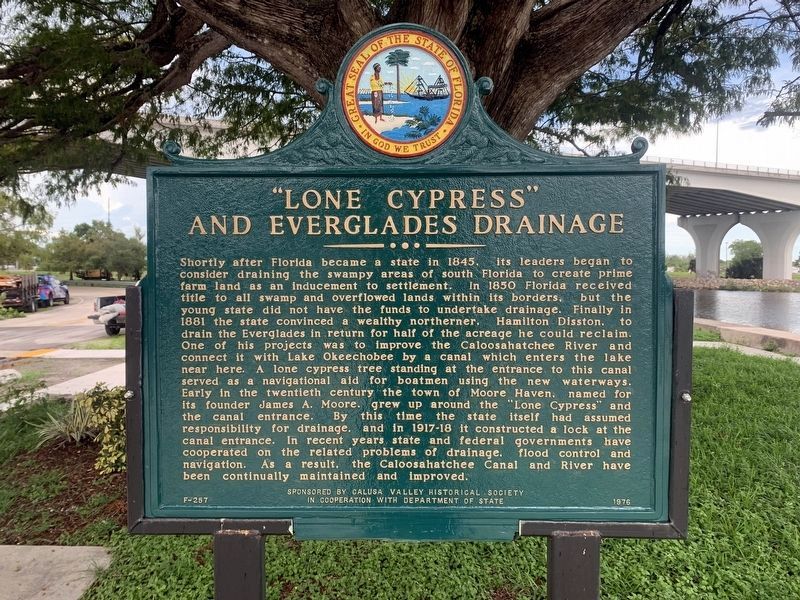
Photographed by Tim Fillmon, June 26, 2024
1. "Lone Cypress" and Everglades Drainage Marker
After restoration
this page online
Erected 1976 by Calusa Valley Historical Society in Cooperation with Department of State. (Marker Number F-257.)
Topics. This historical marker is listed in these topic lists: Industry & Commerce • Waterways & Vessels. A significant historical year for this entry is 1845.
Location. 26° 49.952′ N, 81° 5.377′ W. Marker is in Moore Haven, Florida, in Glades County. It is at the intersection of Riverside Drive SW and Avenue J SW, on the right when traveling north on Riverside Drive SW. Touch for map. Marker is in this post office area: Moore Haven FL 33471, United States of America. Touch for directions.

Regionally, this marker is in the Everglades. It is also in the American South. Globally, it is in the North Atlantic Region, North America, a Gulf of Mexico state, the Western Hemisphere, the Western World, and the Anglosphere. Historically, it finds itself in what was once New Spain, the territory of the Mississippian Culture, one of the Confederate States of America, and the Antebellum South.
Other nearby markers. At
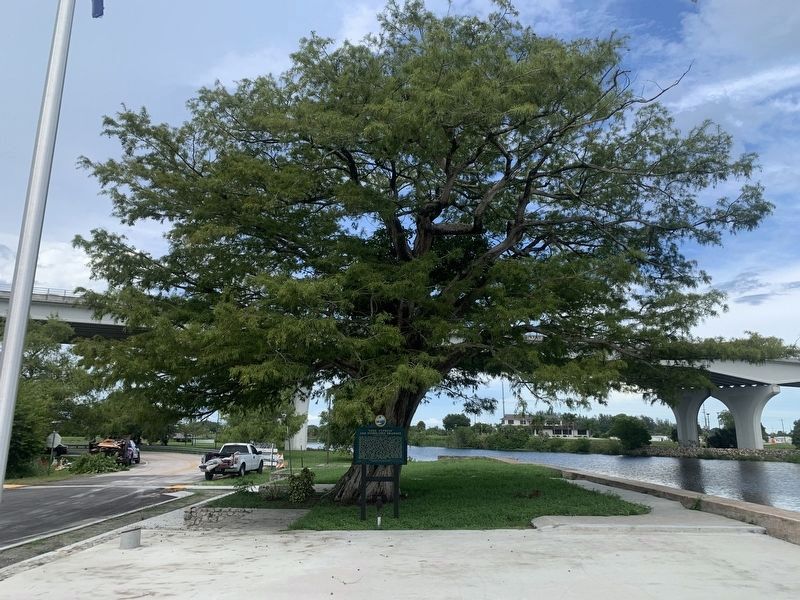
Photographed by Tim Fillmon, June 26, 2024
2. "Lone Cypress" and Everglades Drainage Marker with cypress
Another marker is no longer nearby. Billie Bowlegs (III) (was approx. 6 miles away but has been confirmed missing).
Also see . . . 1928 Okeechobee Hurricane. (Submitted on February 24, 2009, by B. Jackson of Maitland, Florida.)
Additional commentary.
1. Moore Haven Past
The town of Moore Haven is the government seat of Glades County. It is located on the banks of the Caloosahatchee River, where it was founded in 1915. It was a thriving community until the deadly "Miami Hurricane" of 1926 killed 150-200 town residents and destroyed most of the downtown buildings. Once again tragedy struck during 1928 when the entire Okeechobee region was flooded by another hurricane killing an estimated 2500. Along with structural damage to towns and agricultural land, the hurricane was very devastating to the residents' morale. Because of the aftermath of the 1928
Photographed by B. Jackson, February 23, 2009
3. "Lone Cypress" and Everglades Drainage Marker
— Submitted February 24, 2009, by B. Jackson of Maitland, Florida.

Photographed by B. Jackson, February 22, 2009
4. "Lone Cypress" and Everglades Drainage Marker
The photograph shows the Lone Cypress as it appears in late winter alongside the historical marker describing its significance. In the background rises the Hwy 27 bridge which crosses over the Caloosahatchee Canal into the town of Moore Haven.
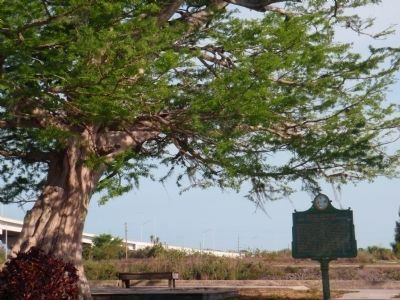
Photographed by B. Jackson, February 22, 2009
5. "Lone Cypress" and Everglades Drainage Marker
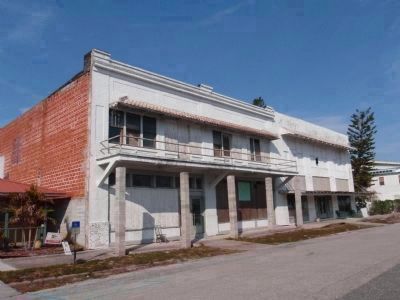
Photographed by B. Jackson, February 23, 2009
6. Downtown Moore Haven
Old downtown Moore Haven at the intersection of 1st Street and Avenue J SW.
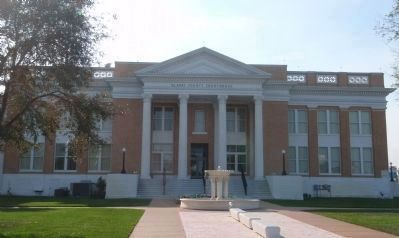
Photographed by B. Jackson, February 22, 2009
7. Glades County Court House
Glades County was formed from DeSoto County in 1921 and was originally intended to be named "Muck County" due to the abundance of the rich, dark soil used throughout the county for producing sugarcane, citrus, and cattle forage. The courthouse was constructed in 1928 from a design by E. C. Hosford.
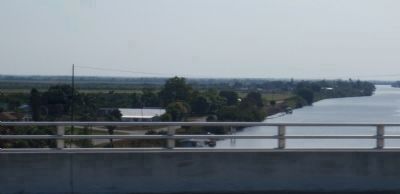
Photographed by B. Jackson, February 23, 2009
8. Highway 27 Bridge
Highway 27 Bridge crossing over the Caloosahatchee River and the "Lone Cypress" into the town of Moore Haven.
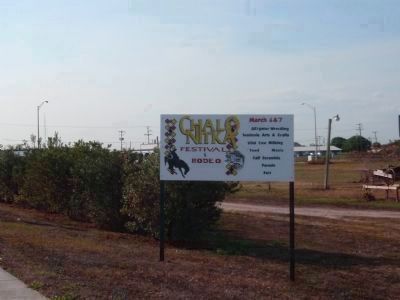
Photographed by B. Jackson, February 22, 2009
9. Chalo Nitka Festival
The Chalo Nitka ( Seminole for "Big Bass") Festival has been held in the town of Moore Haven since 1949. The festival reflects the area's Native American Heritage and the culture of rural south Florida.
Credits. This page was last revised on June 30, 2024. It was originally submitted on February 23, 2009, by B. Jackson of Maitland, Florida. This page has been viewed 4,282 times since then and 96 times this year. Photos: 1, 2. submitted on June 30, 2024, by Tim Fillmon of Webster, Florida. 3. submitted on February 24, 2009, by B. Jackson of Maitland, Florida. 4. submitted on February 23, 2009, by B. Jackson of Maitland, Florida. 5, 6, 7, 8, 9. submitted on February 24, 2009, by B. Jackson of Maitland, Florida. • Kevin W. was the editor who published this page.
