Quihi in Medina County, Texas — The American South (West South Central)
Quihi Bethlehem Lutheran Church Cemetery
Photographed by James Hulse, June 14, 2020
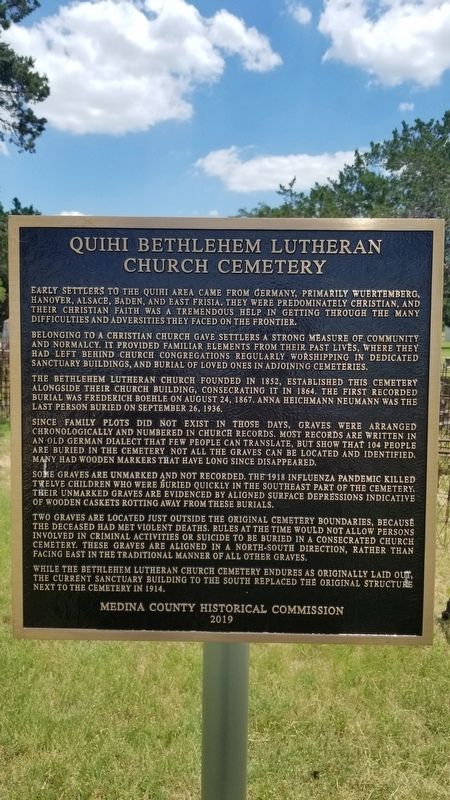
1. Quihi Bethlehem Lutheran Church Cemetery Marker
Early settlers to the Quihi area came from Germany, primarily Wuertemberg, Hanover, Alsace, Baden, and East Frisia. They were predominately Christian, and their Christian faith was a tremendous help in getting through the many difficulties and adversities they faced on the frontier.
Belonging to a Christian Church gave settlers strong measure of community and normalcy. It provided familiar elements from their past lives, where they had left behind church congregations regularly worshipping in dedicated sanctuary buildings, and burial of loved ones in adjoining cemeteries.
The Bethlehem Lutheran Church founded in 1852, established this cemetery alongside their church building, consecrating it in 1864. The first recorded burial was Frederich Boehle on August 24, 1867. Anna Heichmann Neumann was the last person buried on September 26, 1936.
Since family plots did not exist in those days, graves were arranged chronologically and numbered in church records. Most records are written in an old German dialect that few people can translate, but show that 104 people are buried in the cemetery not all the graves can be located and identified. Many had wooden markers that have long since disappeared.
Some graves are unmarked and not recorded. The 1918 influenza pandemic killed twelve children who were buried quickly in the southeast part of the cemetery. Their unmarked graves are evidenced by aligned surface depressions indicative of wooden caskets rotting away from these burials.
Two graves are located just outside the original cemetery boundaries, because the deceased had met violent deaths, rules at the time would not allow persons involved in criminal activities or suicide to be buried in a consecrated church cemetery. These graves are aligned in a north-south direction, rather than facing east in the traditional
this page online
While the Bethlehem Lutheran Church Cemetery endures as originally laid out, the current sanctuary building to the south replaced the original structure next to the cemetery in 1914.
Erected 2019 by Medina County Historical Commission.
Topics. This historical marker is listed in these topic lists: Cemeteries & Burial Sites • Settlements & Settlers. A significant historical date for this entry is August 24, 1867.
Location. 29° 23.653′ N, 99° 1.801′ W. Marker is in Quihi, Texas, in Medina County. It is at the intersection of Farm to Market Road 2676 and County Highway 4520, on the right when traveling west on Highway 2676. The Cemetery and marker are located northwest of the the Quihi Bethlehem Lutheran Church. Touch for map. Marker is at or near this postal address: 3901 FM 2676, Hondo TX 78861, United States of America. Touch for directions.

Regionally, this marker is in the Hill Country and in the San Antonio Metropolitan Area. Globally, it is in North America, a Gulf of Mexico state, the Western Hemisphere, the Western World, and the Anglosphere. Historically, it finds itself in what was once New
Photographed by James Hulse, June 14, 2020
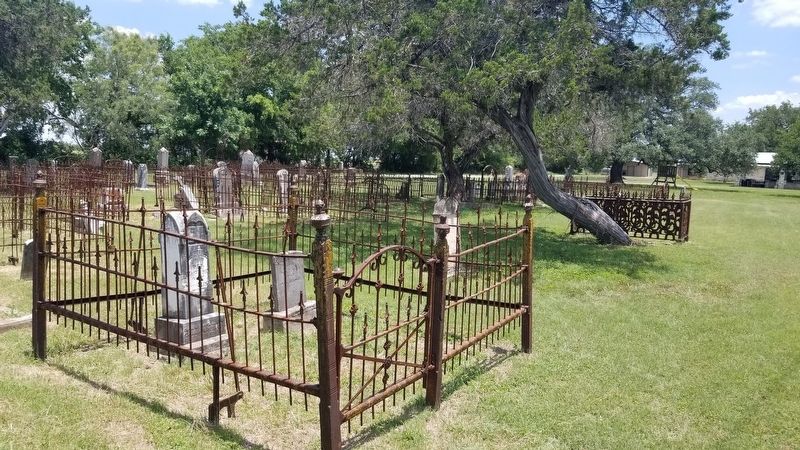
2. The view of the front of the Quihi Bethlehem Lutheran Church Cemetery
Other nearby markers. At least 8 other markers are within 4 miles of this marker, measured as the crow flies: Bethlehem Lutheran Church (within shouting distance of this marker); a different marker also named Bethlehem Lutheran Church (within shouting distance of this marker); General Woll's Road (about 700 feet away, measured in a direct line); Town of Quihi (approx. ¼ mile away); New Fountain United Methodist Church (approx. 1.8 miles away); Early New Fountain Community (approx. 1.8 miles away); Masonic Cemetery (approx. 3½ miles away); Dunlay (approx. 3.7 miles away). Touch for a list and map of all markers in Quihi.
Photographed by James Hulse, June 14, 2020
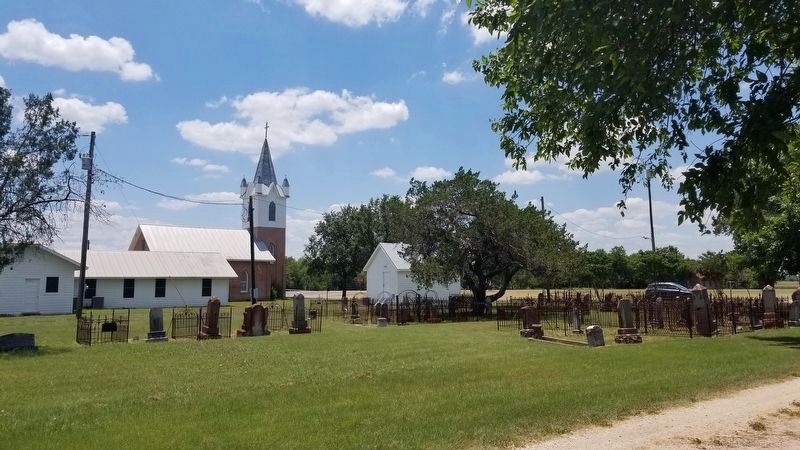
3. The view from the back of the church and cemetery
Credits. This page was last revised on January 10, 2021. It was originally submitted on January 10, 2021, by James Hulse of Medina, Texas. This page has been viewed 657 times since then and 57 times this year. Photos: 1, 2, 3. submitted on January 10, 2021, by James Hulse of Medina, Texas. • J. Makali Bruton was the editor who published this page.
