Naples in Collier County, Florida — The American South (South Atlantic)
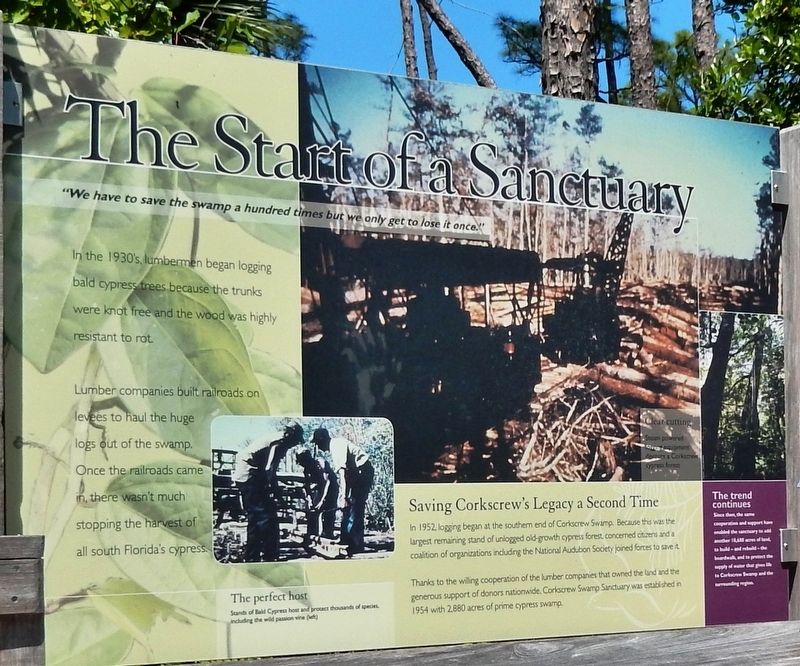
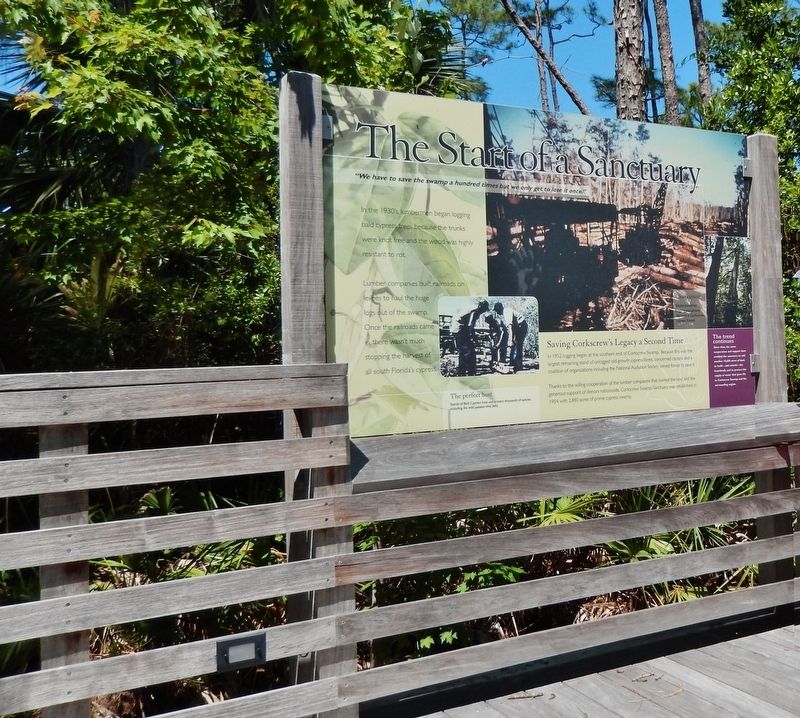
The Start of a Sanctuary
Photographed by Cosmos Mariner, March 26, 2014
1. The Start of a Sanctuary Marker
In the 1930’s lumbermen began logging bald cypress trees because the trunks were knot-free and the wood was highly resistant to rot.
Lumber companies built railroads on levees to haul the huge logs out of the swamp. Once the railroads came in, there wasn’t much stopping the harvest of all south Florida’s cypress.
Saving Corkscrew’s Legacy a Second Time
In 1952, logging began at the southern end of Corkscrew Swamp. Because this was the largest remaining stand of unlogged old-growth cypress forest, concerned citizens and a coalition of organizations including the National Audubon Society joined forces to save it.
Thanks to the willing cooperation of the lumber companies that owned the land and the generous support of donors nationwide, Corkscrew Swamp Sanctuary was established in 1954 with 2,880 acres of prime cypress swamp.
The trend continues
Since then, the same cooperation and support have enabled the sanctuary to add another 10,680 acres of land, to build — and rebuild — the boardwalk, and to protect the supply of water that
this page online
[photo captions]
• Clear cutting
Steam powered logging equipment devours a Corkscrew cypress forest
• The perfect Host
Stands of Bald Cypress host and protect thousands of species, including the wild passion vine (left background image).
Topics. This historical marker is listed in these topic lists: Environment • Horticulture & Forestry • Industry & Commerce • Parks & Recreational Areas. A significant historical year for this entry is 1952.
Location. 26° 22.554′ N, 81° 36.244′ W. Marker is in Naples, Florida, in Collier County. It can be reached from Rookery Lane north of Sanctuary Road West, on the left when traveling north. Marker is located along the boardwalk approaching the Corkscrew Sanctuary Visitor Center. Touch for map. Marker is at or near this postal address: 375 Sanctuary Road West, Naples FL 34120, United States of America. Touch for directions.

Regionally, this marker is on the Gulf Coast. It is also in the American South and on the Gulf Coast. Globally, it is in the North Atlantic Region, North America, a Gulf of Mexico state, the Western Hemisphere,
Photographed by Cosmos Mariner, March 26, 2014
2. The Start of a Sanctuary Marker
Other nearby markers. At least 8 other markers are within walking distance of this marker: Protecting the Plume Birds (a few steps from this marker); What Makes Corkscrew Swamp Special? (within shouting distance of this marker); Corkscrew Swamp Sanctuary (within shouting distance of this marker); Landmark Cypress № 12 - “Hemenway” (about 300 feet away, measured in a direct line); Landmark Cypress № 9 - “Green” (about 700 feet away); Landmark Cypress № 6 - “Baker - Currey” (approx. 0.2 miles away); Landmark Cypress № 5 — “Bradley” (approx. 0.2 miles away); Landmark Cypress № 12 — "Baker-Curry" (approx. ¼ mile away). Touch for a list and map of all markers in Naples.
Related markers. Click here for a list of markers that are related to this marker. Corkscrew Swamp Sanctuary
Also see . . .
1. Corkscrew Swamp Sanctuary History. Systematic logging of South Florida cypress forests
Photographed by Cosmos Mariner, March 26, 2014
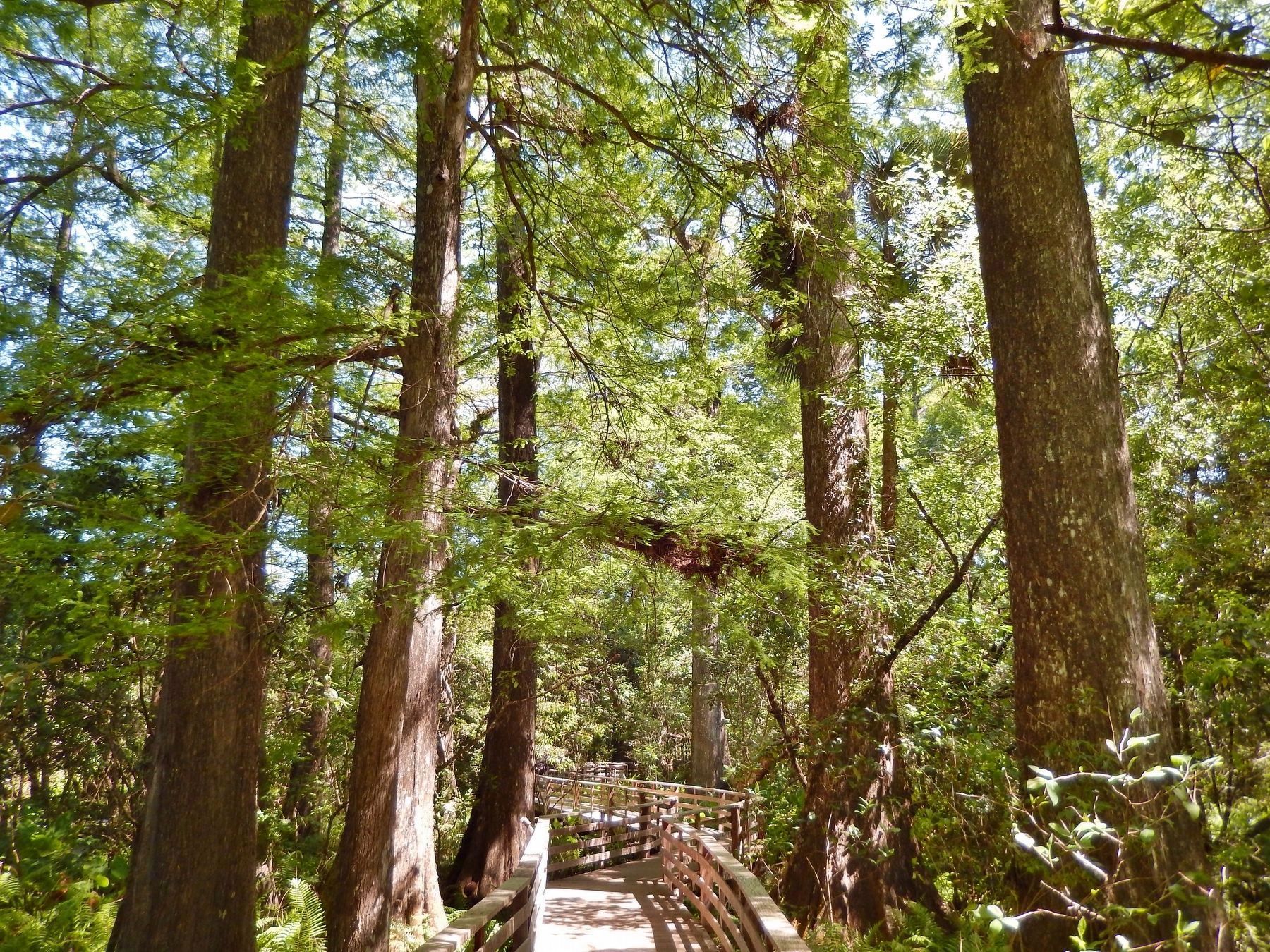
3. Corkscrew Boardwalk through Old-Growth Cypress Swamp
2. Corkscrew Swamp Sanctuary (Wikipedia). The sanctuary was established to protect one of the largest remaining stands of bald cypress (Taxodium distichum) and pond cypress (T. ascendens) in North America from extensive logging that was ongoing throughout the 1940s and 1950s. The National Audubon Society accepted responsibility for management and started constructing the first boardwalk through the swamp in 1955. (Submitted on January 18, 2021, by Cosmos Mariner of Cape Canaveral, Florida.)
Credits. This page was last revised on January 18, 2021. It was originally submitted on January 16, 2021, by Cosmos Mariner of Cape Canaveral, Florida. This page has been viewed 334 times since then and 22 times this year. Photos: 1. submitted on January 17, 2021, by Cosmos Mariner of Cape Canaveral, Florida. 2, 3. submitted on January 18, 2021, by Cosmos Mariner of Cape Canaveral, Florida.
