Williamsburg, Virginia — The American South (Mid-Atlantic)
Battle of Williamsburg
The Bloody Ravine
| — | 1862 Peninsula Campaign | — |
Photographed by Bill Coughlin, August 10, 2008
1. Battle of Williamsburg Marker
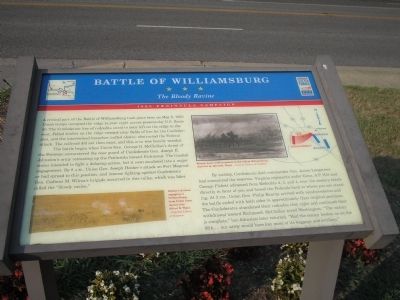
The battle began when Union Gen. George B. McClellan’s Army of the Potomac encountered the rear guard of Confederate Gen. Joseph E. Johnston’s army retreating up the Peninsula toward Richmond. The Confederates intended to fight a delaying action, but it soon escalated into a major engagement. By 8 A.M., Union Gen. Joseph Hooker’s attack on Fort Magruder had spread to this position, and intense fighting against Confederate Gen. Cadmus M. Wilcox’s brigade occurred in this valley, which was later called the “bloody ravine.”
By midday, Confederate field commander Gen. James Longstreet had committed the reserves. Virginia regiments under Gens. A.P. Hill and George Pickett advanced
this page online
Erected by Virginia Civil War Trails.
Topics and series. This historical marker is listed in this topic list: War, US Civil. In addition, it is included in the Virginia Civil War Trails series list. A significant historical date for this entry is May 5, 1862.
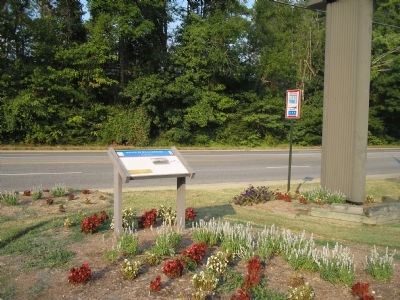
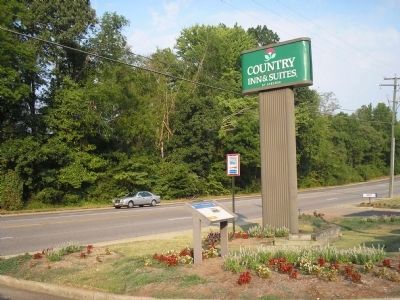
Location. 37° 15.594′ N, 76° 40.409′ W. Marker is in Williamsburg, Virginia. It is on Pocahontas Trail (U.S. 60), on the right when traveling east. Touch for map. Marker is in this post office area: Williamsburg VA 23185, United States of America. Touch for directions.

Regionally, this marker is on Virginia’s Peninsula, in Coastal
Photographed by Bill Coughlin, August 10, 2008
2. Battle Map from Marker
Other nearby markers. At least 8 other markers are within walking distance of this marker: Quarterpath Road (approx. 0.4 miles away); Peninsula Campaign (approx. 0.4 miles away); a different marker also named The Battle of Williamsburg (approx. 0.4 miles away); History of Fort Magruder (approx. 0.4 miles away); The Jersey Boys (approx. 0.4 miles away); Fort Magruder (approx. half a mile away); Confederate Soldiers and Sailors Monument (approx. half a mile away); a different marker also named Fort Magruder (approx. half a mile away). Touch for a list and map of all markers in Williamsburg.
Other markers no longer nearby. Magruder’s Defenses
Photographed by Bill Coughlin, August 10, 2008
3. Marker on Pocahontas Trail
More about this marker. The marker contains two pictures depicted by Alfred R. Waud. – Courtesy Library of Congress. The bottom left of the marker contains a picture of “Hooker’s division engaging at Williamsburg, from Union lines” and in a picture at the top of the marker, “Kearny leads reinforcements in the rain at Williamsburg.”
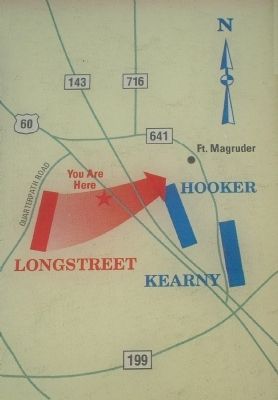
The top right of the marker features a battle map showing troop movements during the May 5, 1862 Battle of Williamsburg.
Also see . . .
1. Battle of Williamsburg, 5 May 1862. Williamsburg was the first large battlefield encounter between Union and Confederate forces during the Peninsula Campaign of 1862. (Submitted on August 17, 2008, by Bill Coughlin of Woodland Park, New Jersey.)
2. The Peninsula Campaign of 1862. (Submitted on August 17, 2008, by Bill Coughlin of Woodland Park, New Jersey.)
3. Tidewater Virginia, The 1862 Peninsula Campaign. Civil
Photographed by Bill Coughlin, August 10, 2008
4. Battle of Williamsburg Marker
This location saw the most intense fighting during the May 5, 1862 battle in which the troops of Kearny and Hooker engaged the Confederate rear guard under Longstreet.
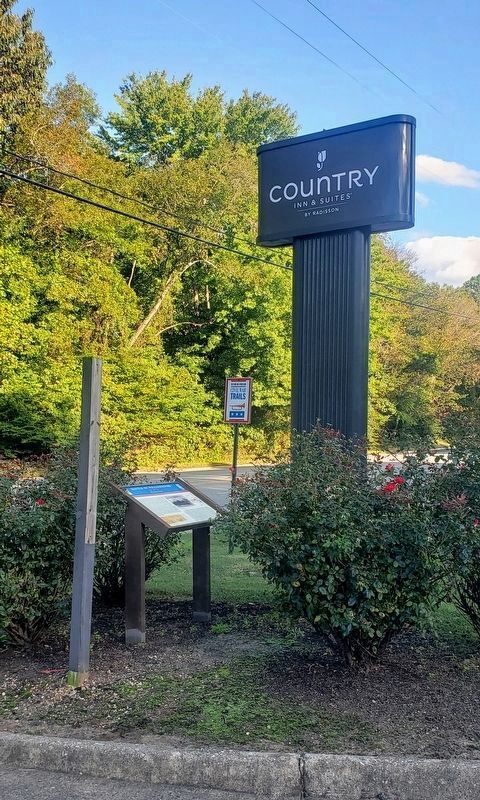
Photographed by Bradley Owen, October 17, 2021
5. Battle of Williamsburg Marker
Credits. This page was last revised on November 3, 2024. It was originally submitted on August 17, 2008, by Bill Coughlin of Woodland Park, New Jersey. This page has been viewed 4,544 times since then and 107 times this year. Last updated on January 17, 2021, by Bradley Owen of Morgantown, West Virginia. Photos: 1, 2, 3, 4. submitted on August 17, 2008, by Bill Coughlin of Woodland Park, New Jersey. 5. submitted on October 17, 2021, by Bradley Owen of Morgantown, West Virginia. • J. Makali Bruton was the editor who published this page.
