
Portsmouth in Scioto County, Ohio — The American Midwest (Great Lakes)
Introduction
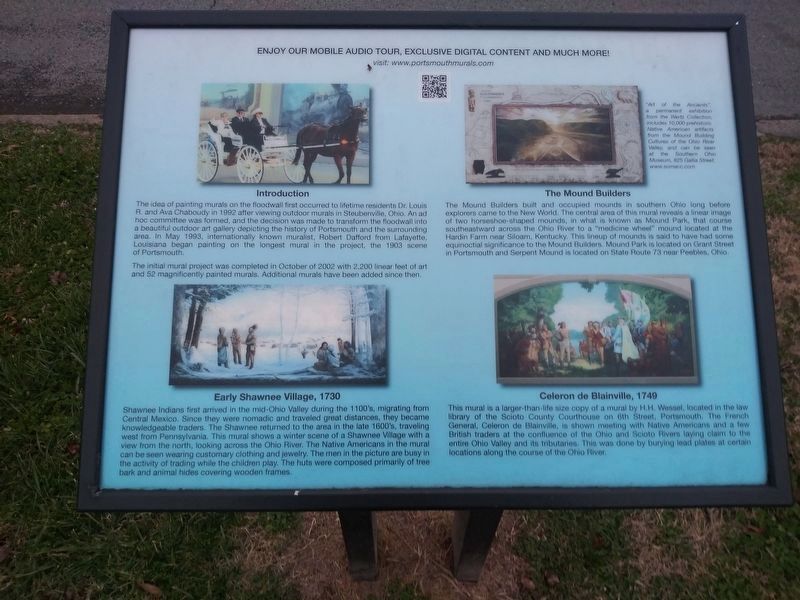
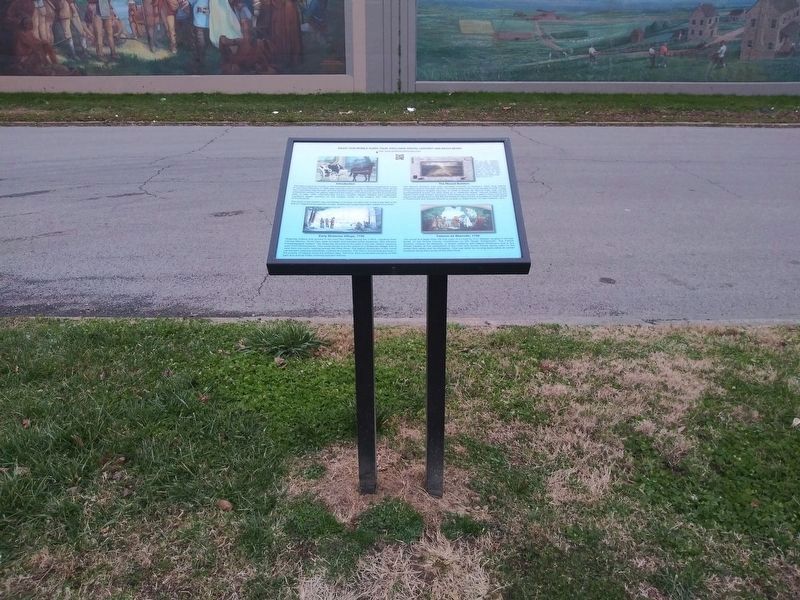
Floodwall Murals, 2000 Feet of History
⎯⎯⎯
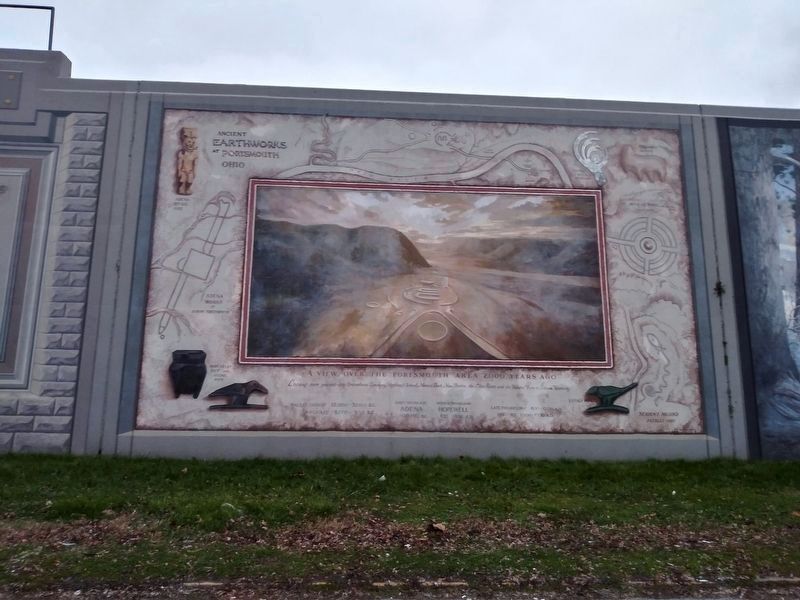
The Mound Builders
⎯⎯⎯
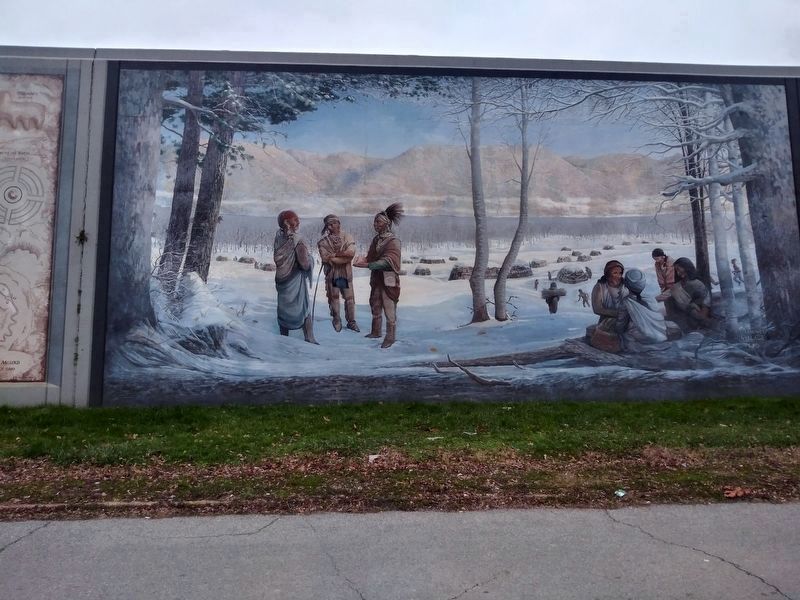
Early Shawnee Village, 1730
⎯⎯⎯
Celeron de Blainville, 1749
2000 Feet of Art
Photographed by Craig Doda, January 7, 2021
1. Introduction / The Mound Builders / Early Shawnee Village, 1730 / Celeron de Blainville, 1749 Marker
The initial mural project was completed in October of 2002 with 2,200 linear feet of art and 52 magnificently painted murals. Additional murals have been added since then.
this page online
"Art of the Ancients", a permanent exhibition from the Wertz Collection, includes 10,000 prehistoric Native American artifacts from the Mound Building Cultures of the Ohio River Valley, and can be seen at the Southern Ohio Museum, 825 Gallia Street. www.somacc.com
Photographed by Craig Doda, January 7, 2021
2. Introduction / The Mound Builders / Early Shawnee Village, 1730 / Celeron de Blainville, 1749 Marker
Topics and series. This historical marker is listed in these topic lists: Arts, Letters, Music • Colonial Era • Indigenous Peoples and Communities • Settlements & Settlers. In addition, it is included in the Ohio, Portsmouth, Floodwall Murals series list. A significant historical month for this entry is May 1993.
Location. 38° 43.844′ N, 83° 0.03′ W. Marker is in Portsmouth, Ohio, in Scioto County. It is on Front Street just east of Court Street, on the left when traveling east. Touch for map. Marker is at or near this postal address: 613 Front St, Portsmouth OH 45662, United States of America. Touch for directions.

Regionally, this marker is in Southern
Photographed by Craig Doda, January 7, 2021
3. The Mound Builders mural
Other nearby markers. At least 8 other markers are within walking distance of this marker: Alexandria / Alexandria Flood / Stone House / Court Street Gateway (here, next to this marker); Platting of Portsmouth, 1803 / The 1810 House / The 1812 Era / Flood Gate House / Early Boneyfiddle (within shouting distance of this marker); James M. Ashley and the Abolition of Slavery (about 300 feet away, measured in a direct line); Stagecoach / Hanging Rock Region / Ohio and Erie Canal / Early Industries (about 300 feet away); Flood of 1937 (about 300 feet away); Portsmouth and the Ohio River (about 500 feet away); First Presbyterian Church (about 600 feet away); Tenth Street Station / Market Square / Portsmouth 1903 (about 700 feet away).
Photographed by Craig Doda, January 7, 2021
4. Early Shawnee Village mural
Other markers no longer nearby. Scioto County, Experience Our Heritage (was here, next to this marker but has been replaced with another marker now near it); a different marker also named Scioto County, Experience Our Heritage (was a few steps from this marker but has been replaced with another marker now near it); a different marker also named Scioto County, Experience Our Heritage (was within shouting distance of this marker but has been replaced with another marker now near it); a different marker also named Scioto County, Experience Our Heritage (was about 300 feet away but has been replaced with another marker now near it); a different marker also named Scioto County, Experience Our Heritage (was about 400 feet away but has been replaced with another marker now near it); a different marker also named Scioto County, Experience Our Heritage (was about 700 feet away but has been replaced with another marker now near it).

Photographed by Craig Doda, January 7, 2021
5. Celeron de Blainville, 1749 mural
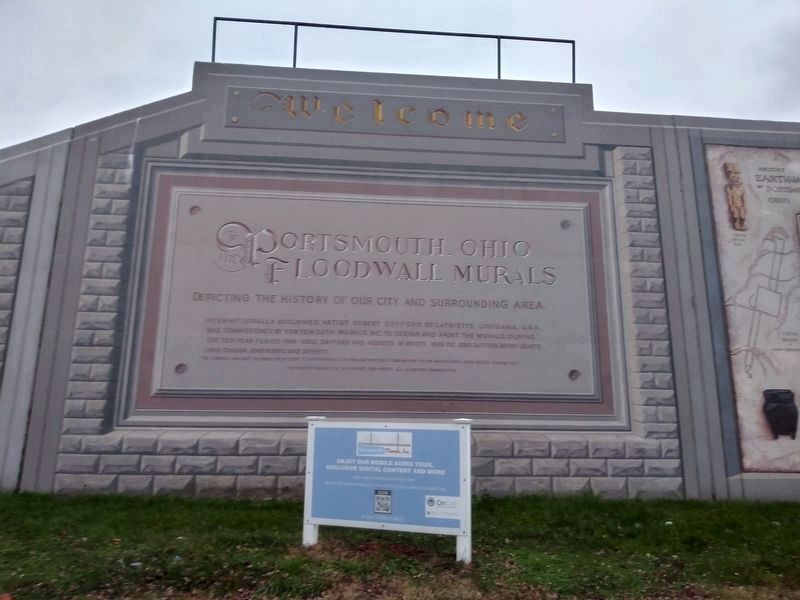
Photographed by Craig Doda, January 7, 2021
6. Floodwall Murals Signage
Credits. This page was last revised on February 5, 2021. It was originally submitted on February 4, 2021, by Craig Doda of Napoleon, Ohio. This page has been viewed 841 times since then and 91 times this year. Photos: 1, 2, 3, 4, 5, 6. submitted on February 4, 2021, by Craig Doda of Napoleon, Ohio. • Devry Becker Jones was the editor who published this page.
