North Park in Billings in Yellowstone County, Montana — The American West (Mountains)
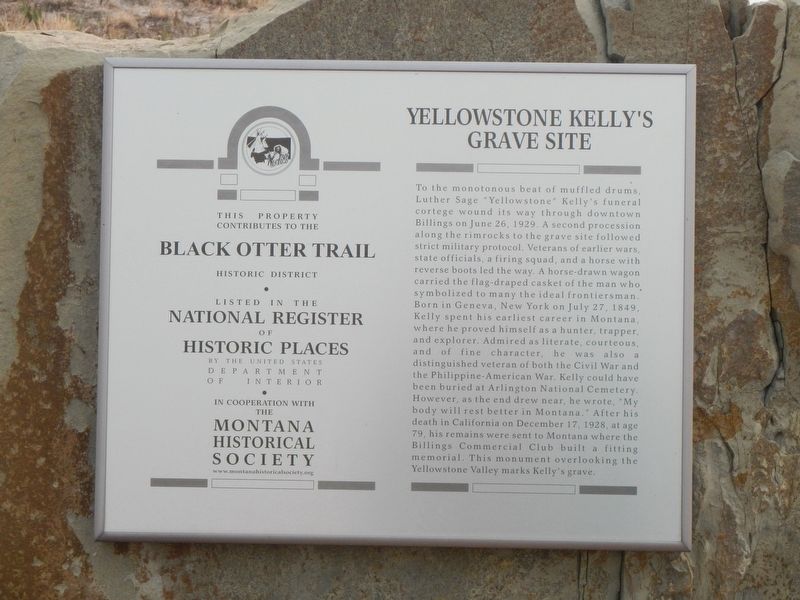
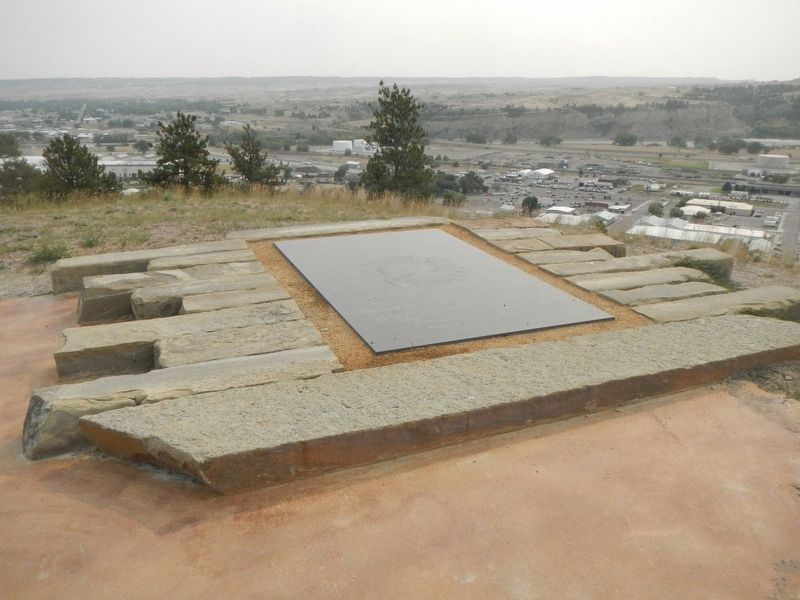
Yellowstone Kelly's Grave
Black Otter Trail Historic District
Photographed by Barry Swackhamer, September 16, 2020
1. Yellowstone Kelly's Grave Marker
Erected by Montana
this page online
Topics. This historical marker is listed in this topic list: Cemeteries & Burial Sites. A significant historical date for this entry is June 26, 1929.
Location. 45° 47.884′ N, 108° 29.329′ W. Marker is in Billings, Montana, in Yellowstone County. It is in North Park. It is on Chief Black Otter Trail near East Airpot Road, on the right when traveling east. The marker is located at the Yellowstone Kelly Interpretive Site. Touch for map. Marker is in this post office area: Billings MT 59101, United States of America. Touch for directions.

Regionally, this marker is in Montana’s Yellowstone Country. It is also in the American Mountain West and in the Lewis & Clark Corridor. Globally, it is in North America, the Western Hemisphere, the Western World, and the Anglosphere. Historically, it finds itself in what was once Rupert’s Land and also the Louisiana Purchase.
Other nearby markers. At least 8 other markers are within walking distance of this marker: Surely this spot was meant for Yellowstone Kelley (here, next to this marker); Luther Sage "Yellowstone" Kelly (a few steps from this marker); Who was Luther Sage "Yellowstone" Kelly?
Photographed by Barry Swackhamer, September 16, 2020
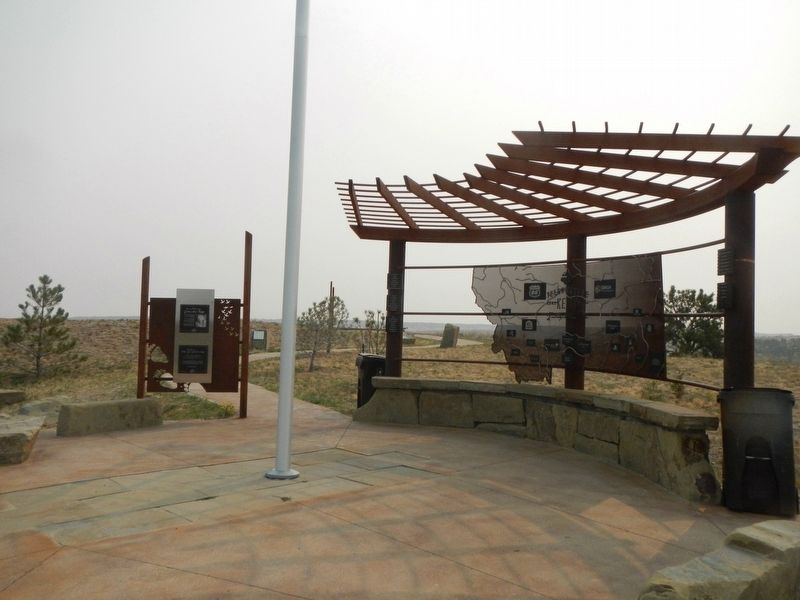
2. Yellowstone Kelly's Grave Marker
The marker is the distance, just to the left of the flagpole.
Photographed by Barry Swackhamer, September 16, 2020
3. Yellowstone Kelly's Grave
Credits. This page was last revised on February 16, 2023. It was originally submitted on February 14, 2021, by Barry Swackhamer of Brentwood, California. This page has been viewed 586 times since then and 91 times this year. Photos: 1, 2, 3. submitted on February 14, 2021, by Barry Swackhamer of Brentwood, California.
