Near Perrysville in Ashland County, Ohio — The American Midwest (Great Lakes)
Greentown Delaware Village
Photographed by Christopher Light, June 24, 2007
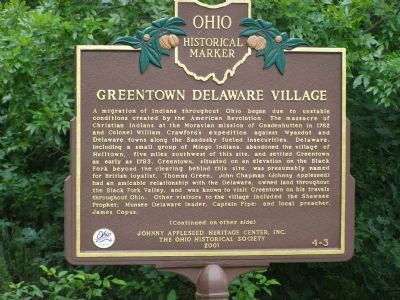
1. Greentown Delaware Village Marker
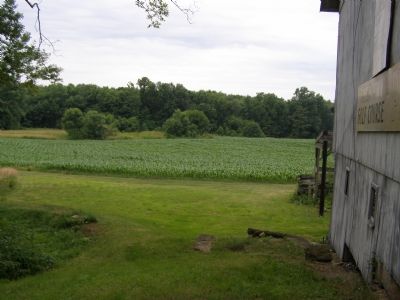
A migration of Indians throughout Ohio began due to unstable conditions created by the American Revolution. The massacre of Christian Indians at the Moravian mission of Gnadenhutten in 1782 and Colonel William Crawford’s expedition against Wyandot and Delaware towns along the Sandusky fueled insecurities. Delaware, including a small group of Mingo Indians, abandoned the village of Helltown, five miles southwest of this site, and settled Greentown as early as 1783. Greentown, situated on an elevation on the Black Fork beyond the clearing behind this site, was presumably named for British loyalist, Thomas Green. John Chapman (Johnny Appleseed) had an amicable relationship with the Delaware, owned land throughout the Black Fork Valley, and was known to visit Greentown on his travels throughout Ohio. Other visitors to the village included the Shawnee Prophet; Munsee Delaware leader, Captain Pipe; and local preacher, James Copus.
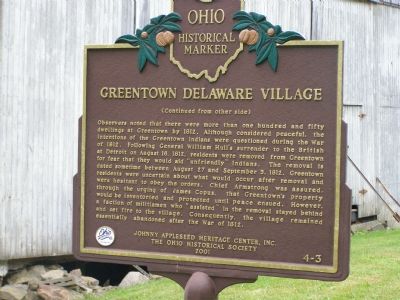
Observers noted that there were more than one hundred and fifty dwellings at Greentown by 1812. Although considered peaceful, the intentions of the Greentown Indians were questioned during the
this page online
Erected 2001 by the Johnny Appleseed Heritage Center, Inc. and The Ohio Historical Society. (Marker Number 4-3.)
Topics and series. This historical marker is listed in these topic lists: Indigenous Peoples and Communities • Settlements & Settlers • War of 1812. In addition, it is included in the Ohio Historical Society / The Ohio History Connection series list. A significant historical month for this entry is September 1762.
Location. 40° 41.895′ N, 82° 19.576′ W.
Photographed by Christopher Light, June 24, 2007
2. Reverse side

Regionally, this marker is in Amish Country. It is also in the American Midwest. Globally, it is in North America, the Western Hemisphere, the Western World, and the Anglosphere. Historically, it finds itself in what was once the Haudenosaunee (Iroquois) Confederacy, the territory of the Mississippian Culture, and the Northwest Territory.
Other nearby markers. At least 8 other markers are within 4 miles of this marker, measured as the crow flies: Johnny “Appleseed” Land Lease and Nursery (approx. 1.7 miles away); Copus Massacre Monument (approx. 2.7 miles away); "The Copus Massacre" (approx. 2.7 miles away); Perrysville Union Cemetery (Veterans Memorial) (approx. 3 miles away); Site of Copus Massacre Monument (approx. 3.1 miles away); Frontier Violence During the War of 1812 (approx. 3.3 miles away); Charles Mill Dam (approx.
Photographed by Christopher Light, June 24, 2007
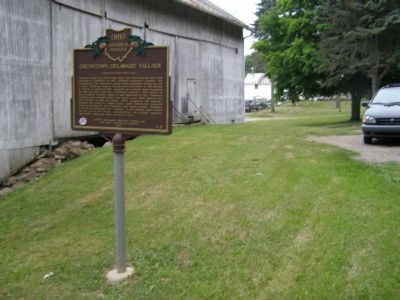
3. General View
Photographed by Christopher Light, June 24, 2007
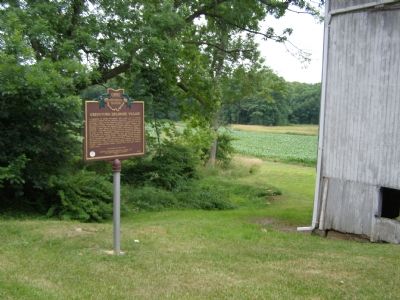
4. Black Fork Valley behind the barn
Photographed by Christopher Light, June 24, 2007
5. Valley of the Black Fork
Credits. This page was last revised on January 26, 2023. It was originally submitted on June 26, 2007, by Christopher Light of Valparaiso, Indiana. This page has been viewed 6,681 times since then and 219 times this year. Last updated on March 16, 2021, by Grant & Mary Ann Fish of Galloway, Ohio. Photos: 1, 2, 3, 4, 5. submitted on June 26, 2007, by Christopher Light of Valparaiso, Indiana. • Devry Becker Jones was the editor who published this page.
