Asheville in Buncombe County, North Carolina — The American South (South Atlantic)
The Quilt Garden
North Carolina Arboretum
Photographed by Cosmos Mariner, August 1, 2009
1. The Quilt Garden Marker
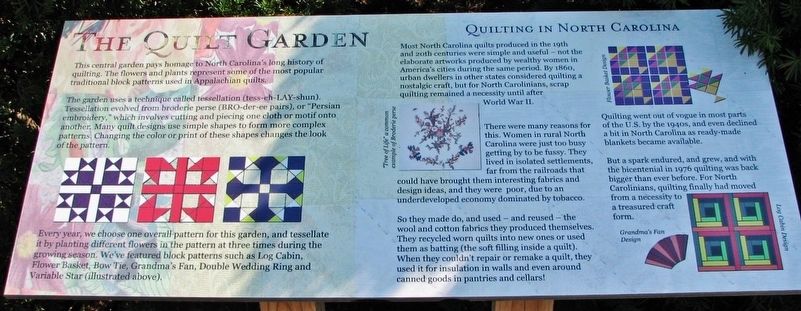
The garden uses a technique called tessellation (tess-eh-LAY-shun). Tessellation evolved from broderie perse (BRO-der-ee pairs), or "Persian embroidery," which involves cutting and piecing one cloth or motif onto another. Many quilt designs use simple shapes to form more complex patterns. Changing the color or print of these shapes changes the look of the pattern.
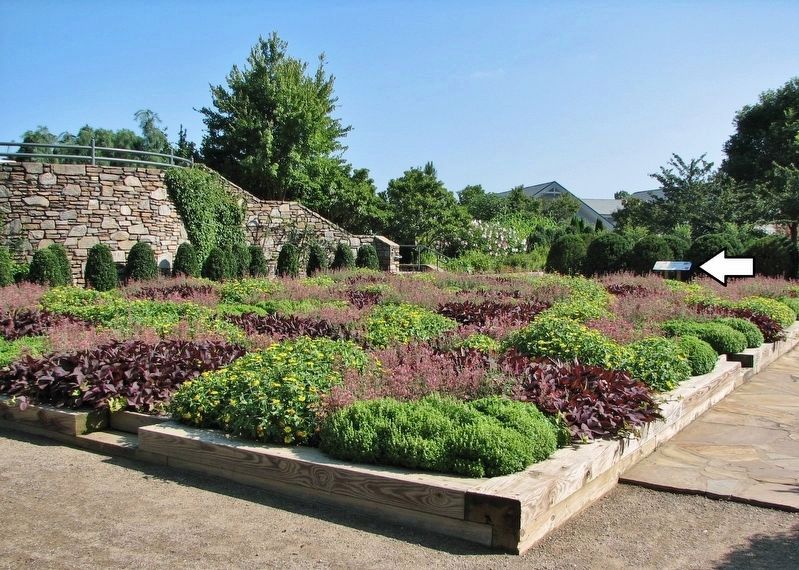
Every year, we choose one overall pattern for this garden, and tessellate it by planting different flowers in the pattern at three times during the growing season. We've featured block patterns such as Log Cabin, Flower Basket, Bow Tie, Grandma's Fan, Double Wedding Ring and Variable Star (illustrated above).
this page online
There were many reasons for this. Women in rural North Carolina were just too busy getting by to be fussy. They lived in isolated settlements, far from the railroads that could have brought them interesting fabrics and design ideas, and they were poor, due to an underdeveloped economy dominated by tobacco.
So they made do, and used — and reused — the wool and cotton fabrics they produced themselves. They recycled worn quilts into new ones or used them as batting (the soft filling inside a quilt). When they couldn't repair or remake a quilt, they used it for insulation in walls and even around canned goods in pantries and cellars!
Quilting went out of vogue in most parts of the U.S. by the 1940s, and even declined a bit in North Carolina as ready-made blankets became available.
But a spark endured, and grew, and with the bicentennial in 1976 quilting was back bigger than ever before. For North Carolinians, quilting finally had moved from a necessity to a treasured craft form.
[inset illustration captions]
• Flower
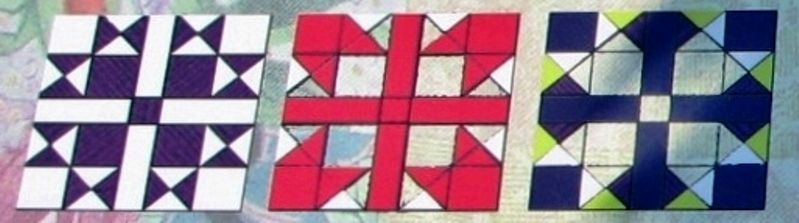
2. Marker detail: Variable Star Pattern
• “Tree of Life” — a common example of Broderie perse
• Log Cabin Design
• Grandma’s Fan Design
Topics. This historical marker is listed in these topic lists: Arts, Letters, Music • Women.
Location. 35° 29.875′ N, 82° 36.489′ W. Marker is in Asheville, North Carolina, in Buncombe County. It can be reached from Frederick Law Olmsted Way 1.2 miles west of Brevard Road (State Highway 191). Marker is located in the Quilt Garden plaza at The North Carolina Arboretum. Touch for map. Marker is at or near this postal address: 100 Frederick Law Olmsted Way, Asheville NC 28806, United States of America. Touch for directions.

Regionally, this marker is in the Mountains. It is also in the American South, specifically in the Upper South, in Appalachia, and specifically in Southern Appalachia. Globally, it is in North America, the Western Hemisphere, the Western World, and the Anglosphere. Historically, it finds itself in what was once the original Cherokee Nation, the territory of the Mississippian Culture, one of the original Thirteen Colonies, one
Photographed by Cosmos Mariner, August 1, 2009
3. The Quilt Garden Marker
Other nearby markers. At least 8 other markers are within 5 miles of this marker, measured as the crow flies: Sassafras (about 700 feet away, measured in a direct line); French Broad River (approx. 0.8 miles away); Dr. L.B. McBrayer (approx. 0.9 miles away); Rutherford Trace (approx. 3½ miles away); William Moore (approx. 3.7 miles away); Home Place of Capt. Wm. Moore (approx. 3.7 miles away); Landsman Riley Powers (approx. 4 miles away); Exploring Deer Park Trail (approx. 4.2 miles away). Touch for a list and map of all markers in Asheville.
Photographed by Cosmos Mariner, August 1, 2009
4. The Quilt Garden Marker
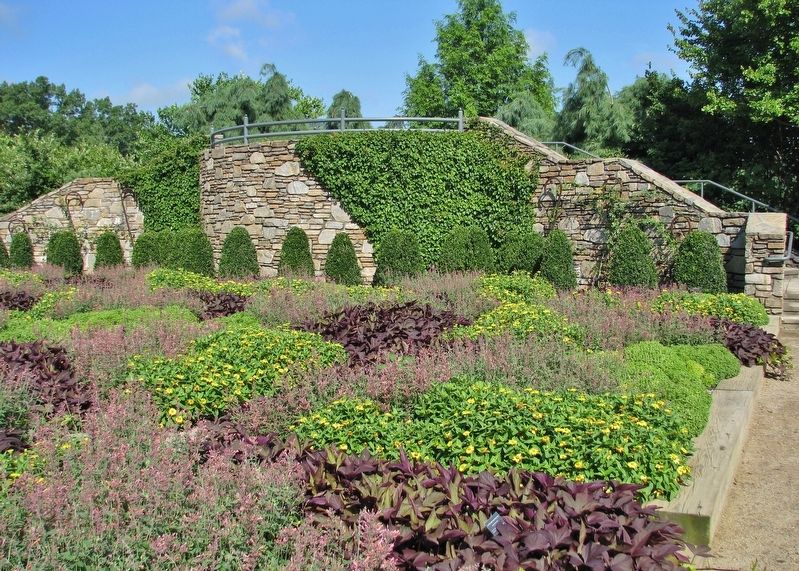
Photographed by Cosmos Mariner, August 1, 2009
5. Quilt Garden Overlook
Credits. This page was last revised on March 20, 2021. It was originally submitted on March 20, 2021, by Cosmos Mariner of Cape Canaveral, Florida. This page has been viewed 439 times since then and 26 times this year. Photos: 1, 2, 3, 4, 5. submitted on March 20, 2021, by Cosmos Mariner of Cape Canaveral, Florida.
