The Blair Property and Sugar Bottom
Early 1900's and Today
| — | Town of Culpeper, Virginia | — |
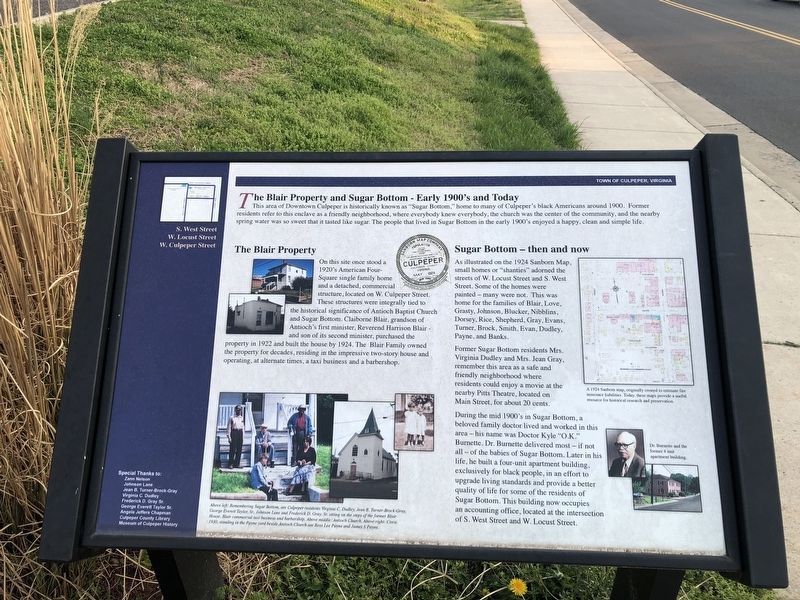
This area of Downtown Culpeper is historically known as "Sugar Bottom," home to many of Culpeper's black Americans around 1900. Former residents refer to this enclave as a friendly neighborhood, where everybody knew everybody, the church was the center of the community, and the nearby spring water was so sweet that it tasted like sugar. the people that lived in Sugar Bottom in the early 1900's enjoyed a happy, clean and simple life.
The Blair Property
On this site once stood a 1920's American Four-Square single family home and a detached, commercial structure, located on W. Culpeper street. These structures were integrally tied to the historical significance of Antioch Baptist Church and Sugar Bottom. Claiborne Blair, grandson of Antioch's first minister, Reverend Harrison Blair — and son of its second minister, purchased the property in 1922 and built the house by 1924. The Blair Family owned the property for decades, residing in the impressive two-story house and operating, at alternate times, a taxi business and a barbershop.
Sugar Bottom — then and now
As illustrated on the 1924 Sanborn Map, small
this page online
Former Sugar Bottom residents Mrs. Virginia Dudley and Mrs. Jean Gray, remember this area as a safe and friendly neighborhood where residents could enjoy a movie at the nearby Pitts Theatre, located on Main Street, for about 20 cents.
During the mid 1900's in Sugar Bottom, a beloved family doctor lived and worked in this area — his name was Doctor Kyle "O.K." Burnette. Dr. Burnette delivered most — if not all — of the babies of Sugar Bottom. Later in his life, he built a four-unit apartment building, exclusively for black people, in an effort to upgrade living standards and provide a better quality of life for some of the residents of Sugar Bottom. This building now occupies an accounting office, located at the intersection of S. West Street and W. Locust Street.
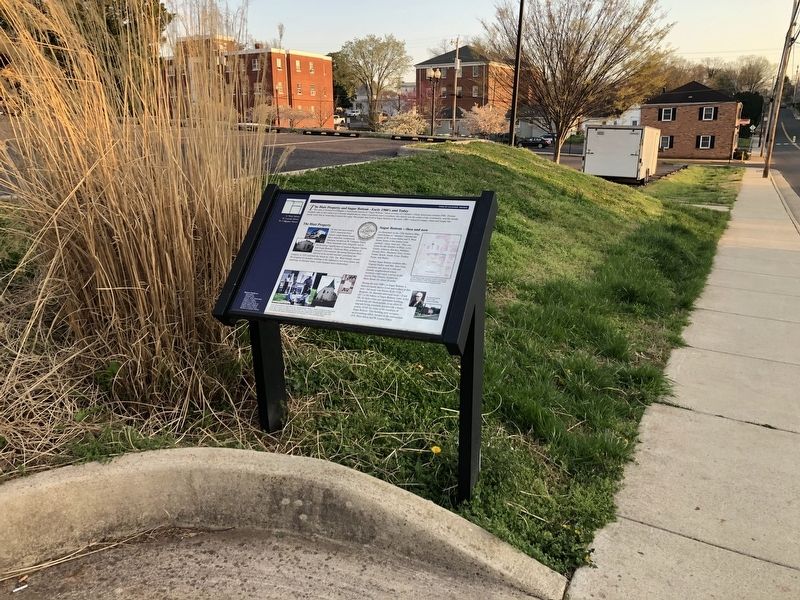
Erected by Town of Culpeper, Virginia.
Topics. This historical marker is listed in these topic lists: African Americans • Religion & Religious Structures • Science & Medicine • Settlements & Settlers. A significant historical year for this entry is 1900.
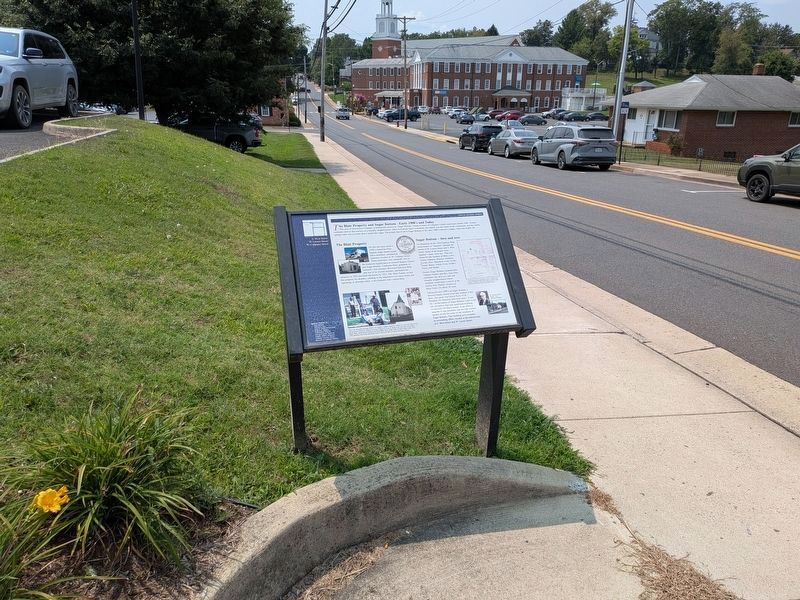
Location. 38° 28.375′ N, 77° 59.872′ W. Marker is in Culpeper, Virginia, in Culpeper County. It is at the intersection of South West Street and West Culpeper Street, on the right when traveling north on South West Street. Touch for map. Marker is in this post office area: Culpeper VA 22701, United States of America. Touch for directions.

Regionally, this marker is in the Washington Metropolitan Area and in Northern Virginia. It is also in the American South, specifically in the Upper South, and in the Mid-Atlantic. Globally, it is in North America, the Western Hemisphere, the Western World, and the Anglosphere. Historically, it finds itself in what was once the territory of the Mississippian Culture, one of the original Thirteen Colonies, one of the Confederate States of America, and the Antebellum South.
Other nearby markers. At least 8 other markers are within walking distance of this marker:
Another marker is no longer nearby. A.P. Hill's Boyhood Home (was about 500 feet away but has been confirmed missing).
Credits. This page was last revised on August 1, 2026. It was originally submitted on April 4, 2021, by Devry Becker Jones of Washington, District of Columbia. This page has been viewed 750 times since then and 46 times this year. Photos: 1, 2. submitted on April 4, 2021, by Devry Becker Jones of Washington, District of Columbia. 3. submitted on August 1, 2026, by Evan Dwyer of Richmond, Virginia.
