Government Hill in San Antonio in Bexar County, Texas — The American South (West South Central)
Belgian Transit of Venus Observation Site

Photographed by James Hulse, August 9, 2021
1. Belgian Transit of Venus Observation Site Marker
The year 1639 marked the first recorded observation of Venus crossing the Sun. Sir Edmund Halley (1656-1742) later predicted that using data from such crossings, known as transits, scientists could precisely quantify the astronomical unit of distance and measure the size of the solar system. The transits of Venus predictably come in pairs, eight years apart, approximately every 120 years. Scientists from around the world traveled to observation sites during the next events, in 1761 and 1769, but timing of the transits was difficult due to the "Black Drop Effect", in which two objects against a bright background appear to blend. For more than a century, astronomers prepared for the next opportunity to record venus' transit.
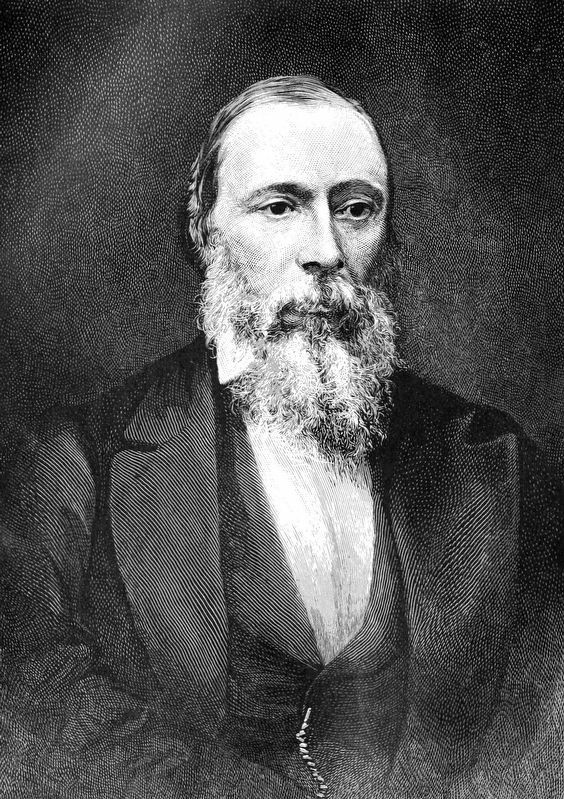
Jean-Charles Houzeau (1820-1888) was a Belgian astronomer with an eclectic history. From 1859 to 1861, he worked as a surveyor in Uvalde, Texas. An abolitionist, he left Texas at the start of the Civil War. In the late 1870s, he returned to Belgium, where he became director of the Royal Observatory and planned the Belgian teams that would go to the Western Hemisphere to observe the December 1882 transit of Venus. He chose one site in Chile and one (22 feet east) in San Antonio. Good observations required clear skies, and San Antonio offered the chance of favorable weather, as well as good logistics for communication and transportation. A U.S. Naval observatory team observed from a site on the grounds of nearby Fort Sam Houston.
Using a heliometer, a device he had developed for the observation, Houzeau obtained 124 photographic plates of Venus silhouetted against the sun. Because of clearer conditions, the team in Chile obtained 606. The Belgian findings equaled those of larger nations, and Houzeau's decision to bring an international team to San Antonio provided the city recognition
this page online
Erected 2005 by Texas Historical Commission. (Marker Number 13266.)
Topics. This historical marker is listed in this topic list: Science & Medicine. A significant historical month for this entry is December 1882.
Location. 29° 26.565′ N, 98° 27.928′ W. Marker is in San Antonio, Texas, in Bexar County. It is in Government Hill. It is on North Palmetto 0 miles south of East Grayson Street, on the right when traveling north. The marker is located along North Palmetto between two houses next to the fence. Touch for map. Marker is at or near this postal address: 1822 North Palmetto, San Antonio TX 78208, United States of America. Touch for directions.

Regionally, this marker is in South Texas. It is also in the American South. Globally, it is in North America, a Gulf of Mexico state, the Western Hemisphere, the Western World, and the Anglosphere. Historically, it finds itself in what was once New Spain, the Republic of Texas, and one of the Confederate States of America.
Other nearby markers. At least 8 other markers are within walking distance of this marker: Bullis House (within shouting distance
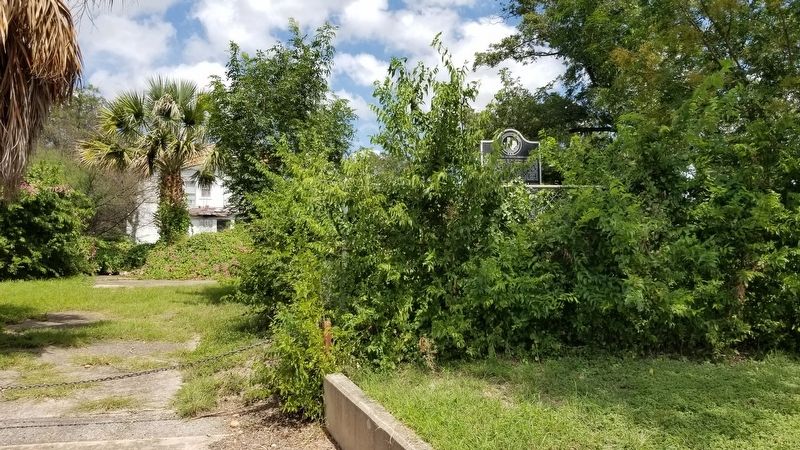
Photographed by James Hulse, August 9, 2021
2. The Belgian Transit of Venus Observation Site Marker is along the fence with bushes
Other markers no longer nearby. Ft. Sam Houston Quadrangle and Staff Post (was about 600 feet away but has been replaced with another marker now near it); M-1905 Field Gun (was about 700 feet away but has been permanently removed).
Also see . . .
1. Jean-Charles Houzeau.
In the U.S. he continued his journalistic, astronomical, and political pursuits. He was an abolitionist and joined with unionists in Texas before the American Civil War. In New Orleans he worked with Dr. Louis Charles Roudanez at the newspapers he founded in the 1860s.(Submitted on August 16, 2021, by James Hulse of Medina, Texas.)
Houzeau migrated to Jamaica in the postwar years. After a period here, he received reinstatement from an observatory in Brussels andreturned to Europe to work. He came back to Texas for an astronomical event. He published stirring memoirs and other accounts of his adventures and contacts during his travels, as well as several works on astronomical subjects. Source: WikipediaPhotographed by James Hulse, August 9, 20213. The view of the Belgian Transit of Venus Observation Site and Marker from across the streetThe marker is hard to see with the under brush

2. Transit of Venus.
Transits of Venus are among the rarest of predictable astronomical phenomena. They occur in a pattern that generally repeats every 243 years, with pairs of transits eight years apart separated by long gaps of 121.5 years and 105.5 years. The periodicity is a reflection of the fact that the orbital periods of Earth and Venus are close to 8:13 and 243:395 commensurabilities.(Submitted on August 16, 2021, by James Hulse of Medina, Texas.)
The last transit of Venus was on 5 and 6 June 2012, and was the last Venus transit of the 21st century; the prior transit took place on 8 June 2004. The previous pair of transits were in December 1874 and December 1882. The next transits of Venus will take place on 10–11 December 2117 and 8 December 2125. Source: Wikipedia
Public Domain
4. Protrait of Houzeau published in The Popular Science Monthly, 1891
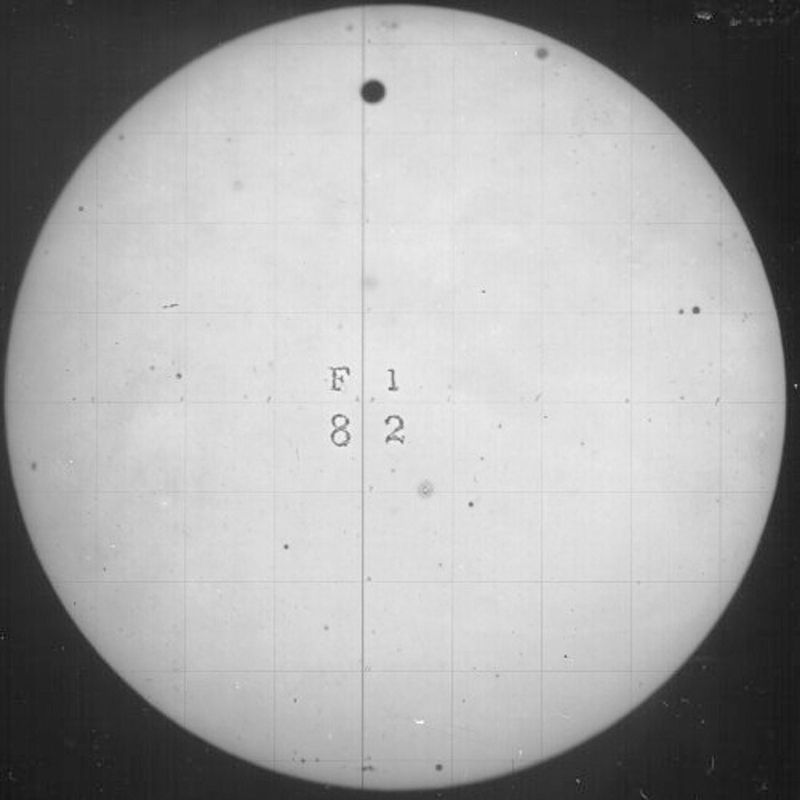
Public Domain - U.S. Navy, 1882
5. The Venus transit of 1882
Credits. This page was last revised on February 2, 2023. It was originally submitted on August 16, 2021, by James Hulse of Medina, Texas. This page has been viewed 1,027 times since then and 72 times this year. Photos: 1, 2, 3, 4, 5. submitted on August 17, 2021, by James Hulse of Medina, Texas.
