Near Rocky Springs in Jackson County, Alabama — The American South (East South Central)
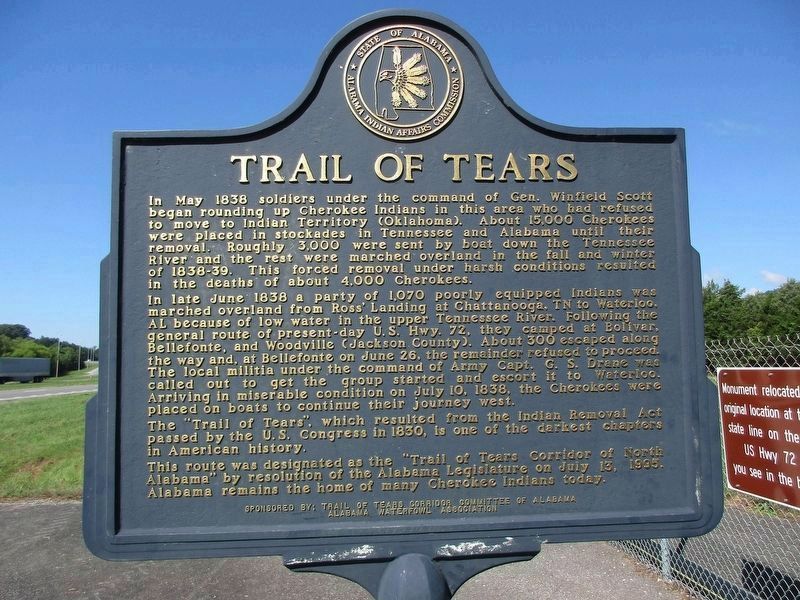
Trail of Tears
Photographed by Jeff Leichsenring, July 2, 2025
1. Trail of Tears Marker
In late June of 1838 a party of 1,070 poorly equipped Indians was marched overland from Ross' Landing at Chattanooga, Tennessee, to Waterloo, Alabama, because of low water in the upper Tennessee River. Following the general route of present day U.S. Highway 72, they camped at Bellefonte, where about 300 escaped between Bellefonte and Woodville. On June 26, the remainder refused to proceed. Consequently,the militia, under the command of Army Captain G.S. Drane was tasked to mobilize the group and escort them to Waterloo. Arriving in miserable condition on July 10, 1838, the Cherokee were placed on a boat to continue their journey
this page online
The "Trail of Tears" which resulted from the Indian Removal Act passed by U.S. Congress in 1830, is one of the darkest chapters in American history.
This route was designated as the "Trail of Tears Corridor of North Alabama" by resolution of the Alabama Legislature on July 13, 1995. Alabama remains the home of many Cherokee Indians today.
Topics and series. This historical marker is listed in this topic list: Indigenous Peoples and Communities. In addition, it is included in the Trail of Tears series list. A significant historical month for this entry is May 1838.
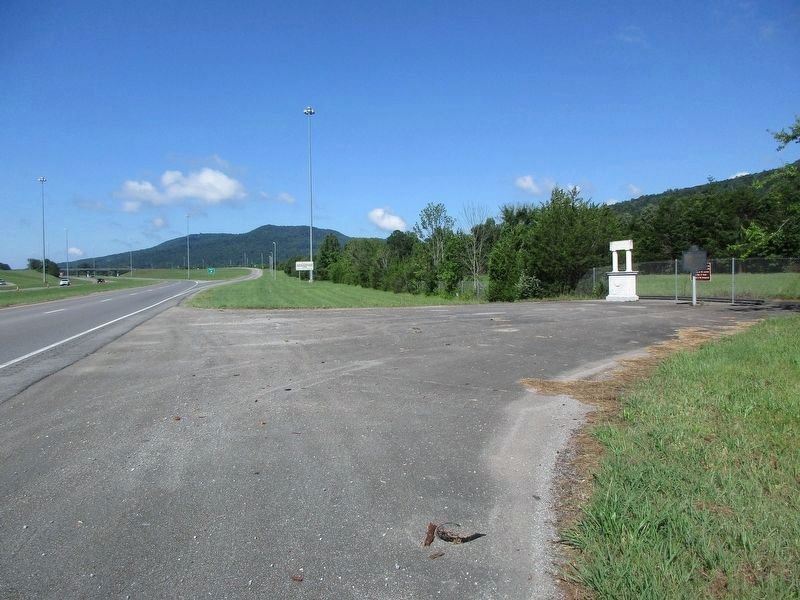
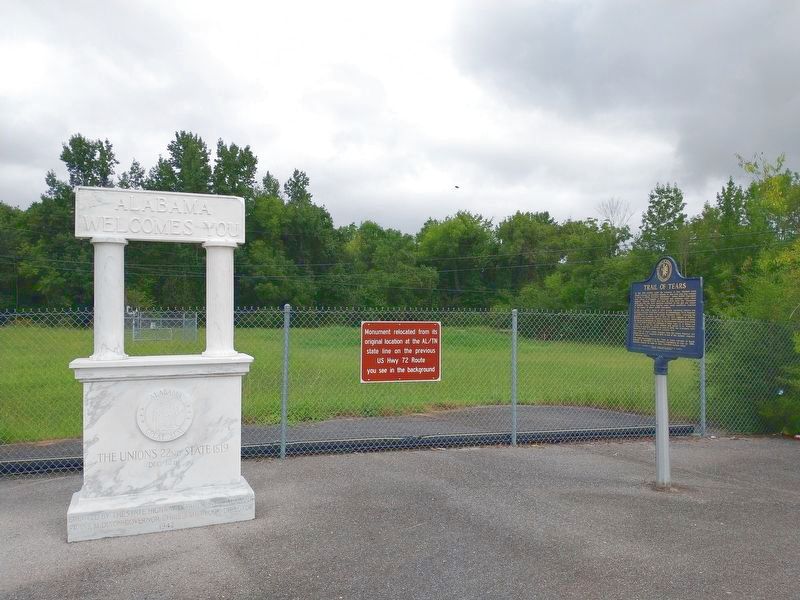
Location. 34° 58.84′ N, 85° 43.86′ W. Marker is near Rocky Springs, Alabama, in Jackson County. It is on U.S. 72 0.2 miles north of State Highway 2, on the right when traveling south. Touch for map. Marker is in this post office area: Bridgeport AL 35740, United States of America. Touch for directions.

Regionally, this marker is in North Alabama. It is also in the American South, specifically in the Deep South, in Appalachia, and specifically in Southern Appalachia. Globally, it is in North America, a Gulf of Mexico state, the Western Hemisphere, the Western World,
Photographed by Stanley and Terrie Howard, April 16, 2009
2. Trail of Tears Marker
Other nearby markers. At least 8 other markers are within 3 miles of this marker, measured as the crow flies: Rocky Springs Church of Christ (approx. 2.1 miles away); Bridgeport (approx. 2.4 miles away); In Rememberance of Those Who Served (approx. 2.4 miles away); a different marker also named Trail of Tears (approx. 2½ miles away); Birthplace of Jobyna Lancaster Ralston-Arlen (approx. 2.6 miles away in Tennessee); Marion Post No. 62 (approx. 2.6 miles away in Tennessee); James Thomas Fitz-Gerald, Jr. (approx. 2.6 miles away in Tennessee); Christmas Night Shootout (approx. 2.6 miles away in Tennessee).
Also see . . .
1. Legends of America - Cherokee-Forced From Their Homeland on the Trail of Tears. The Cherokee tribe was the first to inhabit what is now the eastern and southeastern United States before most of them were forcefully moved to the Ozark Plateau. One of the tribes referred to by Native Americans
Photographed by Jeff Leichsenring, July 2, 2025
3. Trail of Tears Marker
2. Legends of America - Nunna dual Tsuny : “The Trail Where They Cried”. During the forced march, over 4,000 of the 15,000 Indians died of hunger, disease, cold, and exhaustion. In the Cherokee language, the event is called Nunna daul Tsuny -- "the trail where they cried." (Submitted on April 19, 2009.)
3. Trail of Tears National Historic Trail. A study that examined the feasibility of adding routes to the Trail of Tears National Historic Trail was completed in November 2007. Legislation was introduced in Congress and signed by President Obama in 2009. (Submitted on April 19, 2009.)
Photographed by Tom Bosse, August 26, 2022
4. Trail of Tears Marker
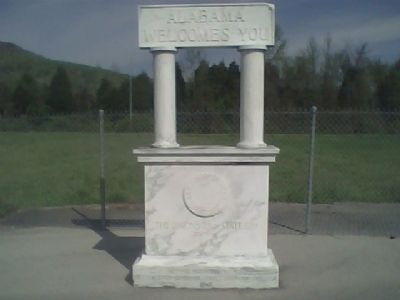
Photographed by Stanley and Terrie Howard, April 16, 2009
5. Alabama Welcomes you
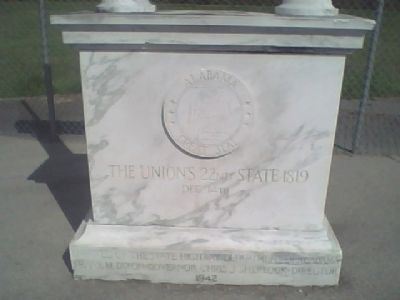
Photographed by Stanley and Terrie Howard, April 16, 2009
6. Alabama Welcomes you

Photographed by Stanley and Terrie Howard, April 16, 2009
7. Trail of Tears Marker
Credits. This page was last revised on October 16, 2025. It was originally submitted on April 18, 2009, by Stanley and Terrie Howard of Greer, South Carolina. This page has been viewed 6,586 times since then and 114 times this year. Photos: 1. submitted on October 16, 2025, by Jeff Leichsenring of Garland, Texas. 2. submitted on April 18, 2009, by Stanley and Terrie Howard of Greer, South Carolina. 3. submitted on October 16, 2025, by Jeff Leichsenring of Garland, Texas. 4. submitted on September 1, 2022, by Tom Bosse of Jefferson City, Tennessee. 5, 6, 7. submitted on April 18, 2009, by Stanley and Terrie Howard of Greer, South Carolina. • Syd Whittle was the editor who published this page.
