
Petersburg, Virginia — The American South (Mid-Atlantic)
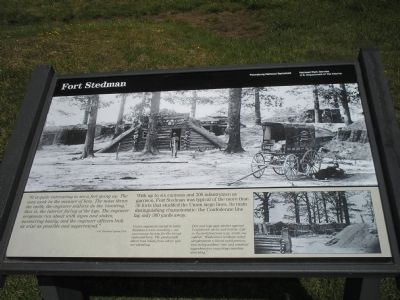
Fort Stedman
Petersburg National Battlefield
| — | National Park Service, U.S. Department of the Interior | — |
Photographed by Bill Coughlin, April 23, 2007
1. Fort Stedman Marker
It is quite interesting to see a fort going up. The men work in the manner of bees. The mass throw the earth; the engineer soldiers do the ‘rivetting,’ that is, the interior facing the logs. The engineer sergeants run about with tapes and stakes, measuring busily; and the engineer officers look as wise as possible and superintend.
- Col. Theodore Lyman, USA
With up to six cannons and 300 infantrymen as garrison, Fort Stedman was typical of the more than 30 forts that studded the Union siege lines. Its main distinguishing characteristic: the Confederate line lay only 300 yards away.
(captions)
Union engineers elected to leave Stedman’s trees standing—an uncommon luxury for the troops stationed here. The photograph above was taken from where you are standing.
Dirt and logs gave shelter against Confederate shells and bullets. Life in the fortifications was, wrote one soldier, “Endurance without relief; sleeplessness without exhilaration; inactivity without rest; and constant apprehension requiring ceaseless watching.”
Erected by National Park Service, U.S. Department of the Interior.
Topics. This historical
this page online
Location. 37° 13.892′ N, 77° 22.18′ W. Marker is in Petersburg, Virginia. It is on Siege Road, on the right when traveling south. The marker stands in Petersburg National Battlefield on the Auto Tour Road at Tour Stop 5. Touch for map. Marker is in this post office area: Petersburg VA 23803, United States of America. Touch for directions.

Regionally, this marker is in Central Virginia. It is also in the American South and specifically in the Upper South. Globally, it is in North America, the Western Hemisphere, the Western World, and the Anglosphere. Historically, it finds itself in what was once the territory of the Mississippian Culture, one of the original Thirteen Colonies, one of the Confederate States of America, and the Antebellum South.
Other nearby markers. At least 8 other markers are within walking distance of this marker: A different marker also named Fort Stedman (a few steps from this marker); A Final Effort (within shouting distance of this marker); Siege of Petersburg—Lee Strikes Back (within shouting distance
Photographed by Bill Coughlin, April 23, 2007
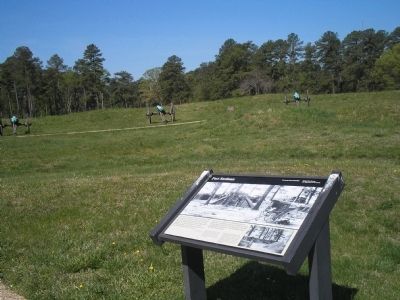
2. Marker outside of Fort Stedman
This Union stronghold was the focus of a Confederate attack on March 25, 1865, which was Gen. Robert E. Lee's last offensive of the Civil War.
Other markers no longer nearby. Colquitt’s Salient Trail (was about 300 feet away, measured in a direct line but has been reported to have been replaced with another marker now near it); Hare House Site (was about 500 feet away but has been permanently removed); Wasted Valor (was about 700 feet away but has been replaced with another marker now near it); Colquitt's Salient (was approx. 0.2 miles away but has been confirmed missing).
Also see . . .
1. Battle of Fort Stedman. National Park Service Petersburg National Battlefield website entry (Submitted on April 12, 2008, by Bill Coughlin of Woodland Park, New Jersey.)
2. The Battle of Fort Stedman: March 25, 1865. The Siege of Petersburg Online. (Submitted on April 12, 2008.)
Photographed by Mike McKeown, April 26, 2024
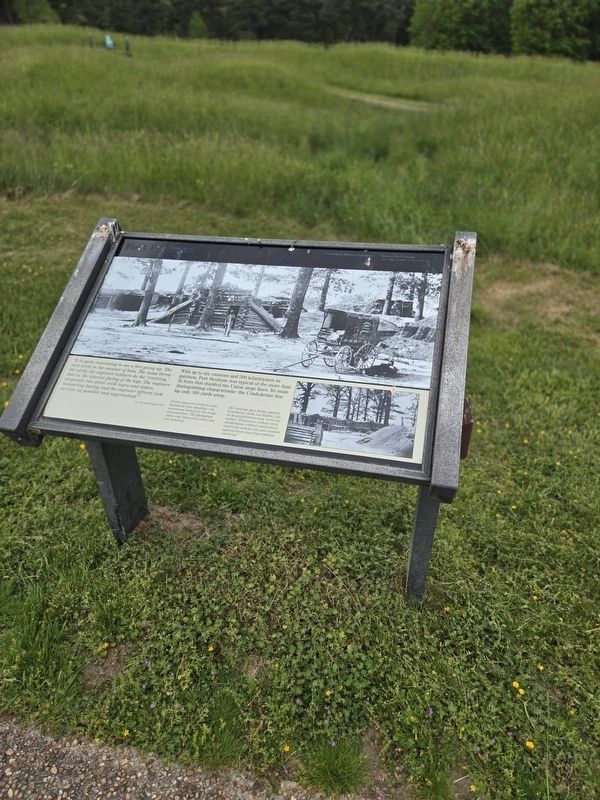
3. Fort Stedman Marker
The marker has weathered.
Photographed by Bill Coughlin, April 23, 2007
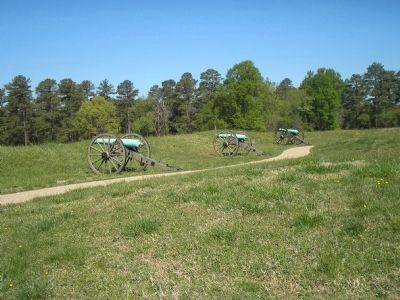
4. Inside Fort Stedman
A number of cannons are still located within the remains of Fort Stedman.
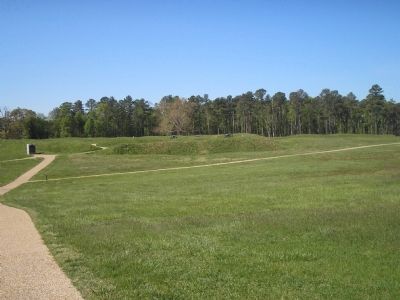
Photographed by Bill Coughlin, April 23, 2007
5. Exterior of Fort Stedman
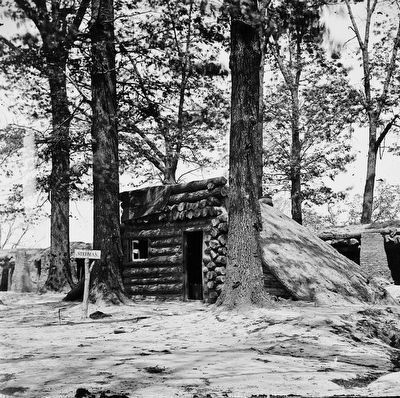
Photographed by Timothy H. O'Sullivan, 1865
6. Bombproof at Fort Stedman
Image courtesy of the Civil War Glass Negative Collection, Library of Congress.
Credits. This page was last revised on April 29, 2024. It was originally submitted on April 12, 2008, by Bill Coughlin of Woodland Park, New Jersey. This page has been viewed 2,908 times since then and 52 times this year. Last updated on April 29, 2024, by Mike McKeown of Baltimore, Maryland. Photos: 1, 2. submitted on April 12, 2008, by Bill Coughlin of Woodland Park, New Jersey. 3. submitted on April 29, 2024, by Mike McKeown of Baltimore, Maryland. 4, 5. submitted on April 12, 2008, by Bill Coughlin of Woodland Park, New Jersey. 6. submitted on October 11, 2015. • Devry Becker Jones was the editor who published this page.
