Wessington Springs in Jerauld County, South Dakota — The American Midwest (Upper Plains)
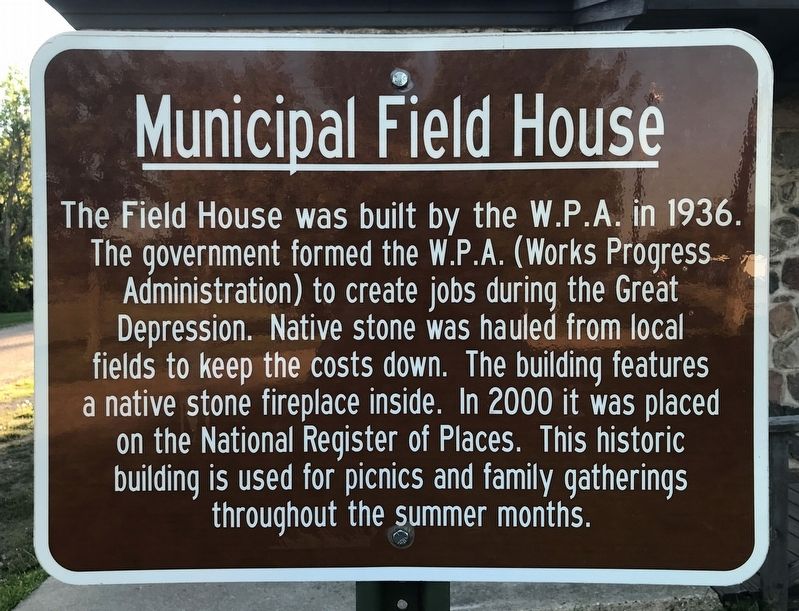
Municipal Field House
August 29, 2021
1. Municipal Field House Marker
Topics and series. This historical marker is listed in these topic lists: Charity & Public Work • Parks & Recreational Areas. In addition, it is included in the National Register of Historic Places (NRHP) series list. A significant historical year for this entry is 1936.
Location. 44° 4.619′ N, 98° 34.357′ W. Marker is in Wessington Springs, South Dakota, in Jerauld County. It is on 2nd Street Southwest 0.1 miles east of Dakota Avenue South, on the right when traveling west. Located at the Wessington Springs City Park. Touch for map. Marker is at or near this postal address: 418 2nd Street SW, Wessington Springs SD 57382, United States of America. Touch for directions.

Regionally, this marker
this page online
Other nearby markers. At least 8 other markers are within walking distance of this marker: Noble's Trail Campsite (within shouting distance of this marker); Neutral Ground (within shouting distance of this marker); Wessington Springs' First Home (about 300 feet away, measured in a direct line); Wessington Springs Trivia (about 300 feet away); City Park (about 500 feet away); South Dakota Amateur Baseball Hall of Fame (about 600 feet away); Old Grade Road (about 600 feet away); Sumac Used By Native Americans (about 700 feet away). Touch for a list and map of all markers in Wessington Springs.
Also see . . . South Dakota MPS Municipal Field House - National Archives Catalog. From the National Register of Historic Places Continuation Sheet
August 29, 2021
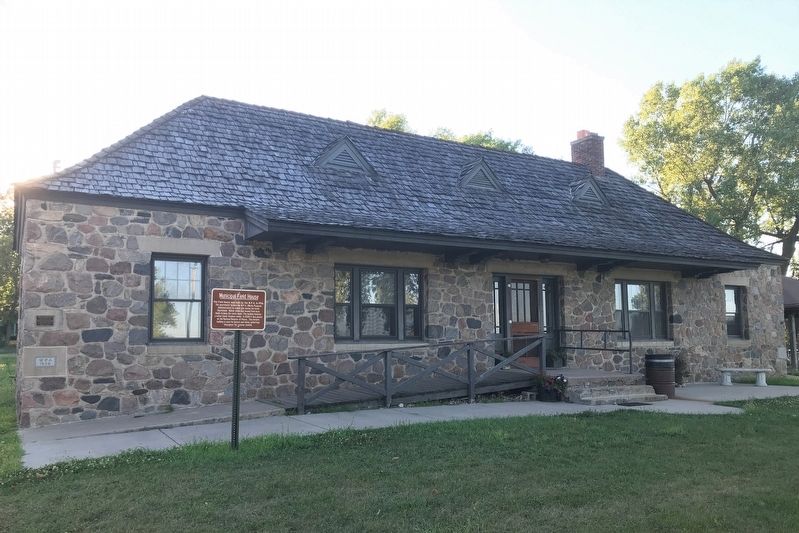
2. Municipal Field House & Marker
"In 1935, Wessington Springs City Council approved the construction of the Municipal Field House for $6,500.00. $4,000.00 of that amount was labor furnished by the Works Progress Administration. Another federal government grant gave $900.00 for materials. Smaller pledges from local organizations made up the difference. In February of 1937, when it was realized that more funds were needed to complete the building, the City Council approved $160.00 and the Works Progress Administration agreed to fund the remaining labor.(Submitted on January 6, 2025.)
F. C. W. Kuehn was the architect for the Municipal Field House. He insisted that the building be constructed of native stone and he gave explicit instructions on how to construct the stone walls. He insisted that the walls be built and then pointed with lime and cement mortar. Michael Kieffer and Leo Schwartz were the master stone masons. The Municipal Field House clearly embodies distinctive characteristics associated with federal relief construction projects including the use of local building materials, fine craftsmanship and stone/masonry construction."
August 29, 2021
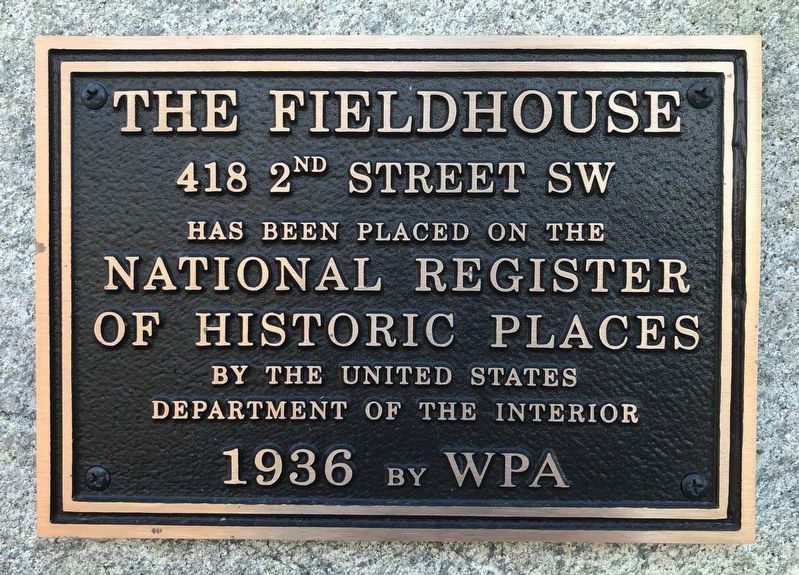
3. National Register of Historic Places Marker
418 2nd Street SW
Has been placed on the
National Register of Historic Places
by the United States Department of the Interior
1936 by WPA
Credits. This page was last revised on January 6, 2025. It was originally submitted on August 31, 2021. This page has been viewed 369 times since then and 60 times this year. Photos: 1, 2, 3. submitted on August 31, 2021. • Bill Pfingsten was the editor who published this page.
