Marker Logo
THE HISTORICAL
MARKER DATABASE
“Bite-Size Bits of Local, National, and Global History”
Old Brooklyn in Cleveland in Cuyahoga County, Ohio — The American Midwest (Great Lakes)
 

Old Brooklyn
 
 
Old Brooklyn Marker image. Click for full size.
Photographed by Cosmos Mariner, June 20, 2021
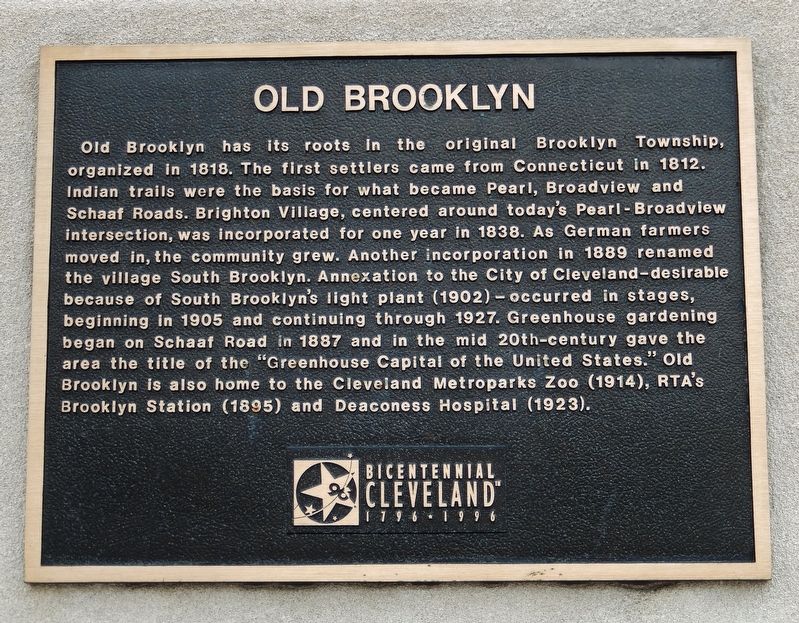
1. Old Brooklyn Marker
Inscription. Old Brooklyn has its roots in the original Brooklyn Township, organized in 1818. The first settlers came from Connecticut in 1812. Indian trails were the basis for what became Pearl, Broadview and Schaaf Roads. Brighton Village, centered around today's Pearl-Broadview intersection, was incorporated for one year in 1838. As German farmers moved in, the community grew. Another incorporation in 1889 renamed the village South Brooklyn. Annexation to the City of Cleveland — desirable because of South Brooklyn's light plant (1902) — occurred in stages, beginning in 1905 and continuing through 1927. Greenhouse gardening began on Schaaf Road in 1887 and in the mid 20th-century gave the area the title of the "Greenhouse Capital of the United States." Old Brooklyn is also home to the Cleveland Metroparks Zoo (1914) RTA's Brooklyn Station (1895) and Deaconess Hospital (1923).
 
Erected 1996 by Bicentennial Cleveland.
 
Topics. This historical marker is listed in these topic lists: AgricultureRoads & VehiclesSettlements & Settlers. A significant historical year for this entry is 1818.
 
Location. 41° 26.506′ N, 81° 42.28′ W. Marker is in Cleveland, Ohio, in Cuyahoga County. It is in Old Brooklyn. It is at the intersection of Pearl Road (U.S. 42) and
Paid Advertisement
Click or scan to see
this page online
Broadview Road, on the right when traveling north on Pearl Road. Marker is mounted at eye-level just to the left of the building entrance at the northeast corner of the intersection. Touch for map. Marker is at or near this postal address: 4175 Pearl Road, Cleveland OH 44109, United States of America. Touch for directions.

Regionally, this marker is on Ohio’s Lake Erie Shore and in the Western Reserve. It is also in the American Midwest and on the Great Lakes. Globally, it is in North America, the Western Hemisphere, the Western World, and the Anglosphere. Historically, it finds itself in what was once the Haudenosaunee (Iroquois) Confederacy, the territory of the Mississippian Culture, and the Northwest Territory.

Other nearby markers. At least 8 other markers are within 2 miles of this marker, measured as the crow flies: Pearl Street Savings & Trust Building (here, next to this marker); In memoriam (approx. Ό mile away); Veterans Memorial (approx. 0.9 miles away); a different marker also named Veterans Memorial (approx. 0.9 miles away); Brookside Stadium (approx. 0.9 miles away); Peak Of A Pastime (approx. 0.9 miles away); a different marker also named In memoriam (approx. one mile away); On This Site (approx. 1.2 miles away). Touch for a list and map of all markers in Cleveland.
 
Also see . . .
1. Old Brooklyn. Commercial gardening received a boost when public transportation came to the community's borders in 1869. The Johnson house at the corner of Broadview and Pearl was the hub of commercial activity — a well-known stopover for farmers headed to Cleveland to sell their produce. In 1889 the community boasted a population of 1,000 and its petition to incorporate, this time as the village of South Brooklyn, was granted. The moniker of South Brooklyn gradually faded and by the end of World War II all of western
Old Brooklyn Marker image. Click for full size.
Photographed by Cosmos Mariner, June 20, 2021
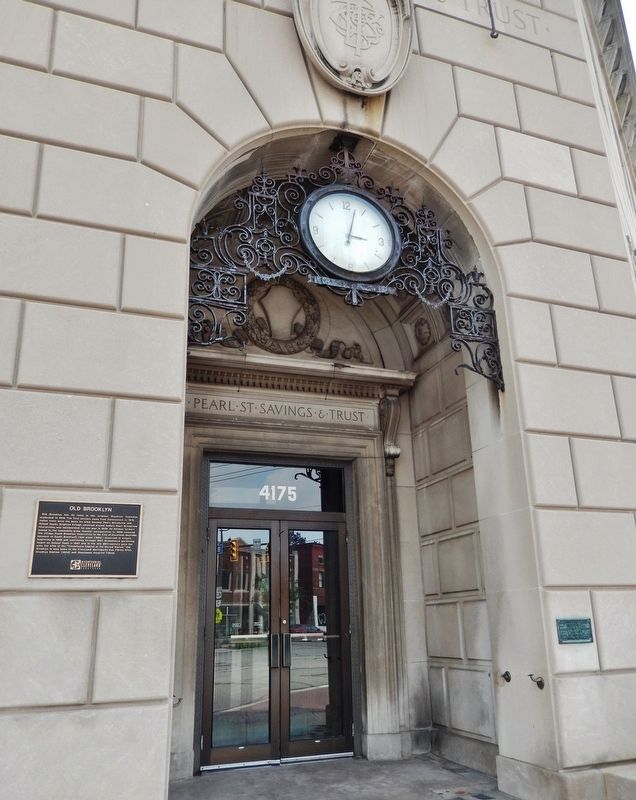
2. Old Brooklyn Marker
(marker visible on left side of entrance)
Cleveland south of Big Creek came to be known as the Brooklyn section of the city. (Submitted on September 20, 2021, by Cosmos Mariner of Cape Canaveral, Florida.) 

2. Old Brooklyn (Wikipedia). During the late 1880s, farmers in Old Brooklyn's Schaaf Road area and the neighboring Village of Brooklyn Heights were among the first in the Midwest to use greenhouses to cultivate vegetables. By the 1920s the neighborhood was one of the nation's leading producers of greenhouse vegetables, with more than 100 acres under glass. Most of the greenhouses were displaced, beginning about 1960, by new housing and the construction of Ohio Rt. 176. (Submitted on September 20, 2021, by Cosmos Mariner of Cape Canaveral, Florida.) 
 
Old Brooklyn Marker image. Click for full size.
Photographed by Cosmos Mariner, June 20, 2021
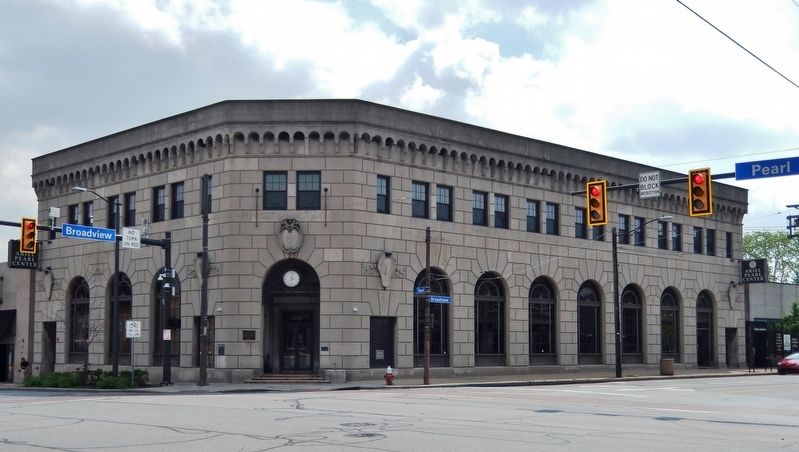
3. Old Brooklyn Marker
(marker visible on left side of center entrance)
 
 
Credits. This page was last revised on February 4, 2023. It was originally submitted on September 20, 2021, by Cosmos Mariner of Cape Canaveral, Florida. This page has been viewed 686 times since then and 28 times this year. Photos:   1, 2, 3. submitted on September 20, 2021, by Cosmos Mariner of Cape Canaveral, Florida.

m=182199

CeraNet Cloud Computing sponsors the Historical Marker Database.
This website earns income from purchases you make after using our links to Amazon.com. We appreciate your support.
Paid Advertisement
Jun. 8, 2026
