Centro histórico de Morelia , Michoacán, Mexico — The Pacific Coast (and Central Highlands)
The Merced Temple
Photographed by J. Makali Bruton, September 28, 2021
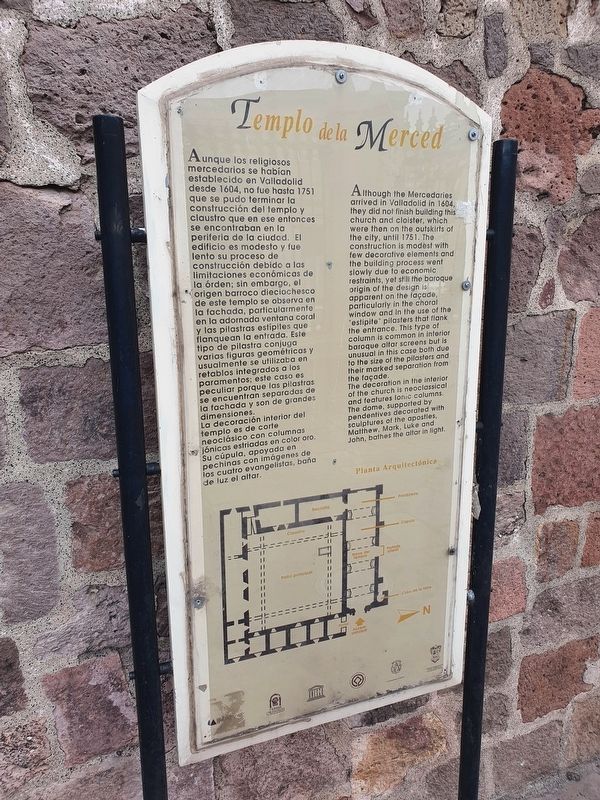
1. The Merced Temple Marker

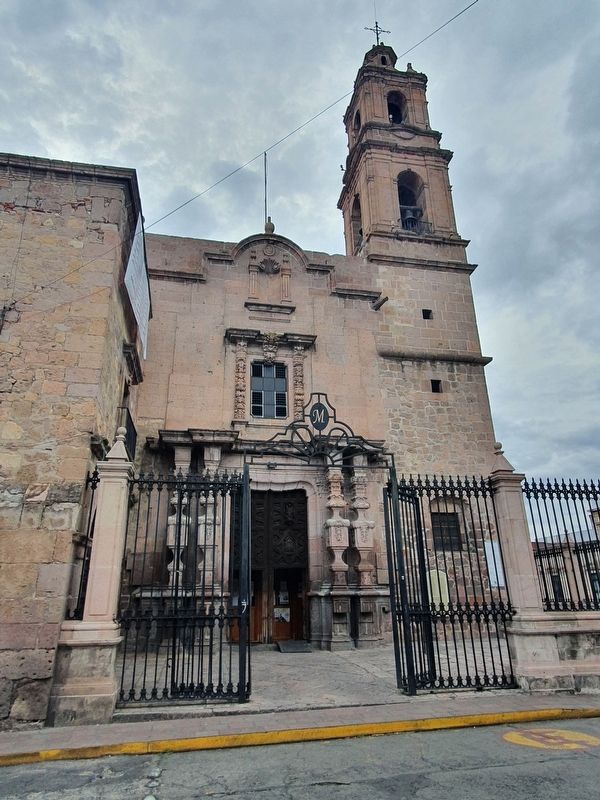
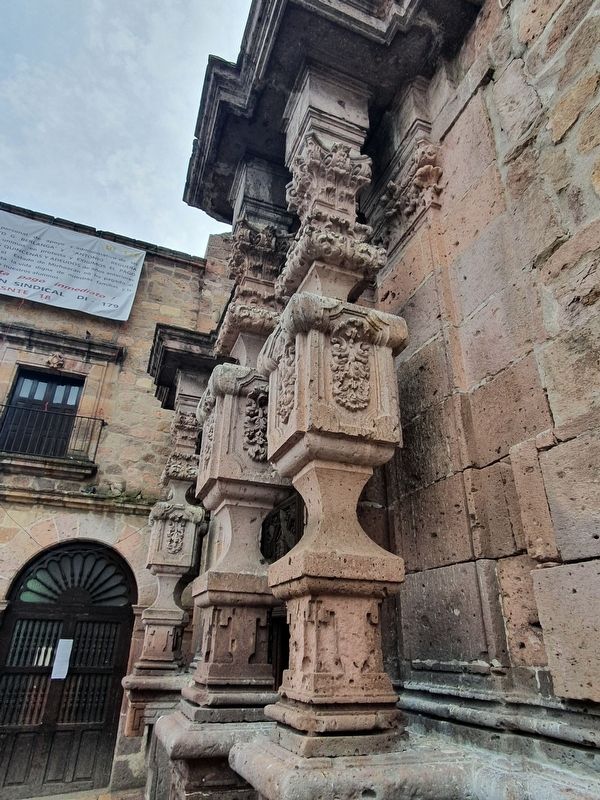
Aunque los religiosos mercedarios se habían establecido en Valladolid desde 1604, no fue hasta 1751 que se pudo terminar la construcción del templo y claustro que en ese entonces se encontraban en la periferia de la ciudad. El edificio es modesto y fue lento su proceso de construcción debido a las limitaciones económicas de la órden; sin embargo, el origen barroco dieciochesco de este templo se observa en la fachada, particularmente en la adornada ventana coral y las pilastras estípites que flanquean la entrada. Este tipo de pilastra conjuga varias figuras geométricas y usualmente se utilizaba en retablos integrados a los paramentos; este caso es peculiar porque las pilastras se encuentran separadas de la fachada y son de grandes dimensiones.
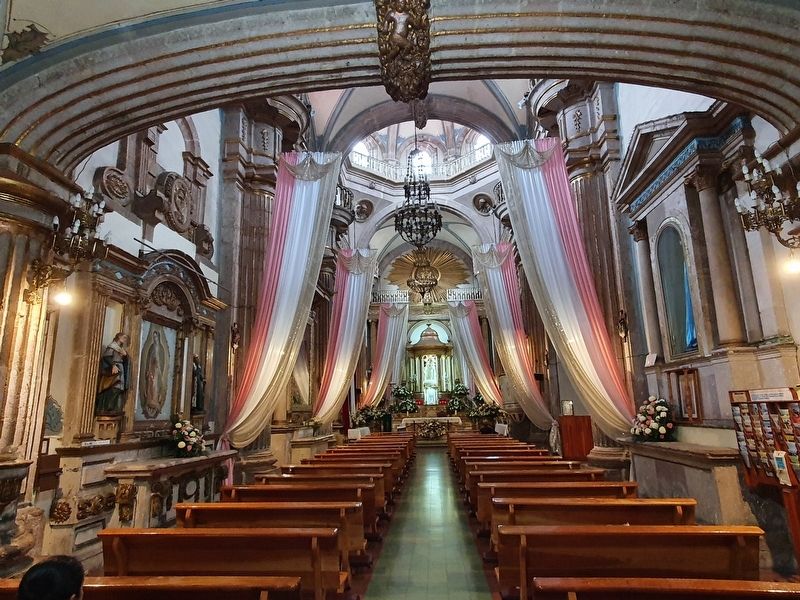
La decoración interior del templo es de corte neoclásico con columnas jónicas estriadas en color oro. Su cúpula, apoyada en pechinas con imágenes de los cuatro evangelistas, baña de luz el altar.
The Merced Temple
Although the Mercedaries arrived in Valladolid in 1604, they did not finish building this church
this page online
The decoration in the interior of the church is neoclassical and features Ionic columns. The dome, supported by pendentives decorated with sculptures of the apostles, Matthew, Mark, Luke and John, bathes the altar in light.
Erected by Honorable Ayuntamiento de Morelia.
Topics. This historical marker is listed in these topic lists: Colonial Era • Religion & Religious Structures. A significant historical year for this entry is 1604.
Location. 19° 42.173′ N, 101° 11.819′ W. Marker is in Morelia, Michoacán. It is in Centro histórico de Morelia. It is at the intersection of Andrés
Photographed by J. Makali Bruton, September 28, 2021
2. The Merced Temple and Marker

Regionally, this marker is in Western Mexico, in the Bajío, and on the Pacific Coast. Globally, it is in North America, specifically in Mesoamerica, on the Ring of Fire, on the Pacific Rim, and in the Western Hemisphere. Historically, it finds itself in what was once New Spain, a Spanish colony, and the Aztec Empire.
Other nearby markers. At least 8 other markers are within walking distance of this marker: Natalio Vazquez Pallares (about 120 meters away, measured in a direct line); Hidalgo in Morelia (about 150 meters away); University Public Library (about 180 meters away); Dr. Manuel Martínez Solórzano (about 180 meters away); Public Library of Morelia (about 180 meters away); Sorinne Font (about 180 meters away); Dr. Ignacio Chávez (about 180 meters away); El Colegio Primitivo y Nacional de San Nicolás de Hidalgo (about 240 meters away). Touch for a list and map of all markers in Morelia.
Photographed by J. Makali Bruton, September 28, 2021
3. The "estipite" pilasters that flank the entrance, mentioned in the marker text
Photographed by J. Makali Bruton, September 28, 2021
4. An interior view of the Merced Temple
Credits. This page was last revised on April 4, 2025. It was originally submitted on October 19, 2021, by J. Makali Bruton of Washington, District of Columbia. This page has been viewed 142 times since then and 11 times this year. Photos: 1, 2, 3, 4. submitted on October 19, 2021, by J. Makali Bruton of Washington, District of Columbia.
