Near Pringle in Custer County, South Dakota — The American Midwest (Upper Plains)
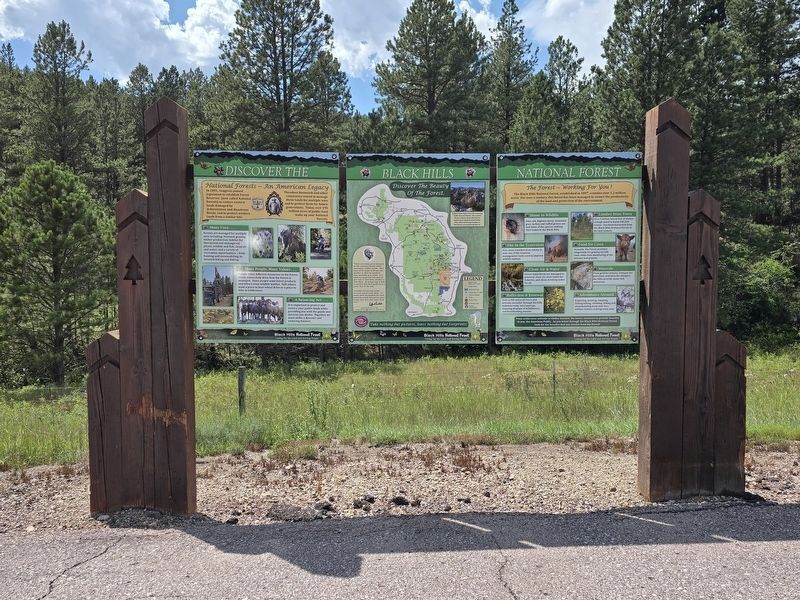
Discover the Black Hills National Forest
October 17, 2021
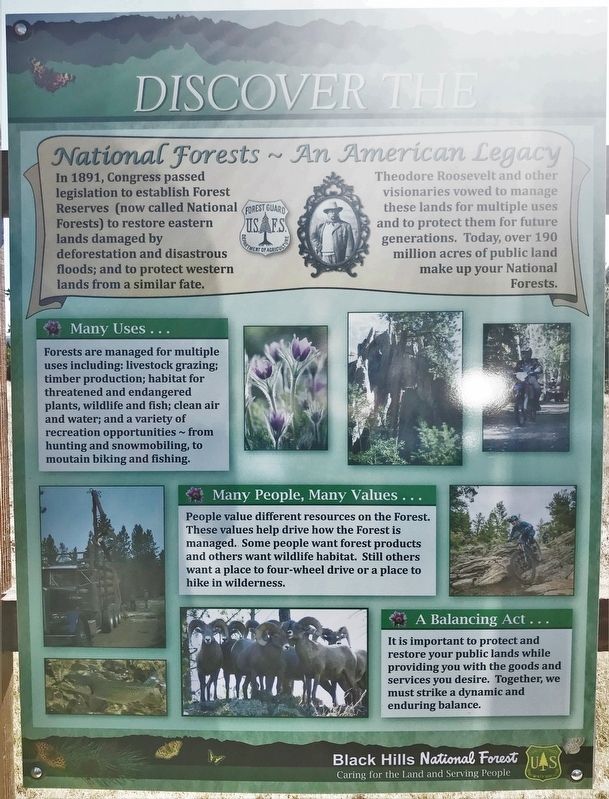
1. Discover the Black Hills National Forest Marker (Left Panel)
Theodore Roosevelt and other visionaries vowed to manage these lands for multiple uses and to protect them for future generations. Today, over 190 million acres of public land make up your National Forests.
Many Uses . . .
Forests are managed for multiple uses including: livestock grazing; timber production; habitat for threatened and endangered plants, wildlife and fish; clean air and water; and a variety of recreation opportunities ~ from hunting and snowmobiling, to mountain biking and fishing.
Many People, Many Values . . .
People value different resources on the Forest. These values help drive how the Forest is managed. Some people want forest products and others want wildlife habitat. Still others want a place to four-wheel drive or a place to hike in wilderness.
A Balancing Act . . .
It is important to protect and restore your public
this page online
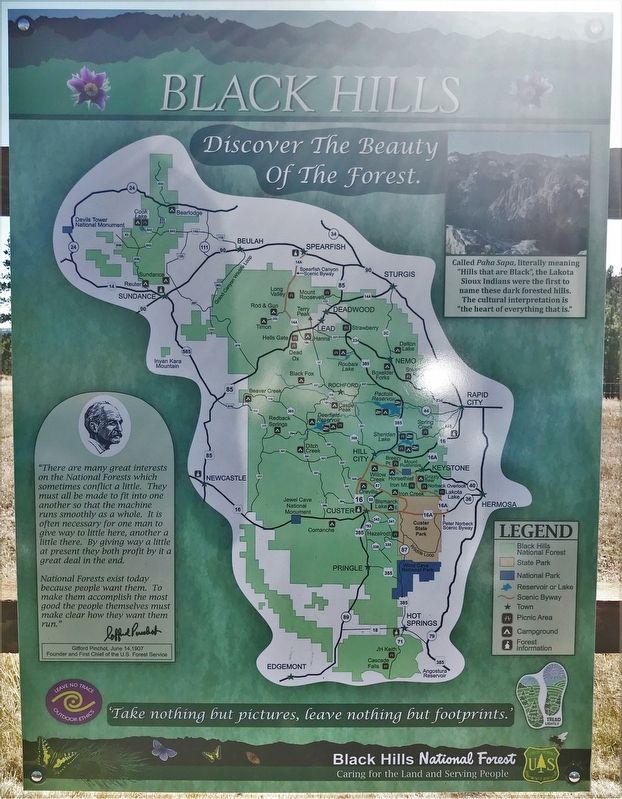
Center Panel:
Called Paha Sapa, literally meaning "Hills that are Black", the Lakota Sioux Indians were the first to name these dark forested hills. The cultural interpretation is "the heart of everything that is."
"There are many great interests on the National Forests which sometimes conflict a little. They must all be made to fit into one another so that the machine runs smoothly as a whole. It is often necessary for one man to give way to little here, another a little there. By giving way a little at present they both profit by it a great deal in the end.
National Forests exist today because people want them. To make them accomplish the most good the people themselves must make clear how they want them run."
Founder and First Chief of the U.S. Forest Service
Leave No Trace Outdoor Ethics
'Take nothing but pictures, leave nothing but footprints.'
Right Panel:
October 17, 2021
2. Discover the Black Hills National Forest Marker (Center Panel)
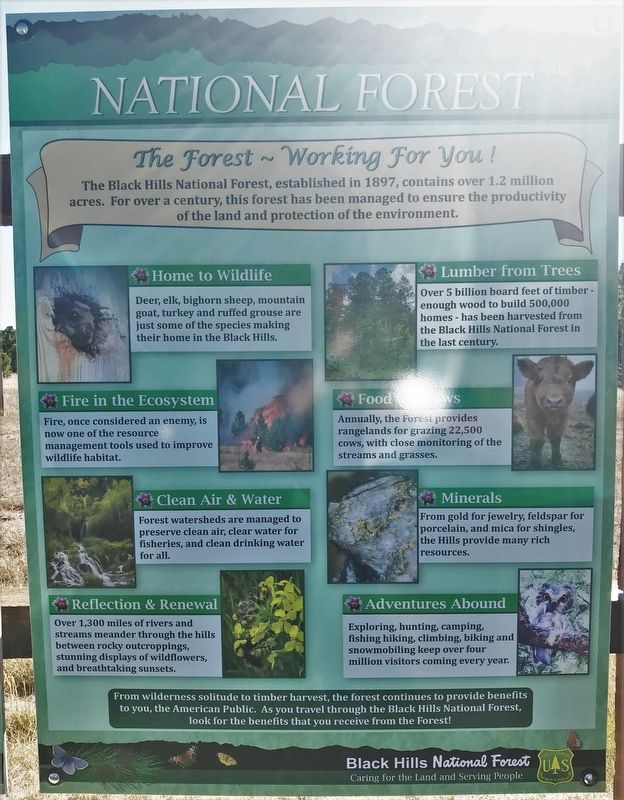
Home to Wildlife
Deer, elk, bighorn sheep, mountain goat, turkey and ruffed grouse are just some of the species making their home in the Black Hills.
Lumber from Trees
Over 5 billion board feet of timber - enough wood to build 500,000 homes - has been harvested from the Black Hills National Forest in the last century.
Fire in the Ecosystem
Fire, once considered an enemy, is now one of the resource management tools used to improve wildlife habitat.
Food for Cows
Annually, the Forest provides rangelands for grazing 22,500 cows, with close monitoring of the streams and grasses.
Clean Air & Water
Forest watersheds are managed to preserve clean air, clear water for fisheries, and clean drinking water for all.
Minerals
From gold for jewelry, feldspar for porcelain, and mica for shingles, the Hills provide many rich resources.
Reflection & Renewal
Over 1,300 miles of rivers and streams meander through the hills between rocky outcroppings,
October 17, 2021
3. Discover the Black Hills National Forest Marker (Right Panel)
Adventures Abound
Exploring, hunting, camping, fishing hiking, climbing, biking and snowmobiling keep over four million visitors coming every year.
From wilderness solitude to timber harvest, the forest continues to provide benefits to you, the American Public. As you travel through the Black Hills National Forest, look for the benefits that you receive from the Forest!
Erected by Black Hills National Forest.
Topics. This historical marker is listed in these topic lists: Animals • Environment • Horticulture & Forestry • Parks & Recreational Areas. A significant historical year for this entry is 1891.
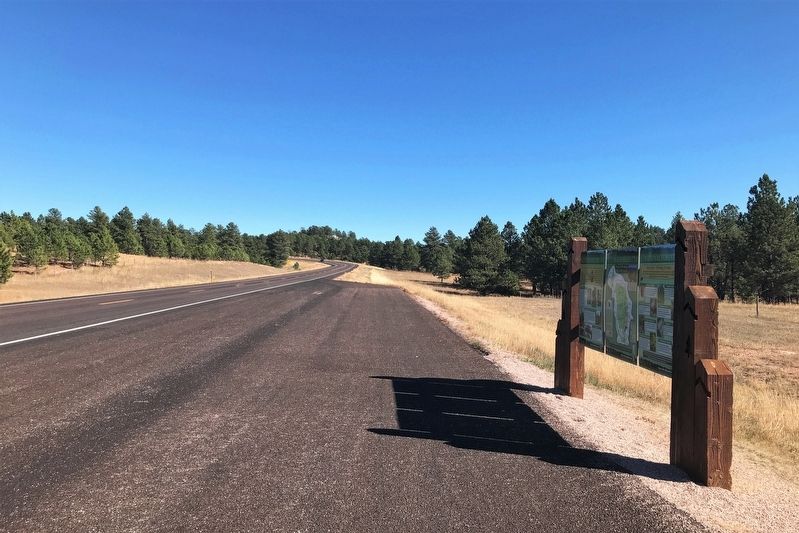
Location. 43° 34.896′ N, 103° 37.259′ W. Marker is near Pringle, South Dakota, in Custer County. It is on State Highway 89 0.7 miles north of Prairie Schooner Road (County Road 318), on the right when traveling north. Located at a National Forest Interpretive Site on SD-89 between Argyle & Pringle. Touch for map. Marker is in this post office area: Pringle SD 57773, United States of America. Touch for directions.

Regionally, this marker is in West River
October 17, 2021
4. Discover the Black Hills National Forest Marker
Other nearby markers. At least 8 other markers are within 8 miles of this marker, measured as the crow flies: Early Game Preserve (approx. 6.6 miles away); Life in a Prairie Dog Town (approx. 6.7 miles away); Vanishing Prairie (approx. 7 miles away); Bringing Back the Bison (approx. 7 miles away); Paha Sapa Limestone (approx. 7.4 miles away); Home on the Range (approx. 7.4 miles away); The CCC's Enduring Legacy (approx. 7.4 miles away); Stephen Tyng Mather (approx. 7.4 miles away).
Photographed by Susan Van Den Bosch, August 13, 2025
5. Discover the Black Hills National Forest Marker
Credits. This page was last revised on September 3, 2025. It was originally submitted on October 28, 2021. This page has been viewed 442 times since then and 44 times this year. Photos: 1, 2, 3, 4. submitted on October 28, 2021. 5. submitted on September 1, 2025, by Susan Van Den Bosch of Almond, Wisconsin. • J. Makali Bruton was the editor who published this page.
