Near Petersburg in Prince George County, Virginia — The American South (Mid-Atlantic)
Uprooted by War
Photographed by Bradley Owen, October 20, 2021
1. Uprooted by War Marker
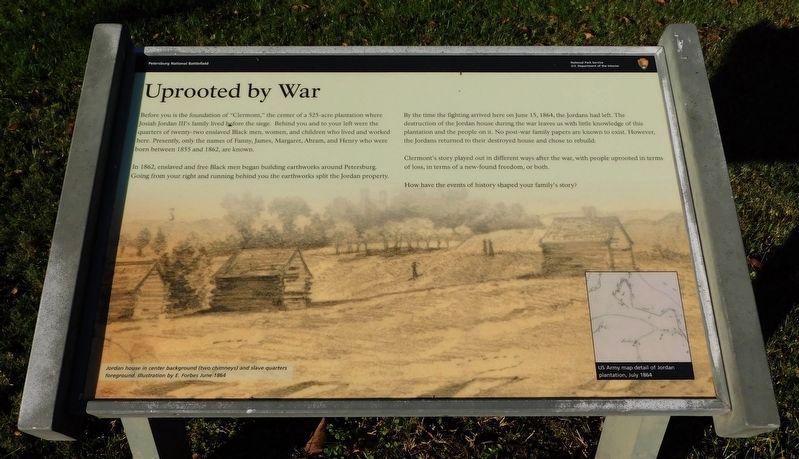
Before you is the foundation of "Clermont," the center of a 525-acre plantation where Josiah Jordan III's family lived before the siege. Behind you and to your left were the quarters of twenty-two enslaved Black men, women, and children who lived and worked here. Presently, only the names of Fanny, James, Margaret, Abram, and Henry who were born between 1855 and 1862, are known.
In 1862, enslaved and free Black men began building earthworks around Petersburg. Going from your right and running behind you the earthworks split the Jordan property.
By the time the fighting arrived here on June 15, 1864, the Jordans had left. The destruction of the Jordan house during the war leaves us with little knowledge of this plantation and the people on it. No post-war family papers are known to exist. However, the Jordans returned to their destroyed house and chose to rebuild.
Clermont's story played out in different ways after the war, with people uprooted in terms of loss, in terms of a new-found freedom, or both.
How have the events of history shaped your family's story?
(Photo Captions)
Jordan house in center
this page online
US Army map detail of Jordan plantation, July 1864
Erected by Petersburg National Battlefield, National Park Service, U.S. Department of the Interior.
Topics. This historical marker is listed in this topic list: War, US Civil.
Location. 37° 14.659′ N, 77° 21.418′ W. Marker is near Petersburg, Virginia, in Prince George County. It is on Petersburg Tour Road, on the left when traveling north. Located on the Battery 5 walking trail, beside the Visitors Center, in Petersburg National Battlefield Park. Touch for map. Marker is at or near this postal address: 5001 Siege Road, Prince George VA 23875, United States of America. Touch for directions.

Regionally, this marker is in Coastal Virginia. It is also in the American South, specifically in the Upper South, in the Tidewater, and on the Eastern Seaboard. Globally, it is in the North Atlantic Region, North America, the Western Hemisphere, the Western World, and the Anglosphere. Historically, it finds itself in what was once the
Photographed by Bradley Owen, October 20, 2021
2. Uprooted by War Marker
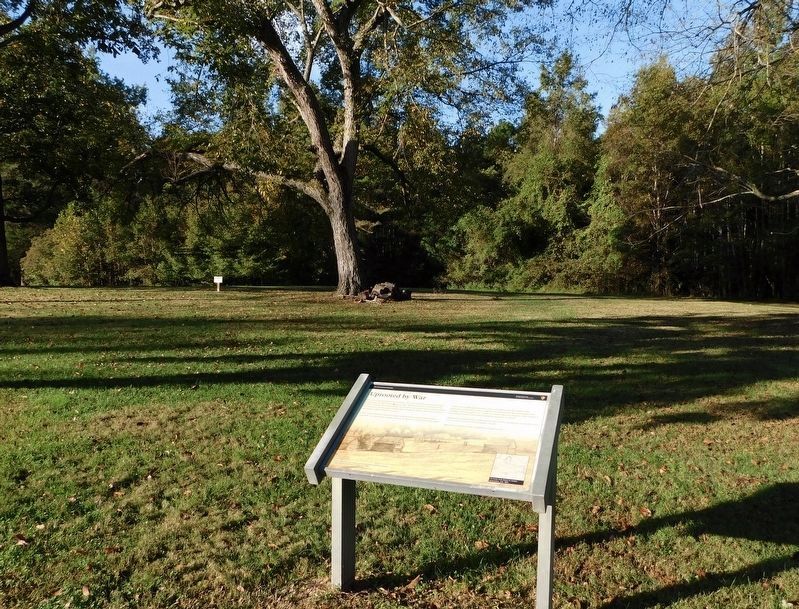
Jordan House site sign is in the background.
Other nearby markers. At least 8 other markers are within walking distance of this marker: Artillery at Petersburg (within shouting distance of this marker); The Petersburg Campaign (within shouting distance of this marker); Siege of Petersburg — Grant's First Offensive (within shouting distance of this marker); a different marker also named Battery 5 Trail (within shouting distance of this marker); Stephen Tyng Mather (within shouting distance of this marker); a different marker also named The Siege of Petersburg (within shouting distance of this marker); Prelude to Petersburg (within shouting distance of this marker); a different marker also named Artillery at Petersburg (within shouting distance of this marker). Touch for a list and map of all markers in Petersburg.
Other markers no longer nearby. Uprooted by War (was a few steps from this marker but has been replaced with another marker now near it); Battery 5 Trail (was within shouting distance of this marker but has been
Photographed by Bradley Owen, October 20, 2021
3. Uprooted by War Marker
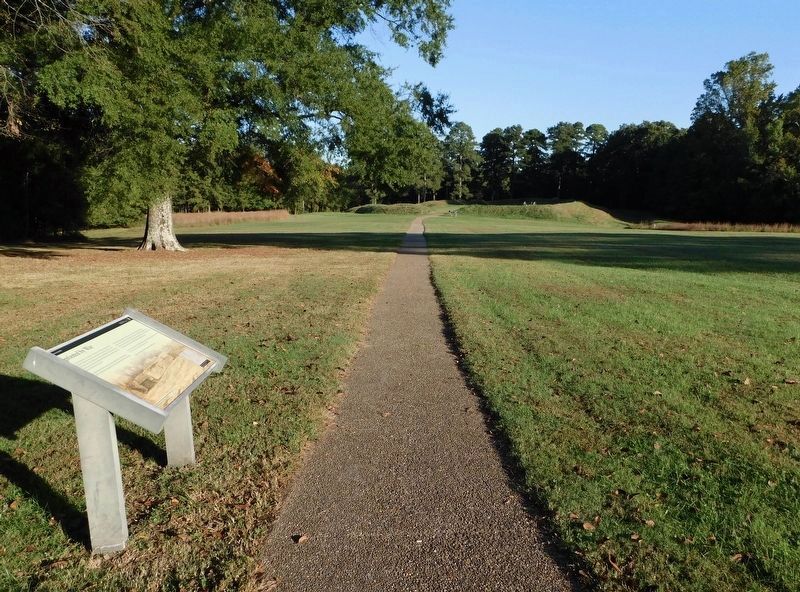
Marker beside the Battery 5 Trail with Battery 5 seen in the distance.
Related marker. Click here for another marker that is related to this marker. Old Marker At This Location also titled "Uprooted by War".
Also see . . . Petersburg National Battlefield. Natoinal Park Service (Submitted on November 15, 2021.)
Photographed by Bradley Owen, October 20, 2021
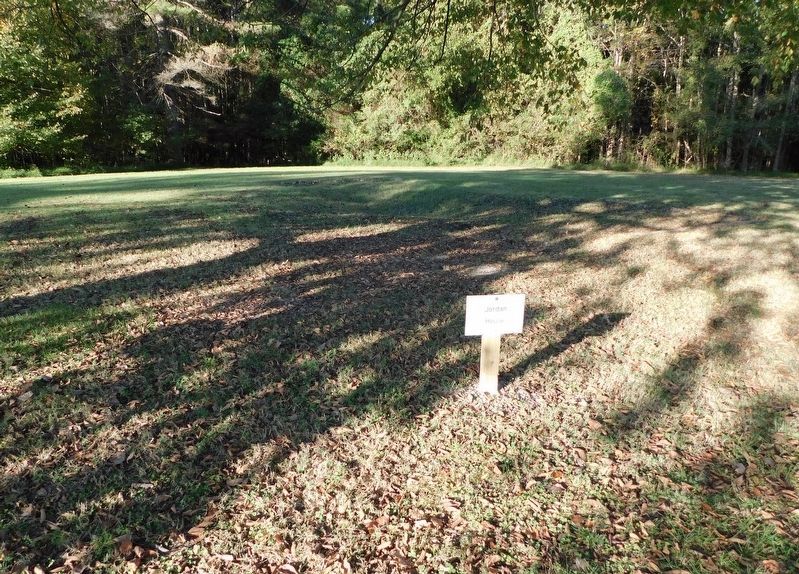
4. Jordan House Site
Credits. This page was last revised on October 21, 2024. It was originally submitted on November 11, 2021, by Bradley Owen of Morgantown, West Virginia. This page has been viewed 394 times since then and 27 times this year. Photos: 1, 2, 3, 4. submitted on November 11, 2021, by Bradley Owen of Morgantown, West Virginia. • Bernard Fisher was the editor who published this page.
