Near Fort Washington in Prince George's County, Maryland — The American Northeast (Mid-Atlantic)
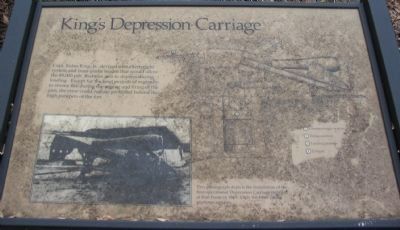
King's Depression Carriage
Photographed by Craig Swain, March 1, 2008
1. King's Depression Carriage Marker
The marker is somewhat worse for the wear.
Capt. Rufus King, Jr. devised a counterweight system and front-pintle mount that would allow the 49,000 pdr. Rodman Gun to depress during loading. Except for the brief periods of exposure to enemy fire during the aiming and firing of the gun, the crew could remain protected behind the high parapets of the fort.
Topics and series. This historical marker is listed in these topic lists: Forts and Castles • Military • War, US Civil. In addition, it is included in the Defenses of Washington series list.
Location. Marker has been reported permanently removed. It was located near 38° 46.066′ N, 77° 1.709′ W. Marker was near Fort Washington, Maryland, in Prince George's County. It could be reached from the intersection of Fort Foote Road. Located inside the Fort Foote National Park. Touch for map. Marker was in this post office area: Fort Washington MD 20744, United States of America.
We have been informed that this marker is no longer there and will not be replaced. This page is an archival view of what was.
Regionally, this marker was in the Washington Metropolitan
this page online

Other nearby markers. At least 8 other markers are within walking distance of this location: Another Shot (a few steps from this marker); Ironclad Killer (within shouting distance of this marker); Reporting for Duty (within shouting distance of this marker); Engineering Evolution (within shouting distance of this marker); Load. Ready. Fire! (about 300 feet away, measured in a direct line); New Forts for a New War (about 300 feet away); Capital View (about 400 feet away); Welcome To Fort Foote (about 500 feet away). Touch for a list and map of all markers in Fort Washington.
Other markers no longer nearby. Fort Foote (was a few steps from this marker but has been reported to have been replaced with another marker now near it); Northwest Bastion (was within
Photographed by Craig Swain, March 1, 2008
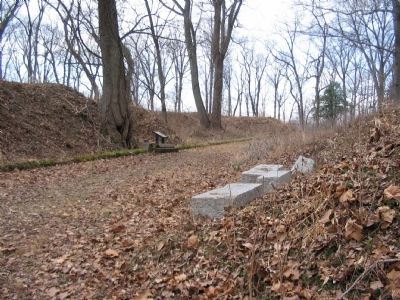
2. Depression Carriage Wayside
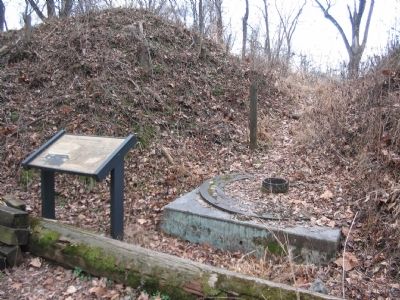
More about this marker. On the lower left This photograph depicts the installation of the first operational Depression Carriage installed at Fort Foote in 1869. Only the front-pintle platform remains. On the right a diagram details the layout of the carriage, with indicators for (1) Counterweight system; (2) Firing position; (3) Loading position; (4) Parapet.
Also see . . . Fort Foote Park. National Park Service site providing a short history of the fort. (Submitted on May 5, 2008, by Craig Swain of Leesburg, Virginia.)
Photographed by Craig Swain, March 1, 2008
3. Marker and the Remaining Pintle of the Carriage
Photographed by Wikipedia
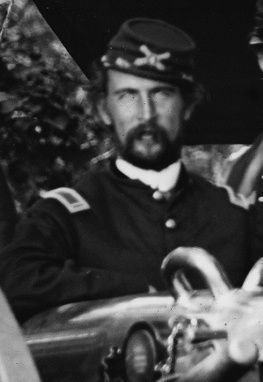
4. Rufus King Jr.
"This officer, when his captain was wounded, succeeded to the command of two batteries while engaged against a superior force of the enemy and fought his guns most gallantly until compelled to retire." Rufus King Jr.'s Medal of Honor Citation awarded on April 2, 1898 for his actions at White Oak Swamp on June 30, 1862.
Credits. This page was last revised on September 30, 2022. It was originally submitted on May 5, 2008, by Craig Swain of Leesburg, Virginia. This page has been viewed 2,893 times since then and 36 times this year. Last updated on December 1, 2021, by Allen C. Browne of Silver Spring, Maryland. Photos: 1, 2, 3. submitted on May 5, 2008, by Craig Swain of Leesburg, Virginia. 4. submitted on September 14, 2013, by Allen C. Browne of Silver Spring, Maryland. • Bill Pfingsten was the editor who published this page.
