Downtown Williamsport
Birthplace of the Little League World Series
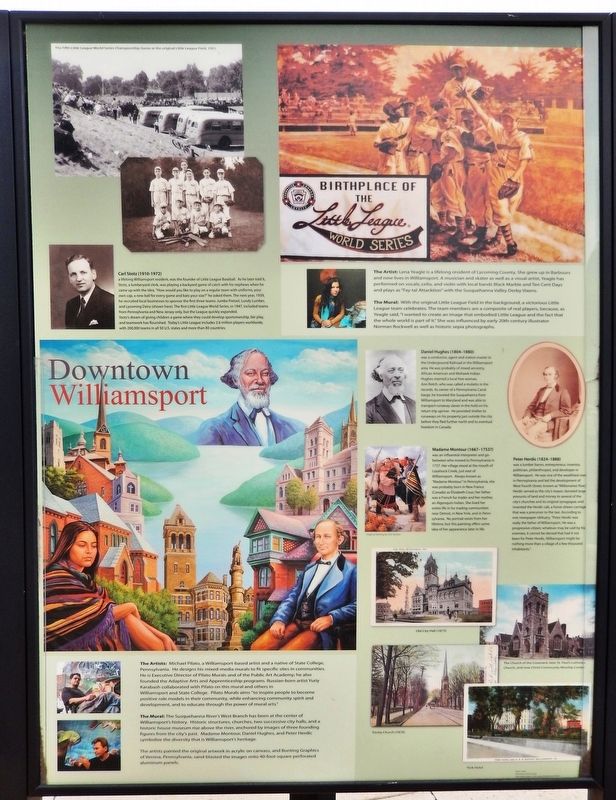
Carl Stotz (1910-1972)
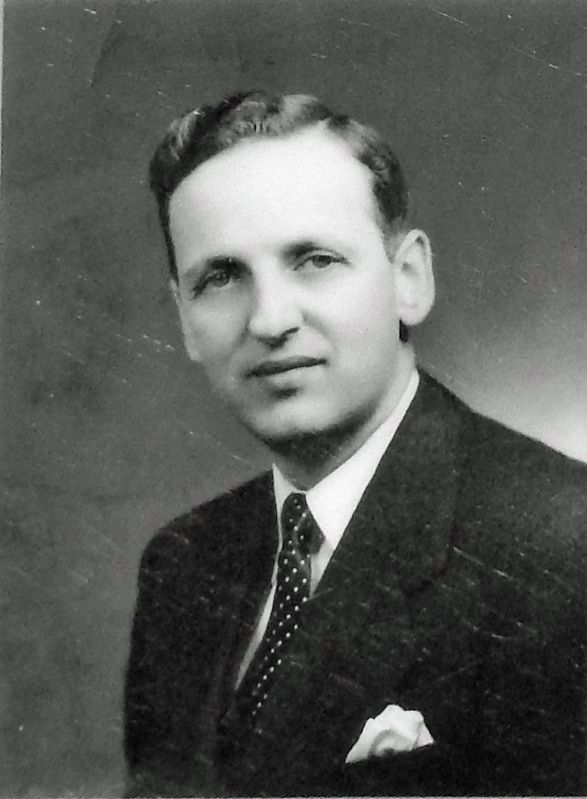
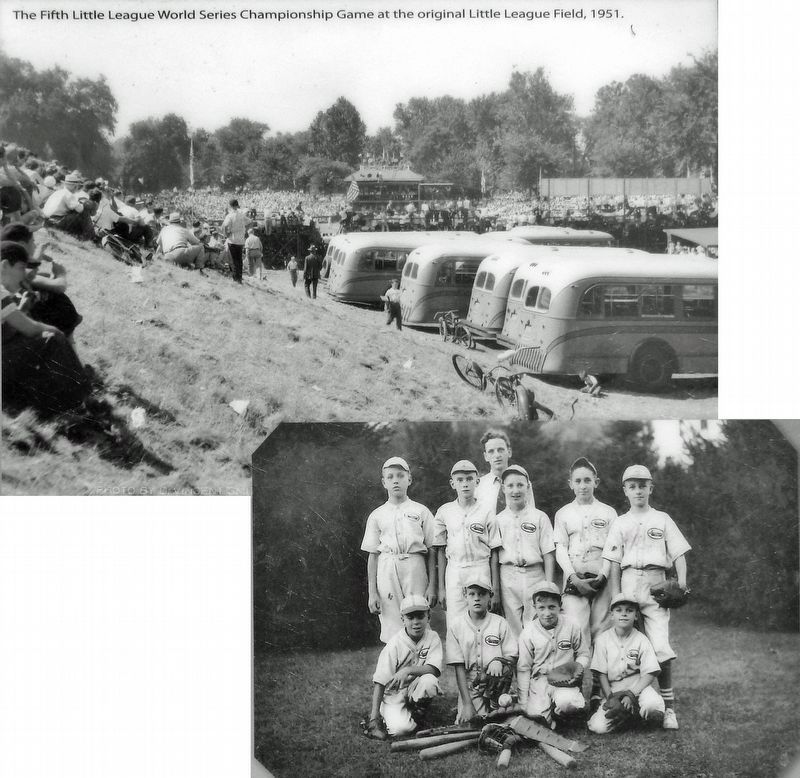
a lifelong Williamsport resident, was the founder of Little League Baseball. As he later told it, Stotz, a lumberyard clerk, was playing a backyard game of catch with his nephews when he came up with the idea. "How would you like to play on a regular team with uniforms, your own cap, a new ball for every game and bats your size?" he asked them. The next year, 1939, he recruited local businesses to sponsor the first three teams: Jumbo Pretzel, Lundy Lumber, and Lycoming Dairy (shown here). The first Little League World Series, in 1947, included teams from Pennsylvania and New Jersey only, but the League quickly expanded.
Stotz's dream of giving children a game where they could develop sportsmanship, fair play, and teamwork has flourished. Today's Little League includes 2.6 million players worldwide, with 200,000 teams in all 50 U.S. states and more than 80 countries.
Daniel Hughes (1804-1880)
was a conductor, agent and station master in the Underground Railroad in the Williamsport area. He was probably of mixed ancestry, African American and Mohawk Indian. Hughes married a local free woman, Ann Rotch,
this page online
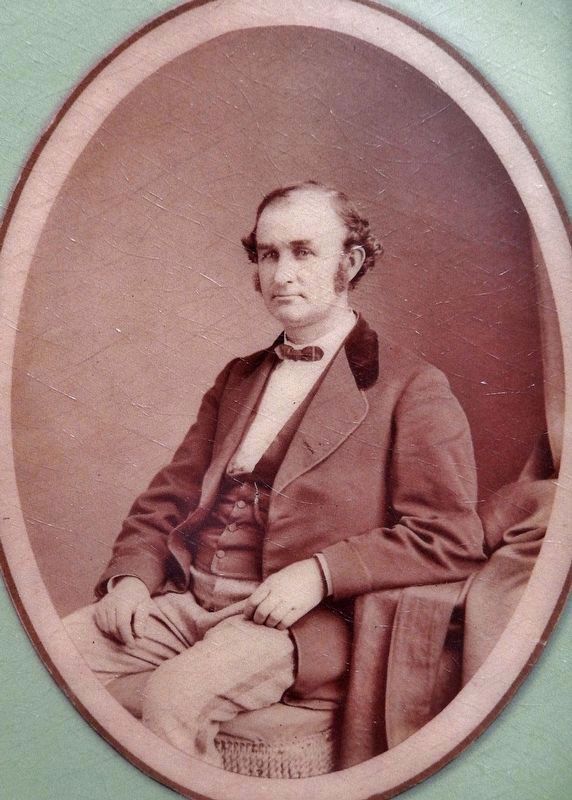
Peter Herdic (1824-1888)
was a lumber baron, entrepreneur, inventor, politician, philanthropist, and developer in Williamsport. He was one of the wealthiest men in Pennsylvania and led the development of West Fourth Street, known as "Millionaires' Row." Herdic served as the city's mayor, donated large amounts of land and money to several of the city's churches and its original synagogue, and invented the Herdic cab, a horse-drawn carriage that was a precursor to the taxi. According to one newspaper obituary, "Peter Herdic was really the father of Williamsport. He was a progressive citizen; whatever may be said by his enemies, it cannot be denied that had it not been for Peter Herdic, Williamsport might be nothing more than a village of a few thousand inhabitants."
Madame Montour (1667-1753?)
was
[photo captions]
• Old City Hall (1875)
• The Church of the Covenant, later St. Paul’s Lutheran Church, and now Christ Community Worship Center
• Trinity Church (1876)
• Park Hotel
Topics. This historical marker is listed in these topic lists: Abolition & Underground RR • Arts, Letters, Music • Settlements & Settlers • Sports.
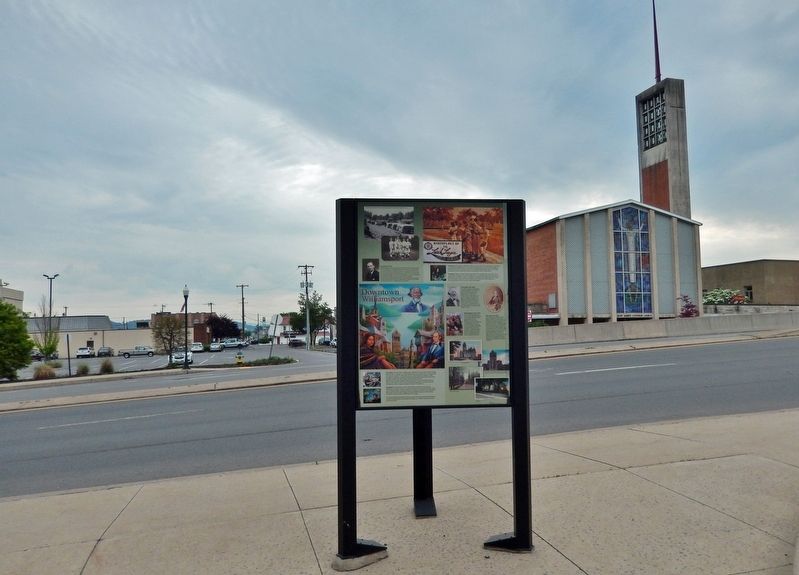
Location. 41° 14.392′ N, 77° 0.016′ W. Marker is in Williamsport, Pennsylvania, in Lycoming County. It is on Market Street just south of West Church Street, on the right when traveling south. Marker is located along

Regionally, this marker is in the Pennsylvania Wilds and in the Susquehanna Valley. It is also in the American Northeast, in the Mid-Atlantic, in Appalachia, and specifically in Northern Appalachia. Globally, it is in North America, the Western Hemisphere, the Western World, and the Anglosphere. Historically, it finds itself in what was once the Haudenosaunee (Iroquois) Confederacy and also one of the original Thirteen Colonies.
Other nearby markers. At least 8 other markers are within walking distance of this marker: St. Mark's Lutheran Church (within shouting distance of this marker); Market Square (about 500 feet away, measured in a direct line); Little League • Big Legacy (about 600 feet away); Lycoming County (about 600 feet away); Lincoln's Gettysburg Address (about 700 feet away); Transportation Tribute (about 700 feet away); Symbols Of Our Heritage (about 800 feet away); Architectural Artifacts
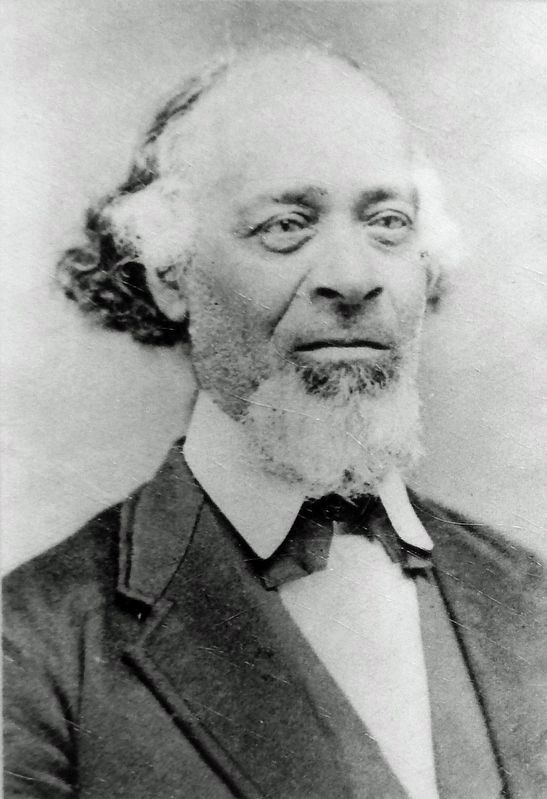
(1804-1880)
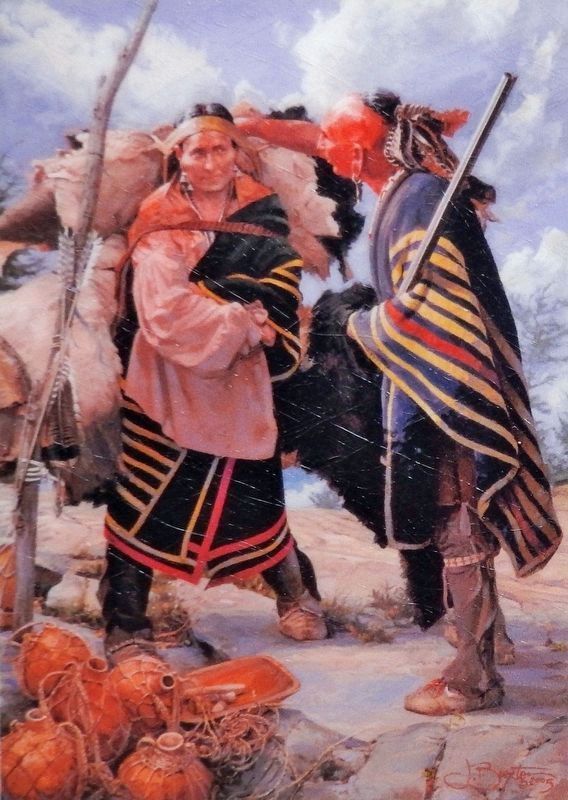
(1667-1753?)
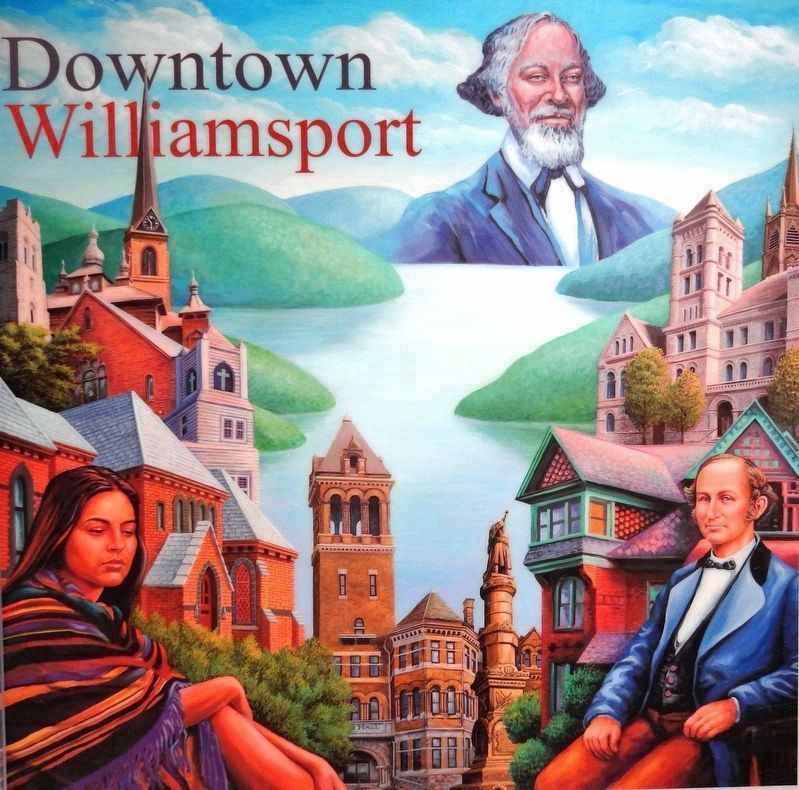
The Mural: The Susquehanna River's West Branch has been at the center of Williamsport's history. Historic structures, churches, two successive city halls, and a historic house museum rise above the river, anchored by images of three founding figures from the city's past. Madame Montour, Daniel Hughes, and Peter Herdic symbolize the diversity that is Williamsport's heritage.
The artists painted the original artwork in acrylic on canvass, and Bunting Graphics of Verona, Pennsylvania, sand-blasted the images onto 40-foot-square perforated aluminum panels.
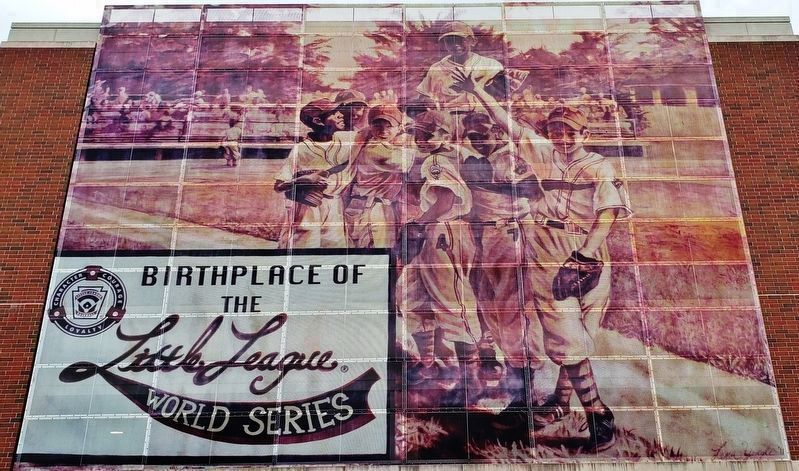
The Mural: With the original Little League Field in the background, a victorious Little League team celebrates. The team members are a composite of real players, because, as Yeagle said, "I wanted to create an image that embodied Little League and the fact that the whole world is part of it." She was influenced by early 20th-century illustrator Norman Rockwell as well as historic sepia photographs.
Credits. This page was last revised on December 6, 2021. It was originally submitted on December 6, 2021, by Cosmos Mariner of Cape Canaveral, Florida. This page has been viewed 556 times since then and 36 times this year. Photos: 1, 2, 3, 4, 5, 6, 7, 8, 9. submitted on December 6, 2021, by Cosmos Mariner of Cape Canaveral, Florida.
