Near Marland in Noble County, Oklahoma — The American South (West South Central)
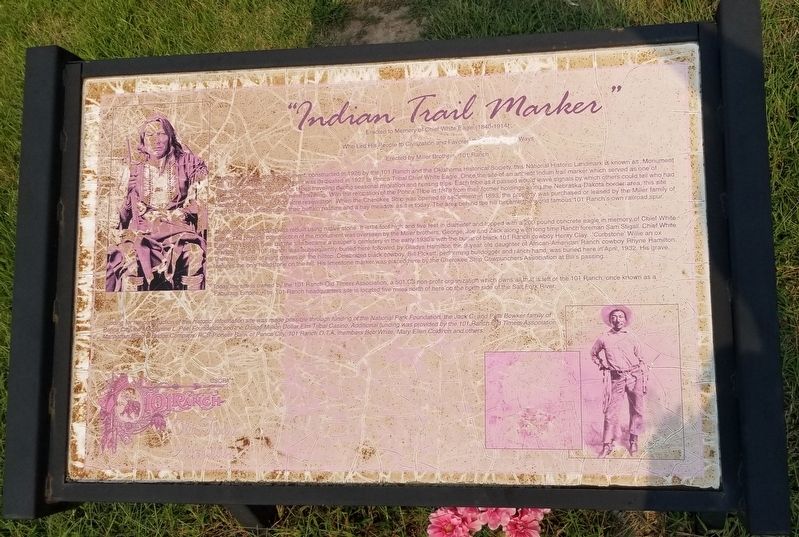
"Indian Trail Marker"
Erected to Memory of Chief White Eagle (1940-1914)
| — | Who led His People to Civilization and Favored the Native Ways | — |
Photographed by James Hulse, September 10, 2021
1. "Indian Trail Marker" Marker
The original stone cairn was rebuilt using native stone. It is 14 foot high and five feet in diameter and topped with a 200 pound concrete eagle in memory
this page online
Today the site is owned by the 101 Ranch Old Timers Association, a 501 03 non-profit organization which owns all that is left of the 101 Ranch, once known as a "Fabulous Empire". The 101 Ranch headquarters site is located five miles north of here on the north side of the Salt Fork River.
Funding for the construction of this historic information site was made possible through funding of the National Park Foundation, the Jack C. and Patti Bowker family of Ponca City, the Madalynne L. Peel Foundation and the Osage Million Dollar Elm Tribal Casino. Additional funding was provided by the 101 Ranch Old Timers Association, Manhattan Bridge & Company, RCB-Pioneer Bank of Ponca City, 101 Ranch O.T.A. members Bob White, Mary Ellen Coldiron and others.
Erected by 101
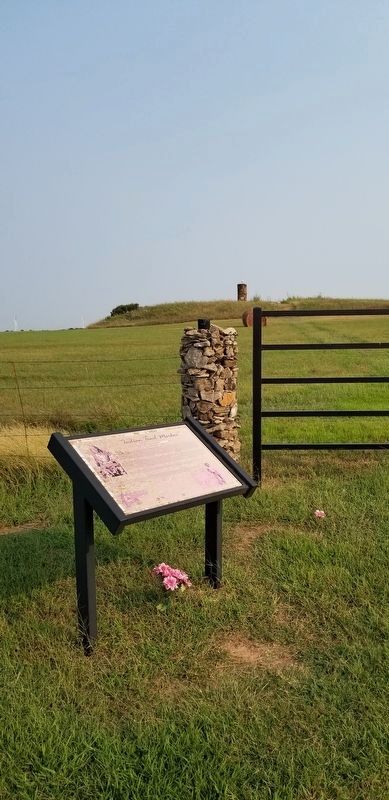
Photographed by James Hulse, September 10, 2021
2. The "Indian Trail Marker" Marker and the Monument Hill in the background
Topics. This historical marker is listed in these topic lists: African Americans • Cemeteries & Burial Sites • Communications • Indigenous Peoples and Communities. A significant historical month for this entry is April 1932.
Location. 36° 34.21′ N, 97° 8.75′ W. Marker is near Marland, Oklahoma, in Noble County. It is on Ranch Road (State Highway 156) 0.3 miles north of West 8th Street, on the left when traveling south. The marker is located at a small historic park. Touch for map. Marker is in this post office area: Marland OK 74644, United States of America. Touch for directions.

Regionally, this marker is in Northwest Oklahoma — Red Carpet Country and specifically in Central Oklahoma—Frontier Country. It is also in the American South, specifically on the prairies, and on the Southern Plains. Globally, it is in North America, the Western Hemisphere, the Western World, and the Anglosphere. Historically, it finds itself in what was once the territory of the Mississippian Culture, the Louisiana Purchase, and Cherokee Outlet.
Other nearby markers. At least 8 other markers are within 7 miles of this marker, measured as the crow flies: 101 Ranch (approx. ¼ mile away); A John Deer Rowe Plow Seed Planter (approx. 2.9 miles away); Two Old Potato Plows (approx. 3 miles away); 101 Dairy Barn Vent from Dairy Barn (approx. 3 miles away); a different marker also named 101 Ranch (approx. 3 miles away); Native American Involvement …in the 101 Ranch (approx. 3 miles away); "White House" (approx. 3 miles away); Otoe Missouri Indians War Memorial (approx. 6.7 miles away).
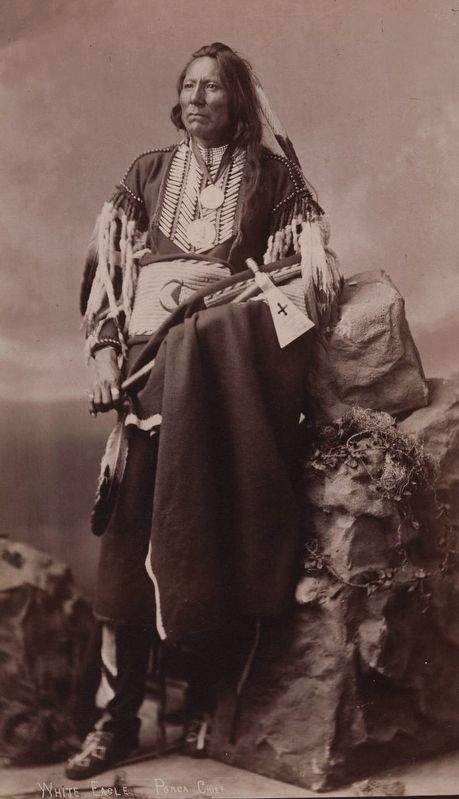
Also see . . . Chief White Eagle.
Chief White Eagle (c. 1825 - February 3, 1914) was a Native American politician and American civil rights leader who served as the hereditary chief of the Ponca from 1870(Submitted on December 15, 2021, by James Hulse of Medina, Texas.)until 1904. His 34-year tenure as the Ponca head of state spanned the most consequential period of cultural and political change in their history, beginning with the unlawful Ponca Trail of Tears in 1877 and continuing through his successful effort to obtain justice for his people by utilizing the American media to wage a public relations campaign against the United States and President Rutherford B. Hayes. His advocacy against America's Indian removal policy following the Ponca Trail of Tears marked a shift in public opinion against the federal government's Indian policy that ended the policy of removal, placing him at the forefront of the nascent Native American civil rights movement in the second half of the 19th century. Source: WikipediaPublic Domain - John K. Hillers, circa 18773. Chief White Eagle
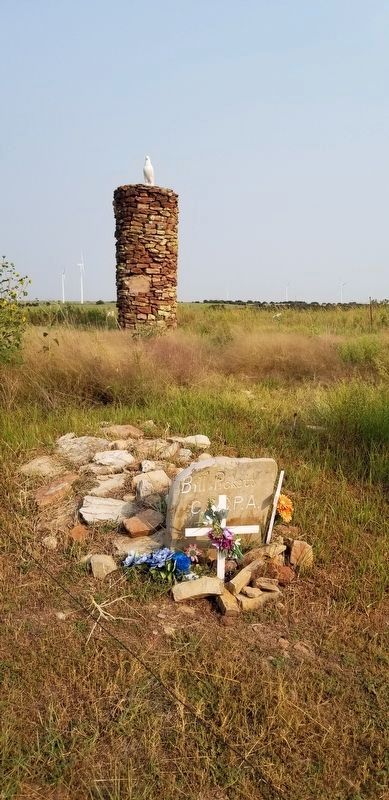
Photographed by James Hulse, September 10, 2021
4. The gravestone of Bill Pickett and the stone cairn with White Eagle on top
Photographed by James Hulse, September 10, 2021
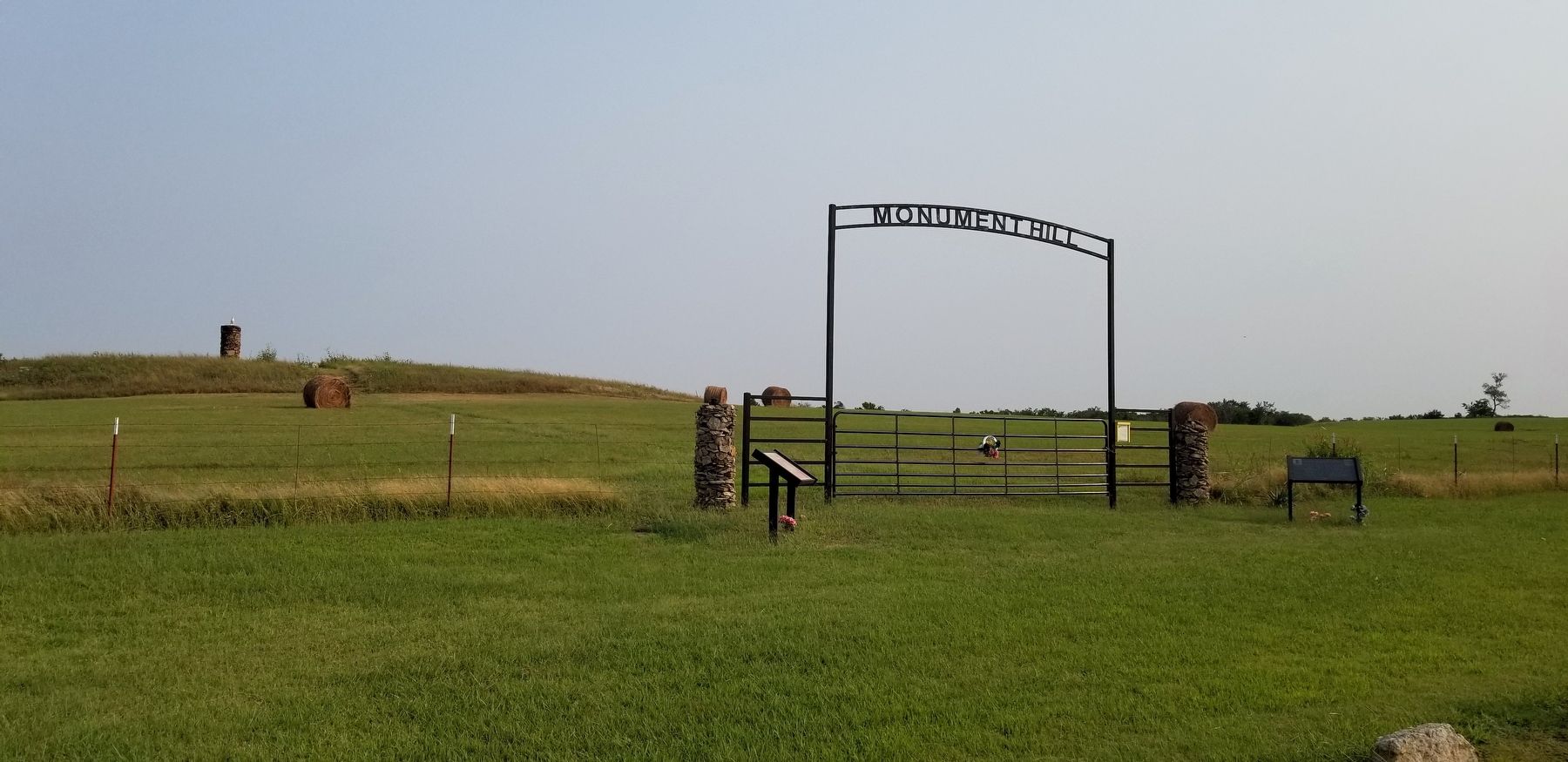
5. The view of the "Indian Trail Marker" Marker and the Monument Hill from the parking lot
Credits. This page was last revised on December 15, 2021. It was originally submitted on December 14, 2021, by James Hulse of Medina, Texas. This page has been viewed 2,408 times since then and 258 times this year. Photos: 1, 2, 3, 4, 5. submitted on December 15, 2021, by James Hulse of Medina, Texas.
