
Historic District in St. Augustine in St. Johns County, Florida — The American South (South Atlantic)
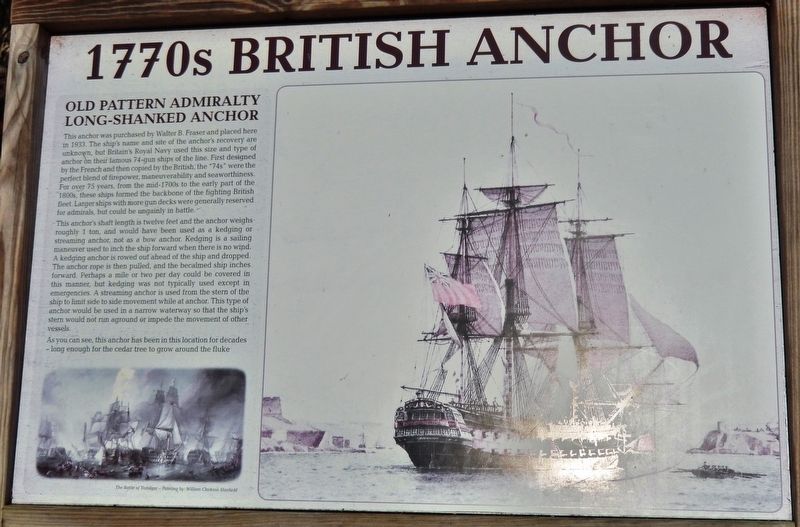
1770s British Anchor
Old Pattern Admiralty Long-Shanked Anchor
Photographed by Cosmos Mariner, December 16, 2021
1. 1770s British Anchor Marker
This anchor's shaft length is twelve feet and the anchor weighs roughly 1 ton, and would have been used as a kedging or streaming anchor, not as a bow anchor. Kedging is a sailing maneuver used to inch the ship forward when there is no wind. A kedging anchor is rowed out-ahead of the ship and dropped. The anchor rope is then pulled, and the becalmed ship inches forward. Perhaps a mile or two per day could be covered in this manner, but kedging was not typically used except in emergencies. A streaming anchor is used from
this page online
As you can see, this anchor has been in this location for decades — long enough for the cedar tree to grow around the fluke.
Topics. This historical marker is listed in these topic lists: Colonial Era • Waterways & Vessels. A significant historical year for this entry is 1770.
Location. 29° 54.422′ N, 81° 18.913′ W. Marker is in St. Augustine, Florida, in St. Johns County. It is in the Historic District. It can be reached from Williams Street east of Magnolia Avenue. Marker is located along the interpretive trail in Ponce de León's Fountain of Youth Archaeological Park. Touch for map. Marker is at or near this postal address: 11 Magnolia Avenue, Saint Augustine FL 32084, United States of America. Touch for directions.

Regionally, this marker is in First Coast and in Greater Jacksonville. It is also in the American South and on the Eastern Seaboard. Globally, it is in the North Atlantic Region, North America, a Gulf
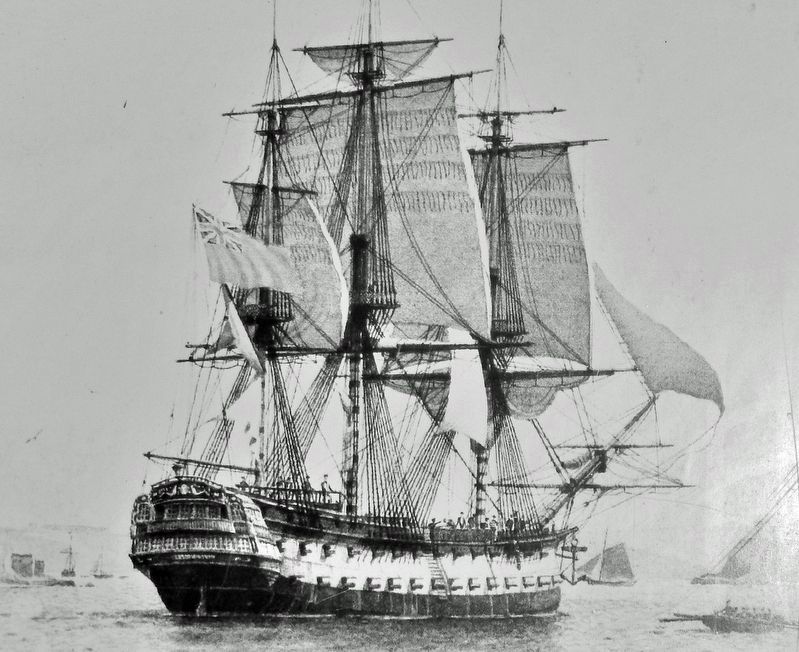
2. Marker detail: British 74-gun Ship
Other nearby markers. At least 8 other markers are within walking distance of this marker: The Original Mission Church (a few steps from this marker); Copper Cauldron (a few steps from this marker); Mission Life in Nombre de Dios (a few steps from this marker); a different marker also named The Original Mission Church (a few steps from this marker); Common Anchor (a few steps from this marker); Life in the Timucuan Village (a few steps from this marker); Timucuan Style Dugout Canoe (within shouting distance of this marker); Spanish Catholic Missions of La Florida (within shouting distance of this marker). Touch for a list and map of all markers in St. Augustine.
Related markers. Click here for a list of markers that are related to this marker. Ponce de León's Fountain of Youth Archaeological Park
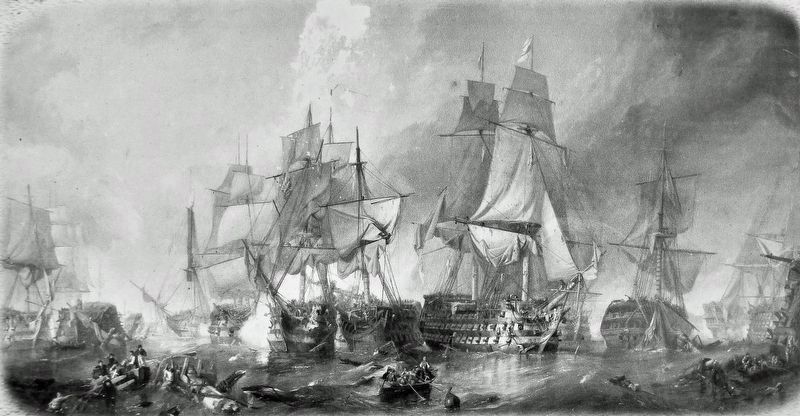
3. Marker detail: The Battle of Trafalgar

Photographed by Cosmos Mariner, December 16, 2021
4. 1770s British Anchor Marker
Credits. This page was last revised on September 5, 2024. It was originally submitted on December 27, 2021, by Cosmos Mariner of Cape Canaveral, Florida. This page has been viewed 656 times since then and 53 times this year. Photos: 1, 2, 3, 4. submitted on December 28, 2021, by Cosmos Mariner of Cape Canaveral, Florida.
