Druid Hill Park in Baltimore, Maryland — The American Northeast (Mid-Atlantic)
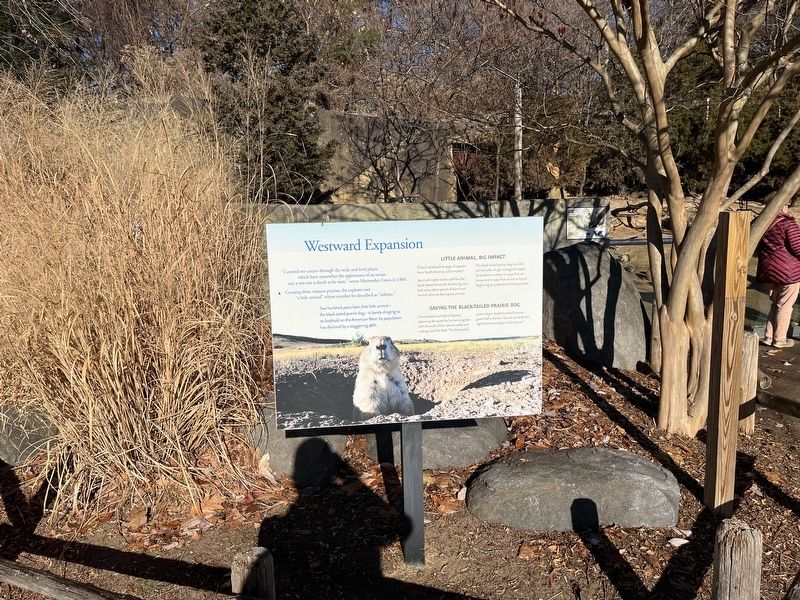
Westward Expansion
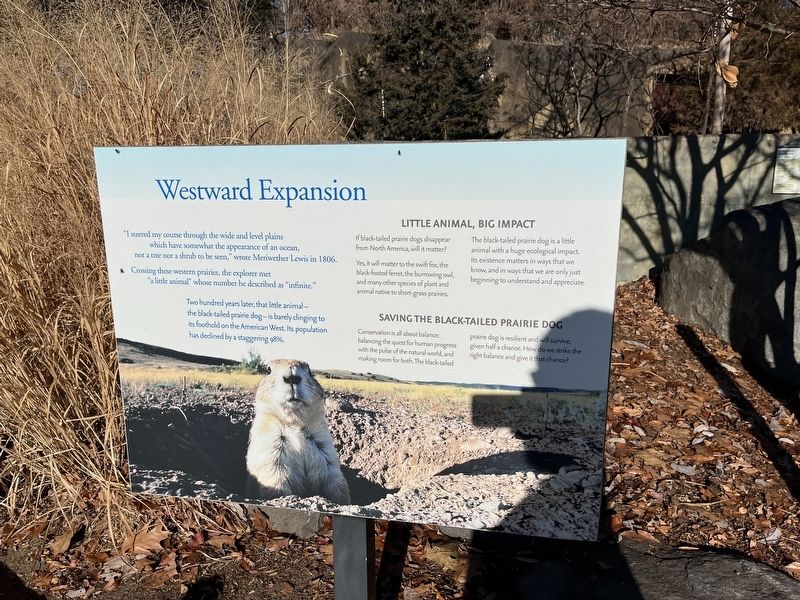
"I steered my course through the wide and level plains which have somewhat the appearance of an ocean, not a tree nor a shrub to be seen," wrote Meriwether Lewis in 1806.
Crossing these westward prairies, the explorer met "a little animal" whose number he described as "infinite."
Two hundred years later, that little animal—the black-tailed prairie dog—is barely clinging its foothold on the American West. Its population has declined by a staggering 98%.
Little Animal, Big Impact
If black-tailed prairie dogs disappear from North America, will it matter?
Yes, it will matter to the swift fox, the black-footed ferret, the burrowing owl, and many other species of plant and animal native to short-grass prairies.
The black-tailed prairie dog is a little animal with a huge ecological impact. Its existence matters in ways that we know, and in ways that we are only just beginning to understand and appreciate.
Saving the Black-Tailed Prairie Dog
Conservation is all about balance: balancing the quest for human progress with the pulse of the natural world, and making room for both. The black-tailed prairie dog is
this page online
Topics and series. This historical marker is listed in these topic lists: Animals • Environment • Exploration. In addition, it is included in the Lewis & Clark Expedition series list. A significant historical year for this entry is 1806.
Location. 39° 19.39′ N, 76° 38.942′ W. Marker is in Baltimore, Maryland. It is in Druid Hill Park. It is on Safari Place 0.1 miles north of Beechwood Drive, on the right when traveling east. Touch for map. Marker is in this post office area: Baltimore MD 21217, United States of America. Touch for directions.

Regionally, this marker is in Central Maryland. It is also in the American Mid-Atlantic, in the Chesapeake Bay Region, and on the Eastern Seaboard. Globally, it is in the North Atlantic Region, North America, the Western Hemisphere, the Western World, and the Anglosphere. Historically, it finds itself in what was once one of the original Thirteen Colonies and also the Antebellum South.
Other nearby markers. At least 8 other markers are within walking distance of this
Another marker is no longer nearby. Nation's Third Oldest Zoo (was about 500 feet away but has been permanently removed).
Credits. This page was last revised on December 27, 2021. It was originally submitted on December 27, 2021, by Devry Becker Jones of Washington, District of Columbia. This page has been viewed 242 times since then and 22 times this year. Photos: 1, 2. submitted on December 27, 2021, by Devry Becker Jones of Washington, District of Columbia.
