North Oakland in Pittsburgh in Allegheny County, Pennsylvania — The American Northeast (Mid-Atlantic)
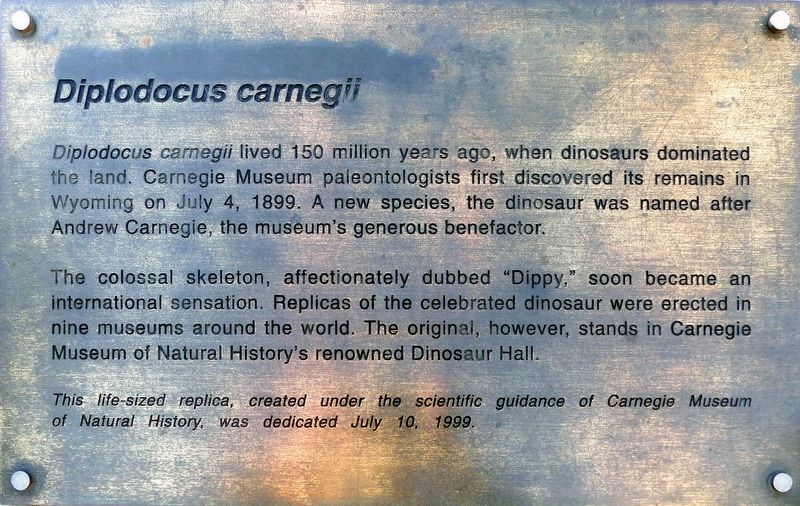
Diplodocus carnegii
Photographed by Allen C. Browne, October 13, 2016
1. Diplodocus carnegii Marker
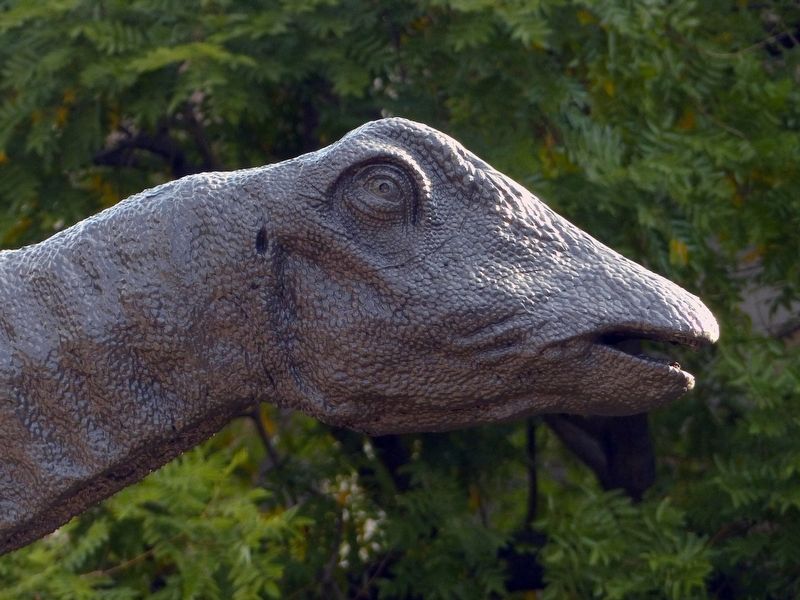
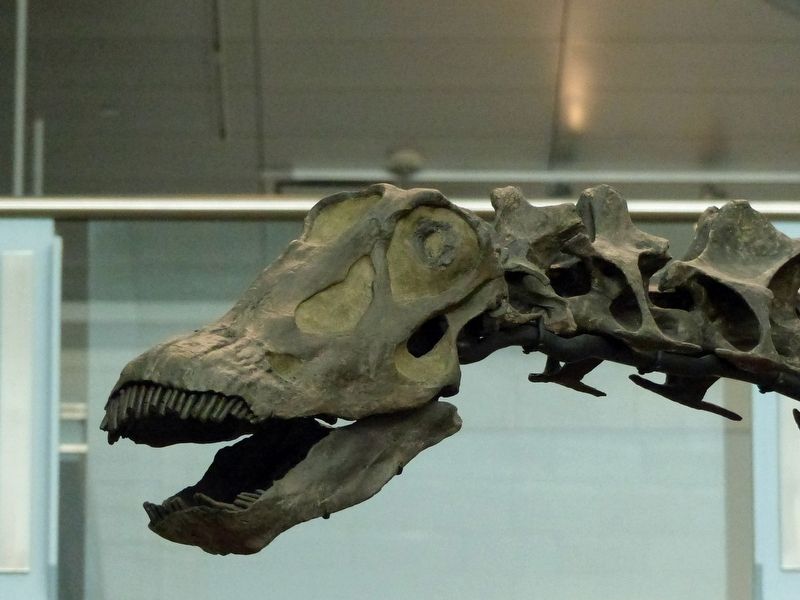
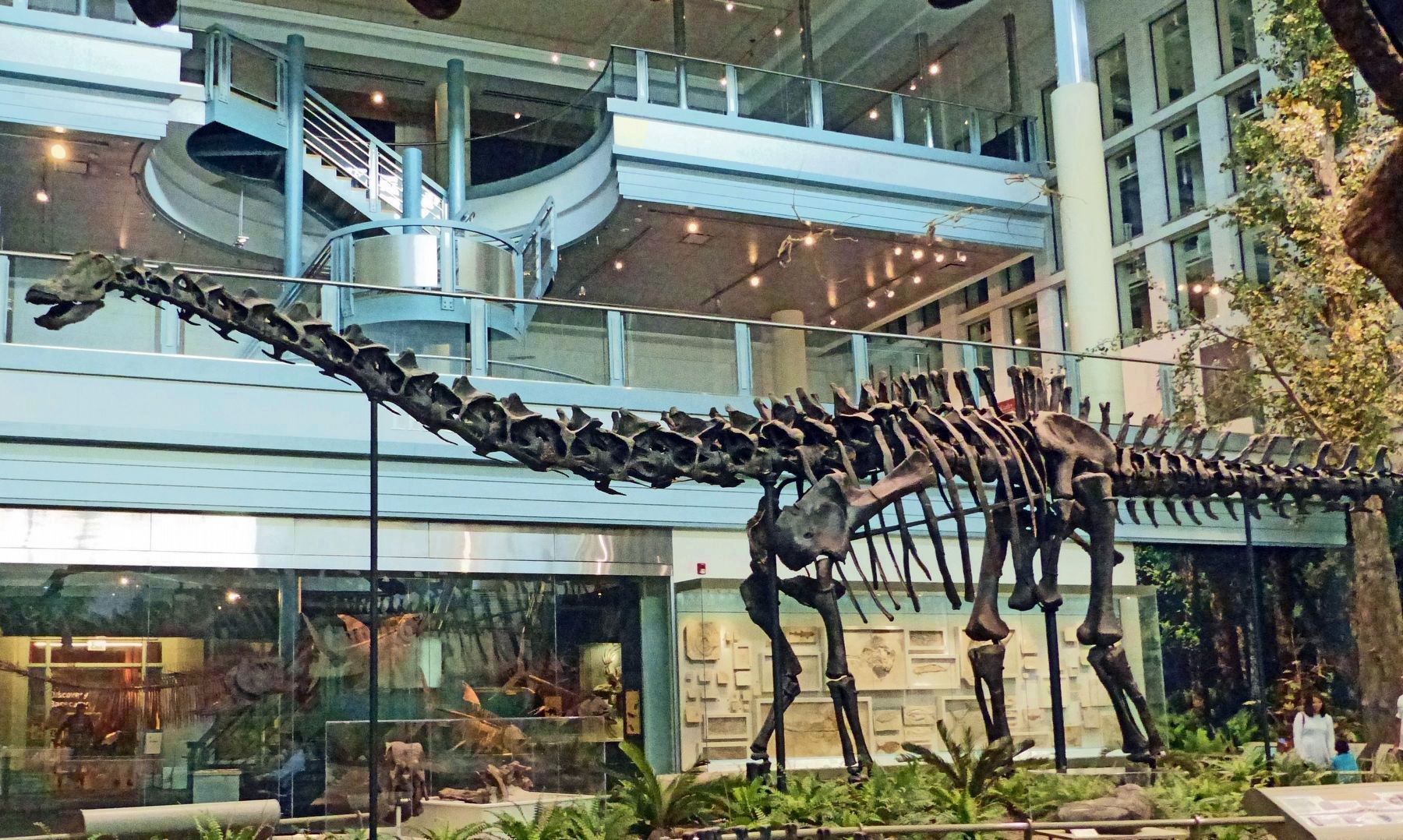
The colossal skeleton, affectionately dubbed “Dippy,” soon became an international sensation. Replicas of the celebrated dinosaur were erected in nine museums around the world. The original, however, stands in Carnegie Museum of Natural History's renowned Dinosaur Hall.
This life-sized replica, created under the scientific guidance of Carnegie Museum of Natural History, was dedicated July 10, 1999.
Erected 1999 by The Carnegie Museum of Natural History.
Topics. This historical marker is listed in these topic lists: Paleontology • Science & Medicine. A significant historical date for this entry is July 4, 1899.
Location. 40° 26.613′ N, 79° 57.086′ W. Marker is in Pittsburgh, Pennsylvania, in Allegheny County. It is in North Oakland. It can be reached from Forbes Avenue. Near the Carnegie Museum of Natural History. Touch for map. Marker is at or near this
this page online

Regionally, this marker is in the American Northeast, in the Mid-Atlantic, in the Ohio River Valley, in Appalachia, and specifically in Northern Appalachia. Globally, it is in North America, the Western Hemisphere, the Western World, and the Anglosphere. Historically, it finds itself in what was once the Viceroyalty of New France, the Haudenosaunee (Iroquois) Confederacy, and one of the original Thirteen Colonies.
Other nearby markers. At least 8 other markers are within walking distance of this marker: Victor Herbert (a few steps from this marker); Stephen C. Foster Memorial (about 400 feet away, measured in a direct line); Andrew Carnegie (about 400 feet away); Pittsburgh Blues War of 1812 Memorial Sundial (about 400 feet away); The Newton Apple Tree (about 400 feet away); American Legion Honor Roll (about 500 feet away); St. Nicholas Cathedral (about 500 feet away); Young Men and Women's Hebrew Assoc. (about 600 feet away). Touch for a list and map of all markers in Pittsburgh.
Also see . . . Dippy the Star-Spangled Dinosaur.
Photographed by Allen C. Browne, October 16, 2016
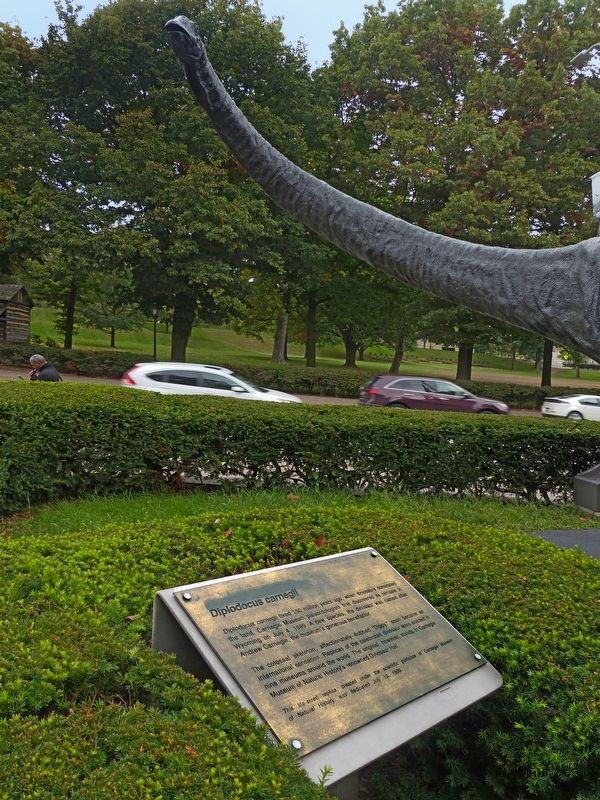
2. Diplodocus carnegii Marker
Photographed by Allen C. Browne, October 13, 2016
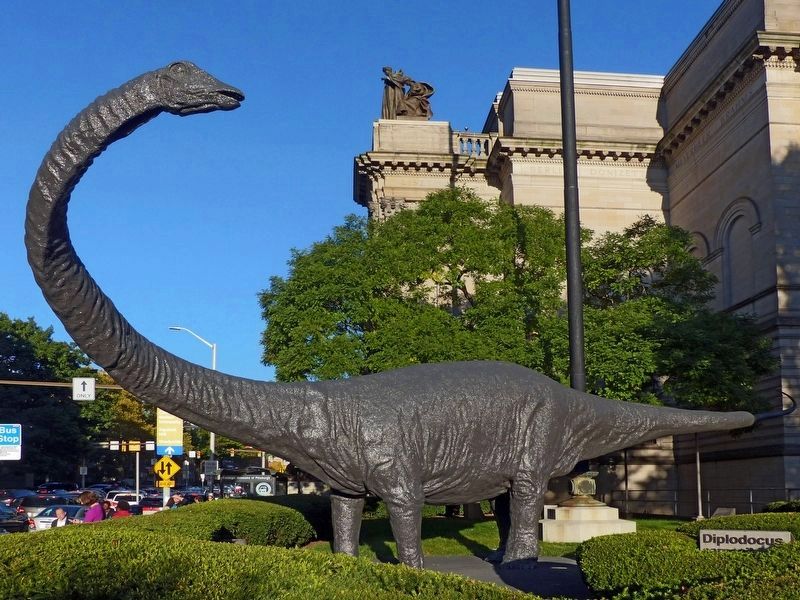
3. "Dippy" the Diplodocus
Photographed by Allen C. Browne, October 16, 2016
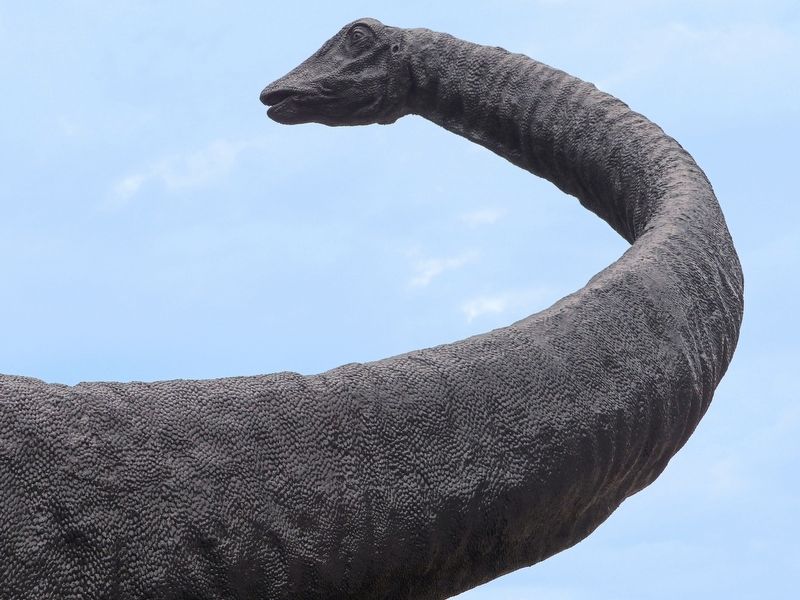
4. "Dippy" the Diplodocus
Photographed by Allen C. Browne, October 16, 2016
5. "Dippy" the Diplodocus
Photographed by Allen C. Browne, October 16, 2016
6. Diplodocus carnegii skeleton inside the Carnegie Museum
Photographed by Allen C. Browne, October 16, 2016
7. Diplodocus carnegii Skeleton
Andrew Carnegie reading his newspaper on November 1898 saw an article headlined "Most Colossal Animal Ever on Earth Just Found Out West!" describing the discovery of this huge dinosaur skeleton by a University of Wyoming Paleontologist. Carnegie wrote to Dr. William J. Holland director of the Carnegie Museum, "Buy this for Pittsburgh" and mailed him a check for $10,000. This skeleton is the type specimen for Diplodicus carnegii.
Photographed by Allen C. Browne, October 16, 2016
8. I ♥ Diplodocus carnegii
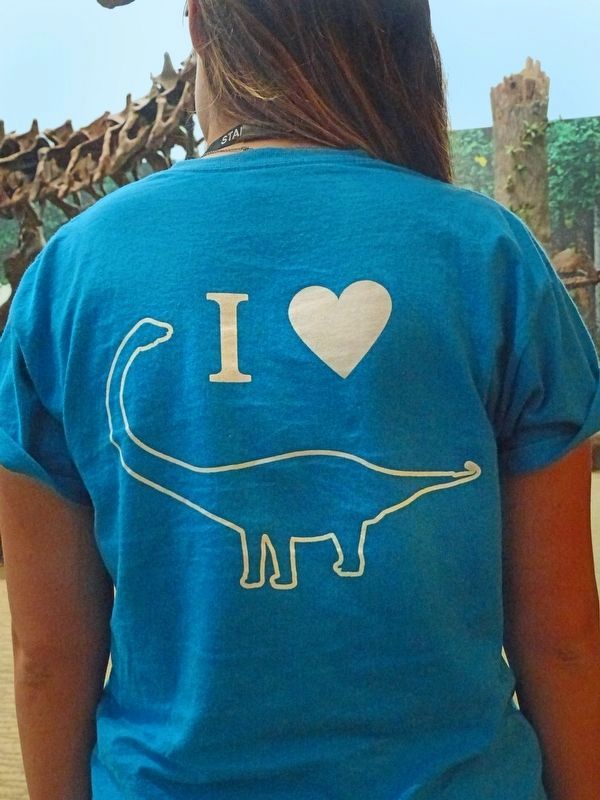
Volunteer Vanessa models a staff tee shirt at the Carnegie Natural History Museum.
Photographed by Allen C. Browne, November 11, 2016
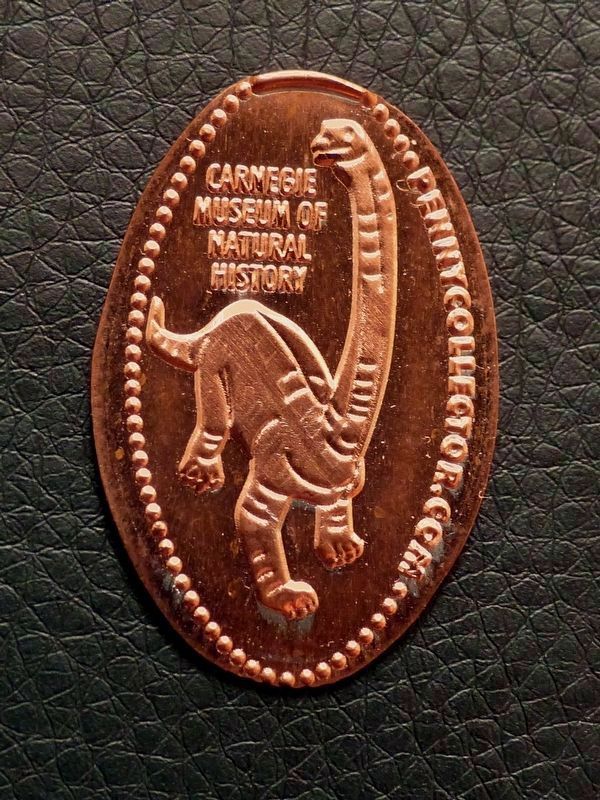
9. Crushed Penny
Credits. This page was last revised on February 2, 2023. It was originally submitted on October 27, 2016, by Allen C. Browne of Silver Spring, Maryland. This page has been viewed 1,268 times since then and 65 times this year. Last updated on December 29, 2021, by Carl Gordon Moore Jr. of North East, Maryland. Photos: 1, 2, 3, 4, 5, 6. submitted on October 27, 2016, by Allen C. Browne of Silver Spring, Maryland. 7, 8, 9. submitted on November 11, 2016, by Allen C. Browne of Silver Spring, Maryland. • J. Makali Bruton was the editor who published this page.
