Lubbock in Lubbock County, Texas — The American South (West South Central)
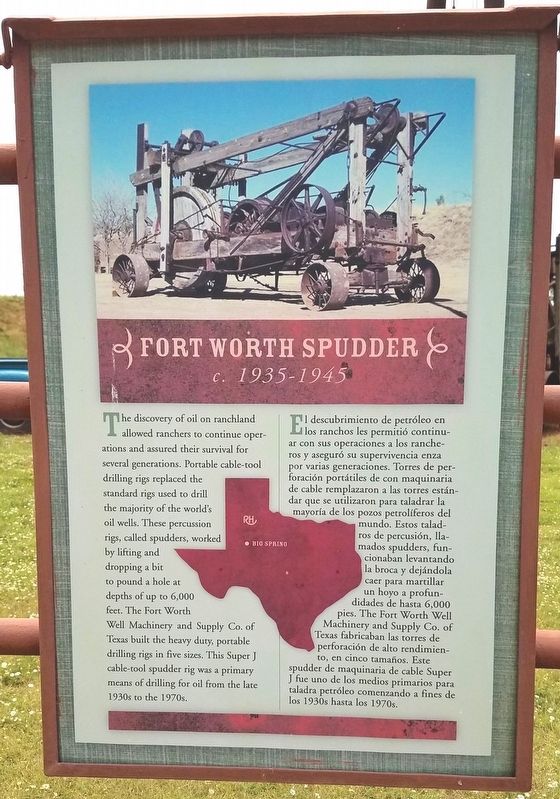
Fort Worth Spudder
c. 1935 - 1945
Photographed by Denise Boose, May 31, 2019
1. Fort Worth Spudder Marker

Spanish:
this page online
Erected by National Ranching Heritage Center.
Topics. This historical marker is listed in these topic lists: Agriculture • Settlements & Settlers. A significant historical year for this entry is 1935.
Location. 33° 35.324′ N, 101° 53.087′ W. Marker is in Lubbock, Texas, in Lubbock County. It can be reached from 4th Street, on the left when traveling north. Touch for map. Marker is at or near this postal address: 3121 4th Street, Lubbock TX 79409, United States of America. Touch for directions.

Regionally, this marker is on Texas’ South Plains. It is also on the American Great Plains, specifically on the Southern Plains, and specifically on the High Plains. Globally, it is in North America, a Gulf of Mexico state, the Western Hemisphere, the Western World, and the Anglosphere. Historically, it finds itself in what was once New Spain, the Comanchería, the Republic
Photographed by Denise Boose, May 31, 2019
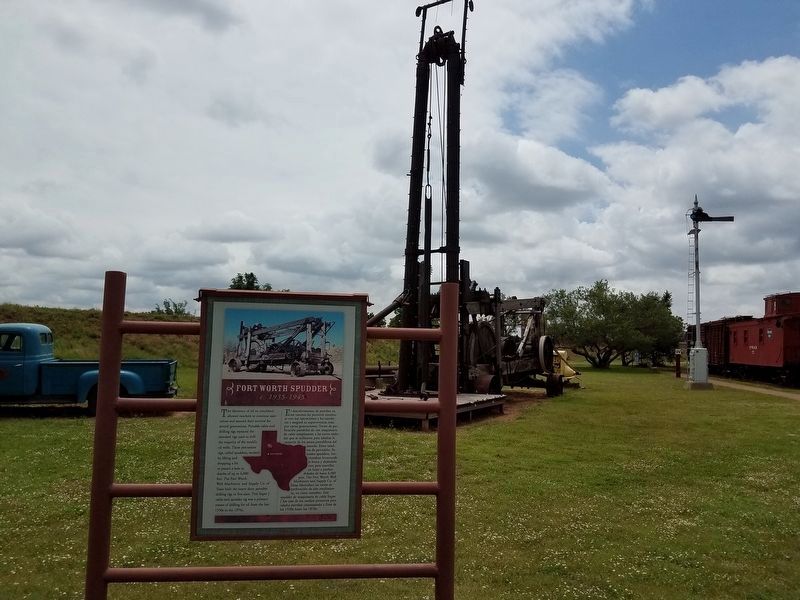
2. Fort Worth Spudder Marker
Other nearby markers. At least 8 other markers are within walking distance of this marker: Ropes Depot (a few steps from this marker); Hoffman Barn (within shouting distance of this marker); 6666 Barn (within shouting distance of this marker); JA Oat Bin (within shouting distance of this marker); JA Oat Bin/Monitor Vaneless L Model Windmill (within shouting distance of this marker); Locomotive (within shouting distance of this marker); Picket and Sotol House (within shouting distance of this marker); Matador Office (within shouting distance of this marker). Touch for a list and map of all markers in Lubbock.
Photographed by Denise Boose, May 31, 2019
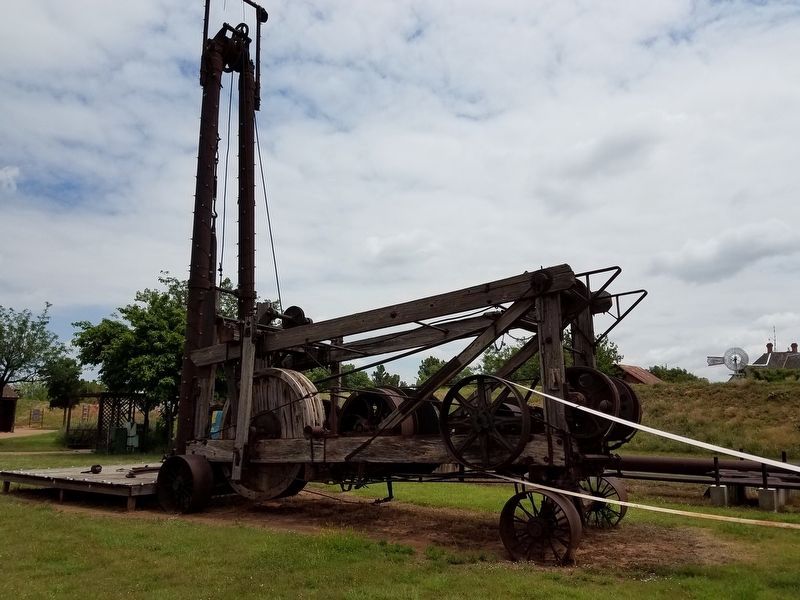
3. Fort Worth Spudder
Credits. This page was last revised on December 1, 2024. It was originally submitted on February 1, 2022, by Denise Boose of Tehachapi, California. This page has been viewed 1,499 times since then and 147 times this year. Photos: 1, 2, 3. submitted on February 2, 2022, by Denise Boose of Tehachapi, California. • J. Makali Bruton was the editor who published this page.
