Winchester, Virginia — The American South (Mid-Atlantic)
The Hollingsworth Family Settlement
Photographed by Devry Becker Jones (CC0), October 31, 2020
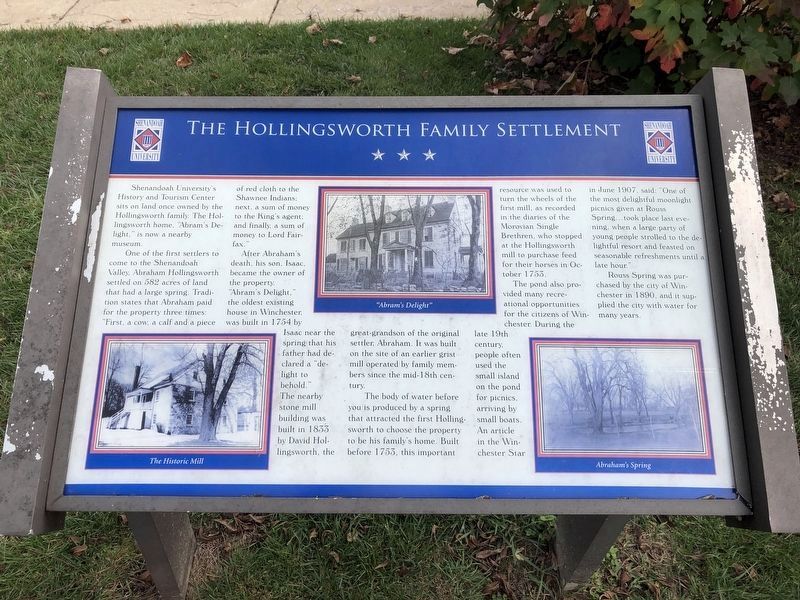
1. The Hollingsworth Family Settlement Marker
One of the first settlers to come to the Shenandoah Valley, Abraham Hollingsworth settled on 582 acres of land that had a large spring. Tradition states that Abraham paid for the property three times: "First, a cow, a calf and a piece of red cloth to the Shawnee Indians; next, a sum of money to the King's agent; and finally, a sum of money to Lord Fairfax."
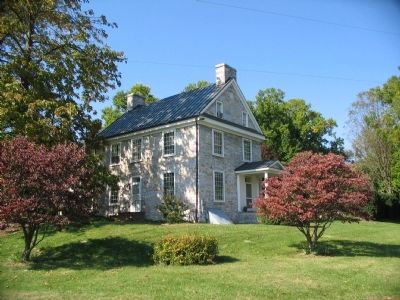
After Abraham's death, his son, Isaac became the owner of the property. "Abram's Delight," the oldest existing house in Winchester, was built in 1754 by Isaac near the spring that his father had declared a "delight to behold." The nearby stone mill building was built in 1833 by David Hollingsworth, the great-grandson of the original settler, Abraham. It was built on the site of an earlier grist mill operated by family members since the mid-18th century.
The body of water before you is produced by a spring that attracted the first Hollingsworth to choose the property to be his family's home. Built before
this page online
The pond also provided many recreational opportunities for the citizens of Winchester. During the late 19th century, people often used the small island on the pond for picnics, arriving by small boats. An article in the Winchester Star in June 1907, said: "One of the most delightful moonlight picnics given at Rouss Spring...took place last evening, when a large party of young people strolled to the delightful resort and feasted on seasonable refreshments until a late hour."
Rouss Spring was purchased by the city of Winchester in 1890, and it supplied the city with water for many years.
Erected 2008 by Shenandoah University.
Topics. This historical marker is listed in this topic list: Settlements & Settlers. A significant historical month for this entry is June 1907.
Location. 39° 10.132′ N, 78° 9.665′ W. Marker is in Winchester, Virginia. It is at the intersection of South Pleasant Valley Road and Milwood Avenue (Business
Photographed by Devry Becker Jones (CC0), October 31, 2020
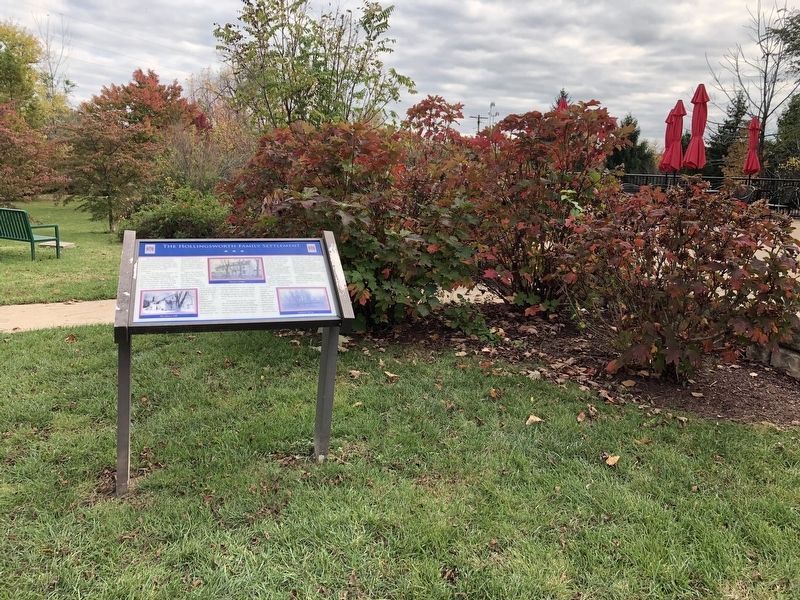
2. The Hollingsworth Family Settlement Marker

Regionally, this marker is in the Shenandoah Valley. It is also in the American South, specifically in the Upper South, and in the Mid-Atlantic. Globally, it is in North America, the Western Hemisphere, the Western World, and the Anglosphere. Historically, it finds itself in what was once the territory of the Mississippian Culture, one of the original Thirteen Colonies, one of the Confederate States of America, and the Antebellum South.
Other nearby markers. At least 8 other markers are within walking distance of this marker: The First Battle of Winchester (a few steps from this marker); Abram's Delight (within shouting distance of this marker); a different marker also named Abram’s Delight (within shouting distance of this marker); a different marker also named Abram's Delight (within shouting distance of this marker); Dr. James A. Davis's Legacy
Photographed by Craig Swain, October 5, 2008
3. Abram's Delight
Other markers no longer nearby. Abram’s Delight (was within shouting distance of this marker but has been reported to have been replaced with another marker now near it); Shawnee Springs Hospital (was approx. 0.2 miles away but has been replaced with another marker now near it).
More about this marker. The marker displays photos of the mill, "Abram's Delight," and Abraham's Spring.
Photographed by Bernard Fisher, December 18, 2025
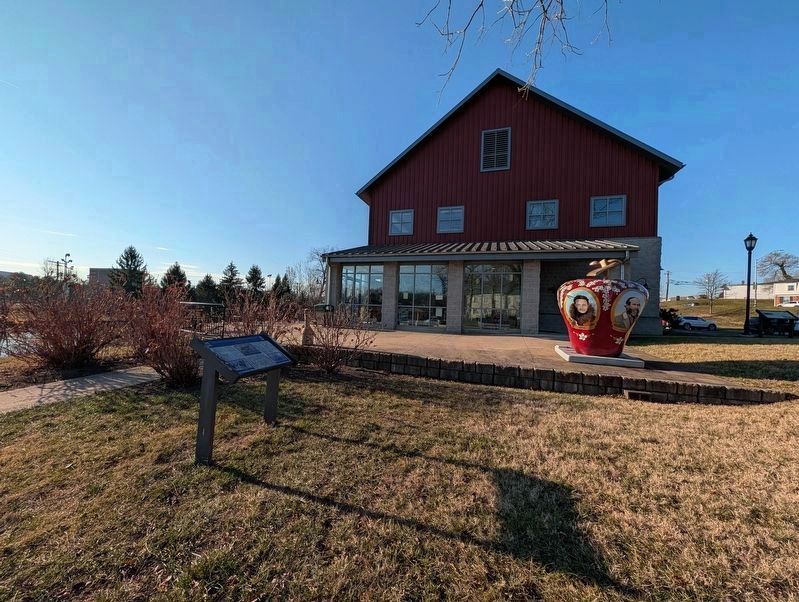
4. The Hollingsworth Family Settlement Marker
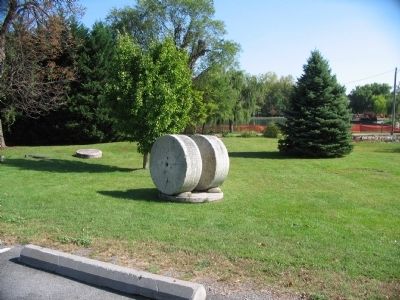
Photographed by Craig Swain, October 5, 2008
5. Mill Stones
A set of mill stones stand near the museum.
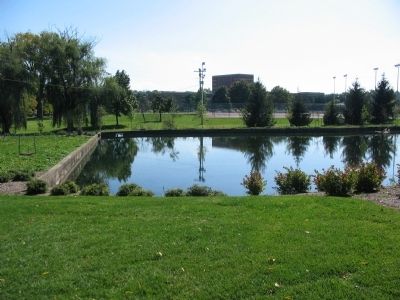
Photographed by Craig Swain, October 5, 2008
6. The Mill Pond
Credits. This page was last revised on December 19, 2025. It was originally submitted on May 31, 2009, by Craig Swain of Leesburg, Virginia. This page has been viewed 2,848 times since then and 121 times this year. Photos: 1, 2. submitted on November 2, 2020, by Devry Becker Jones of Washington, District of Columbia. 3. submitted on May 31, 2009, by Craig Swain of Leesburg, Virginia. 4. submitted on December 19, 2025, by Bernard Fisher of Richmond, Virginia. 5, 6. submitted on May 31, 2009, by Craig Swain of Leesburg, Virginia.
