Clifton in Fairfax County, Virginia — The American South (Mid-Atlantic)
Sangster’s Station
“Tears And Love For the Blue—Love and Tears for the Grey”
Photographed by Allen C. Browne, November 14, 2017
1. Sangster’s Station Marker
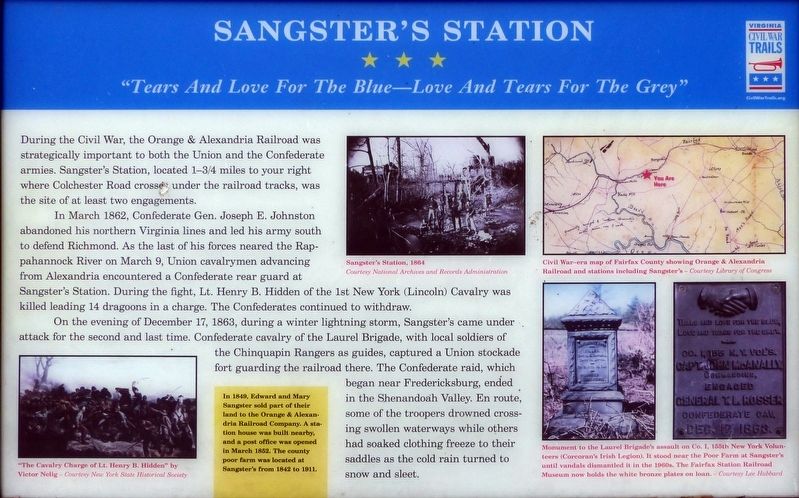
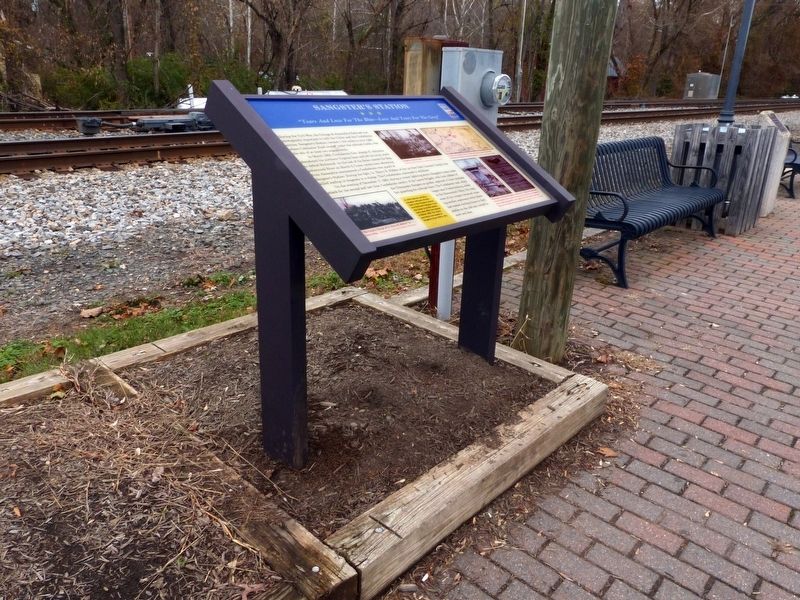
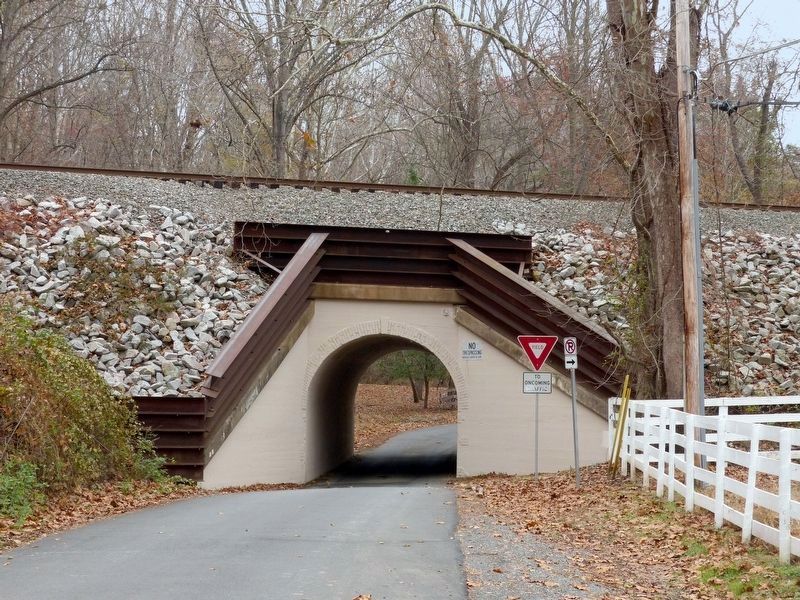
During the Civil War, the Orange & Alexandria Railroad was strategically important to both the Union and the Confederate armies. Sangster's Station, located 1-3/4 miles to your right where Colchester Road crosses under the railroad tracks, was the site of at least two engagements.
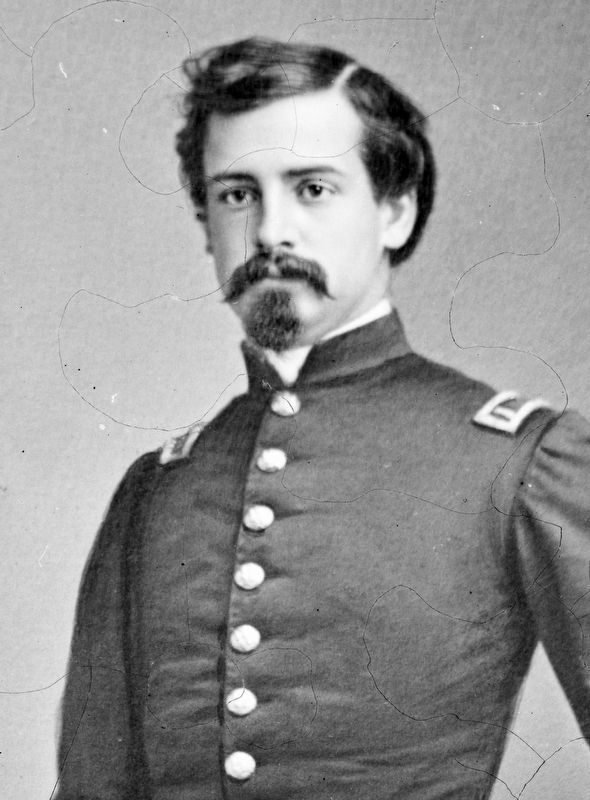
In March 1862, Confederate Gen. Joseph E. Johnston abandoned his northern Virginia lines and led his army south to defend Richmond. As the last of his forces neared the Rappahannock River on March 9, Union cavalrymen advancing from Alexandria encountered a Confederate rear guard at Sangster's Station. During the fight, Lt. Henry B. Hidden of the 1st New York (Lincoln) Cavalry was killed leading 14 dragoons in a charge. The Confederates continued to withdraw.
On the evening of December 17, 1863, during a winter lightning storm, Sangster's came under attack for the second and last time. Confederate cavalry of the Laurel Brigade, with local soldiers of the Chinquapin Rangers as guides, captured a Union stockade fort guarding the railroad there. The Confederate raid, which began near Fredericksburg, ended in the Shenandoah Valley. En route,
this page online
(sidebar)
In 1849, Edward and Mary Sangster sold part of their land to the Orange & Alexandria Railroad Company. A station house was built nearby, and a post office was opened in March 1852. The county poor farm was located at Sangster's from 1842 to 1911.
Erected by Virginia Civil War Trails.
Topics and series. This historical marker is listed in these topic lists: Railroads & Streetcars • War, US Civil. In addition, it is included in the Orange and Alexandria Railroad, and the Virginia Civil War Trails series lists. A significant historical month for this entry is March 1862.
Location. This marker has been replaced by another marker nearby. It was located near 38° 46.856′ N, 77° 23.208′ W. Marker was in Clifton, Virginia, in Fairfax County. It could be reached from the intersection of Main Street (Virginia Route 645) and Ford Lane, on the right when traveling north. Touch for map. Marker was at or near this postal address: 7145 Main Street, Clifton VA 20124, United States
Photographed by Allen C. Browne, November 14, 2017
2. Sangster’s Station Marker

Regionally, this marker was in the Washington Metropolitan Area and in Northern Virginia. It was also in the American South, specifically in the Upper South, in the Mid-Atlantic, and on the Eastern Seaboard. Globally, it was in the North Atlantic Region, North America, the Western Hemisphere, the Western World, and the Anglosphere. Historically, it found itself in what was once the territory of the Mississippian Culture, one of the original Thirteen Colonies, one of the Confederate States of America, and the Antebellum South.
Other nearby markers. At least 8 other markers are within walking distance of this location: Devereux Station (a few steps from this marker); a different marker also named Sangster's Station (a few steps from this marker); Buckley Store (within shouting distance of this marker); Barn (within shouting distance of this marker); “Pink” House (within shouting distance of this marker); Weaver House (within shouting distance of this marker); Clifton Hotel (within shouting distance of this marker); Detwiler House (within shouting distance of this marker). Touch for a list and map
Library of Congress
3. Lt. Henry B. Hidden
Another marker is no longer nearby. Devereux Station (was a few steps from this marker but has been replaced with another marker now near it).
Related marker. Click here for another marker that is related to this marker. This marker has been replaced the linked marker, which was erected by the Town of Clifton.
Photographed by Allen C. Browne, November 14, 2017
4. The Bunnyman Bridge
This underpass through which Colchester Road passes under the Railroad marks the location of Sangster’s Station. The bridge is famous as “The Bunnyman Bridge” because of an urban legend involving a murderous maniac dressed in a bunny costume who is said to have committed several murders there.
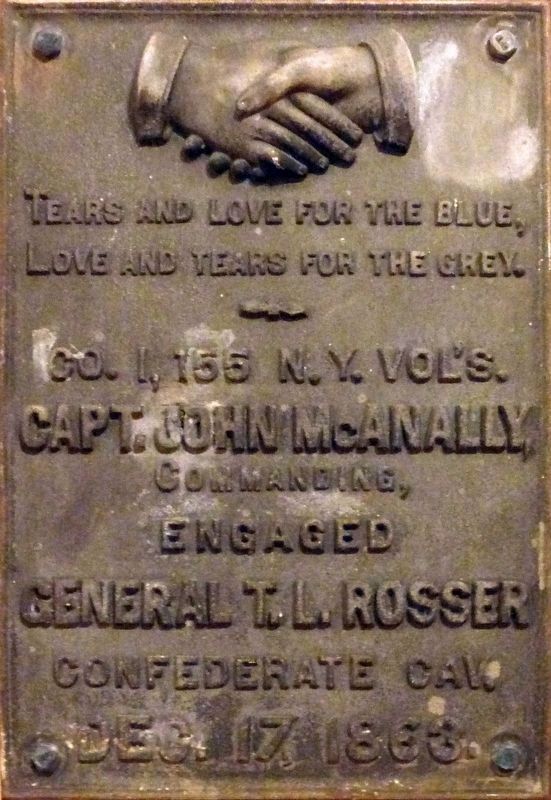
Photographed by Allen C. Browne, January 7, 2018
5. Tears and Love for the Blue,
Love and Tears for the Grey.
Love and Tears for the Grey.
Co. I, 155 N.Y. Vol’s.
Capt. John McAnally,
Commanding,
Engaged
General R.L. Rosser
Confederate Cav.
Dec. 17, 1863.
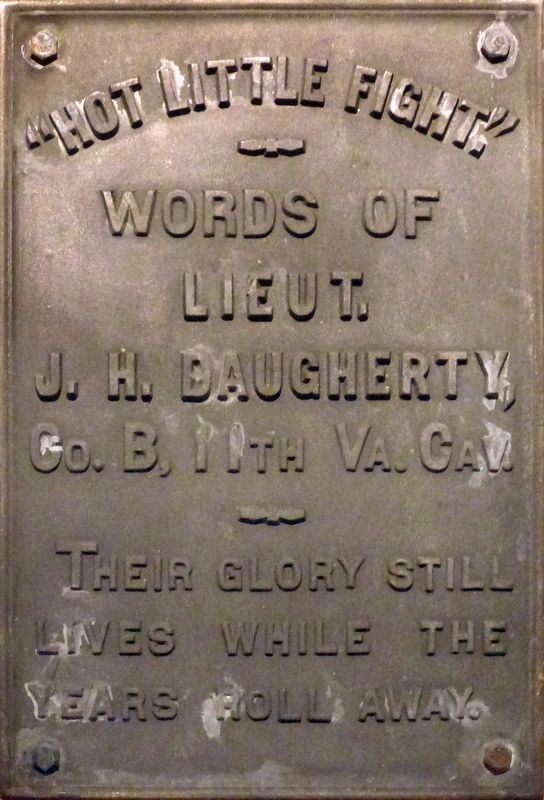
Photographed by Allen C. Browne, January 7, 2018
6. “Hot Little Fight”
Words of
Lieut.
J. H. Daugherty
Co. B. 11th Va. Cav.
-:-
Their Glory Still
Lives While the
Years Roll Away.
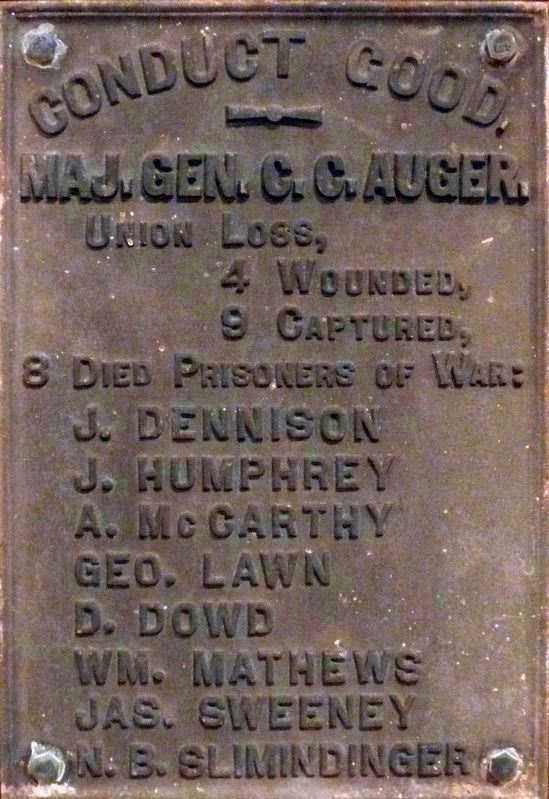
Photographed by Allen C. Browne, January 7, 2018
7. Conduct Good.
Maj. Gen. C. C. Auger,
Union Loss,
4 Wounded,
9 Captured,
8 Died Prisoners of War:
J. Dennison
J. Humphrey
A. McCarthy
Geo. Lawn
D. Dowd
Wm. Mathews
Jas. Sweeney
N. B. Slimindinger
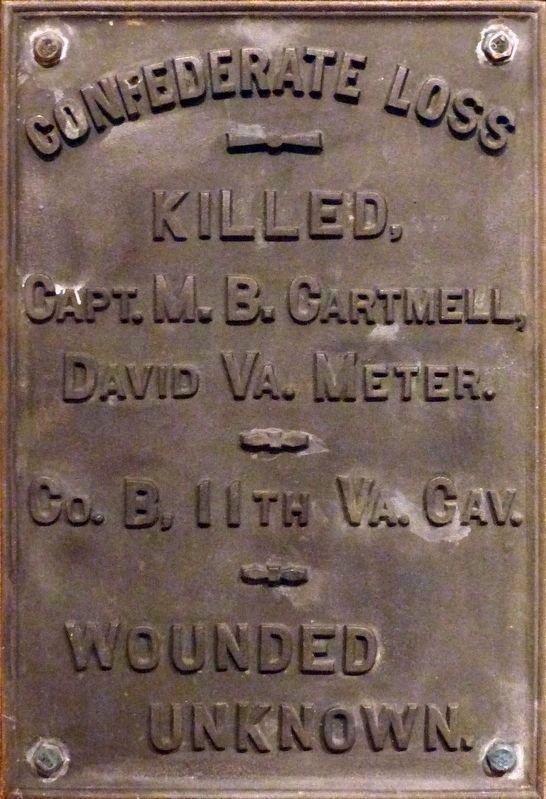
Photographed by Allen C. Browne, January 7, 2018
8. Confederate Loss
Killed.
Capt. M. B. Carmell,
David Va. Meter.
-:-
Co. B. 11th Va. Cav.
-:-
Wounded
Unknown.
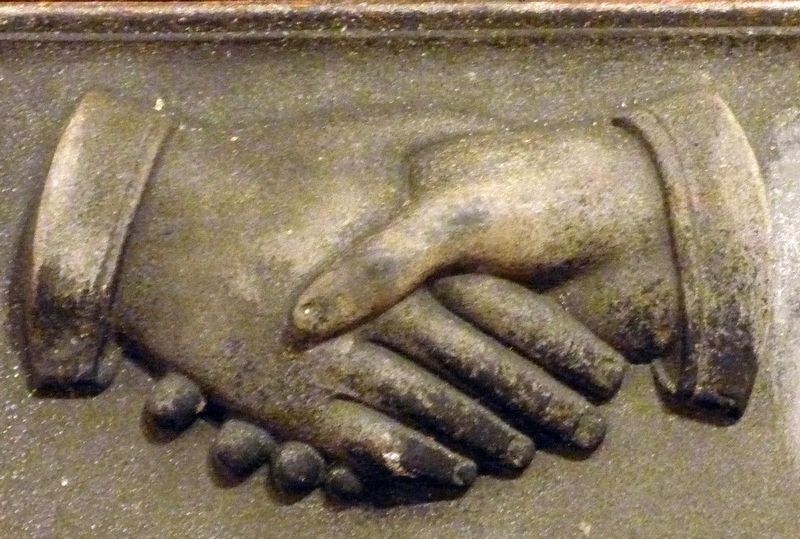
Photographed by Allen C. Browne, January 7, 2018
9. The Handshake
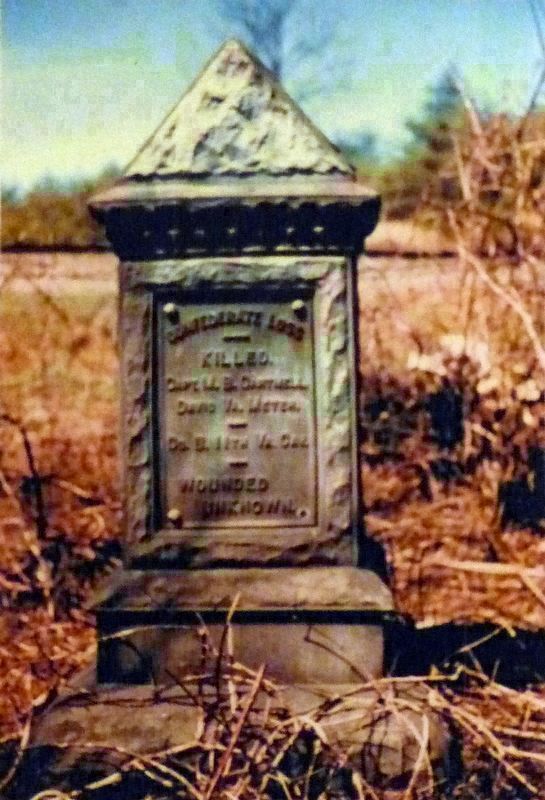
Photographed by Allen C. Browne, January 7, 2018
10. Reconciliation
The Sangster's Station Monument
The Sangster's Station Monument
“These plates once graced the four sides of a monument commemorating the 1863 Battle of Sangster's Station.
Confederate cavalry of the Laurel Brigade clashed with Co. I of the l55th New York Volunteers — known as Corcoran's Irish Legion — on December 17 of that year.
John McAnally, a member of the l55th New York Volunteers and participant in the engagement, initiated an effort in 1903 to recognize units on both sides of the battle. Northern and Southern survivors contributed funds for its construction. The modest marker stood on the grounds of the former Alms House near the site of the clash. It is believed to be the only instance of former enemy combatants collaborating to finance and construct a monument to memorialize their own engagement.
Vandalized in the 1940s, the plates disappeared for many years before being recovered and loaned to the museum. The original statue base disappeared decades ago.
On long term loan from:
Lee Hubbard
John Kincheloe
Lewis Leigh”
Signage at the Fairfax Station Railroad Museum
(1958 photo by Lee Hubbard)
Confederate cavalry of the Laurel Brigade clashed with Co. I of the l55th New York Volunteers — known as Corcoran's Irish Legion — on December 17 of that year.
John McAnally, a member of the l55th New York Volunteers and participant in the engagement, initiated an effort in 1903 to recognize units on both sides of the battle. Northern and Southern survivors contributed funds for its construction. The modest marker stood on the grounds of the former Alms House near the site of the clash. It is believed to be the only instance of former enemy combatants collaborating to finance and construct a monument to memorialize their own engagement.
Vandalized in the 1940s, the plates disappeared for many years before being recovered and loaned to the museum. The original statue base disappeared decades ago.
On long term loan from:
Lee Hubbard
John Kincheloe
Lewis Leigh”
(1958 photo by Lee Hubbard)
Credits. This page was last revised on March 18, 2023. It was originally submitted on November 16, 2017, by Allen C. Browne of Silver Spring, Maryland. This page has been viewed 2,239 times since then and 102 times this year. Last updated on April 21, 2022, by Drew A Gruber of N/a, N/a. Photos: 1, 2, 3, 4. submitted on November 16, 2017, by Allen C. Browne of Silver Spring, Maryland. 5, 6, 7. submitted on January 8, 2018, by Allen C. Browne of Silver Spring, Maryland. 8, 9, 10. submitted on January 9, 2018, by Allen C. Browne of Silver Spring, Maryland. • Bernard Fisher was the editor who published this page.
