Near Monroe in Walton County, Georgia — The American South (South Atlantic)
Moore’s Ford Lynching
Photographed by David Seibert, June 6, 2009
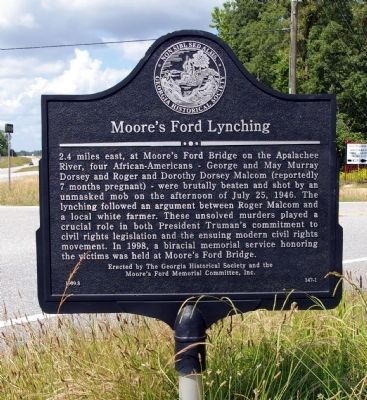
1. Moore’s Ford Lynching Marker
2.4 miles east, at Moore’s Ford Bridge on the Apalachee River, four African-Americans - George and Mae Murray Dorsey and Roger and Dorothy Dorsey Malcom (reportedly 7 months pregnant) - were brutally beaten and shot by an unmasked mob on the afternoon of July 25, 1946. The lynching followed an argument between Roger Malcom and a local white farmer. These unsolved murders played a crucial role in both President Truman’s commitment to civil rights legislation and the ensuing modern civil rights movement. In 1998, a biracial memorial service honoring the victims was held at Moore’s Ford Bridge.
Erected 1999 by Georgia Historical Society and the Moore's Ford Memorial Committee, Inc. (Marker Number 147-1.)
Topics and series. This historical marker is listed in these topic lists: African Americans • Bridges & Viaducts • Civil Rights. In addition, it is included in the Former U.S. Presidents: #33 Harry S. Truman, and the Georgia Historical Society series lists. A significant historical date for this entry is July 25, 1946.
Location. 33° 51.417′ N, 83° 36.733′ W. Marker is near Monroe, Georgia, in Walton County. It is at the
this page online

Regionally, this marker is in the Piedmont and in Metro Atlanta. It is also in the American South and specifically in the Deep South. Globally, it is in North America, the Western Hemisphere, the Western World, and the Anglosphere. Historically, it finds itself in what was once the territory of the Mississippian Culture, one of the original Thirteen Colonies, one of the Confederate States of America, and the Antebellum South.
Other nearby markers. At least 8 other markers are within 7 miles of this marker, measured as the crow flies: Moina Michael (approx. 6 miles away); The Poppy Lady (approx. 6½ miles away); Harris Family Cemetery (approx. 6.8 miles away); Harris Smokehouse (approx. 6.8 miles away); King Cotton (approx. 6.9 miles away); Boll Weevil Eradication Program (approx. 6.9 miles away); The William Harris Homestead (approx. 6.9 miles away); Soil and Water Conservation Districts (approx. 6.9 miles away). Touch for a list and map
Photographed by David Seibert, June 6, 2009
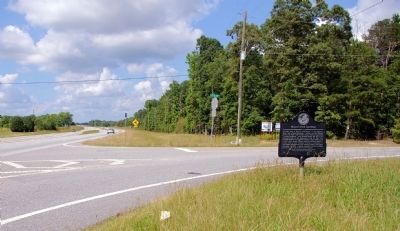
2. Moore’s Ford Lynching Marker
Looking northeast; US 78 is to the left, and Locklin Road curves to the right in the foreground.
More about this marker. The bridge, site of the murders, is located on Mount Carmel Church Road at the Apalachee River at the Oconee County line. The road name changes to Moores Ford Road at the bridge.
Also see . . . The Moore's Ford Lynching (July 1946). Blackpast website entry (Submitted on October 22, 2024, by Larry Gertner of New York, New York.)
Additional keywords. Jim Crow; terrorism; lynching
Photographed by David Seibert, June 6, 2009
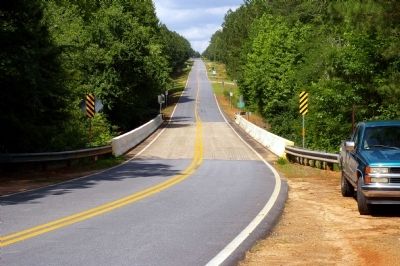
3. The Bridge at Moore's Ford
Looking east into Oconee County, where the road name changes to Moores Ford Road
Photographed by David Seibert, June 6, 2009
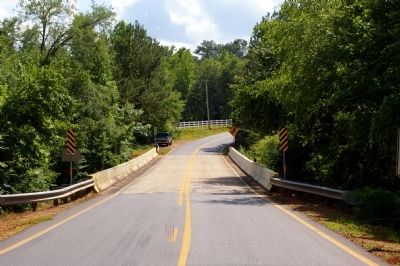
4. The Bridge at Moore's Ford
Looking east into Walton County; the road, leading to the marker, is named Mount Carmel Church Road at this point.
Credits. This page was last revised on October 22, 2024. It was originally submitted on June 8, 2009, by David Seibert of Sandy Springs, Georgia. This page has been viewed 6,433 times since then and 166 times this year. Photos: 1, 2, 3, 4. submitted on June 8, 2009, by David Seibert of Sandy Springs, Georgia. • Christopher Busta-Peck was the editor who published this page.
