
Zona Centro in Guanajuato, Mexico — The Central Highlands (North America)
People's Museum
Photographed by J. Makali Bruton, May 29, 2022
1. People's Museum Marker

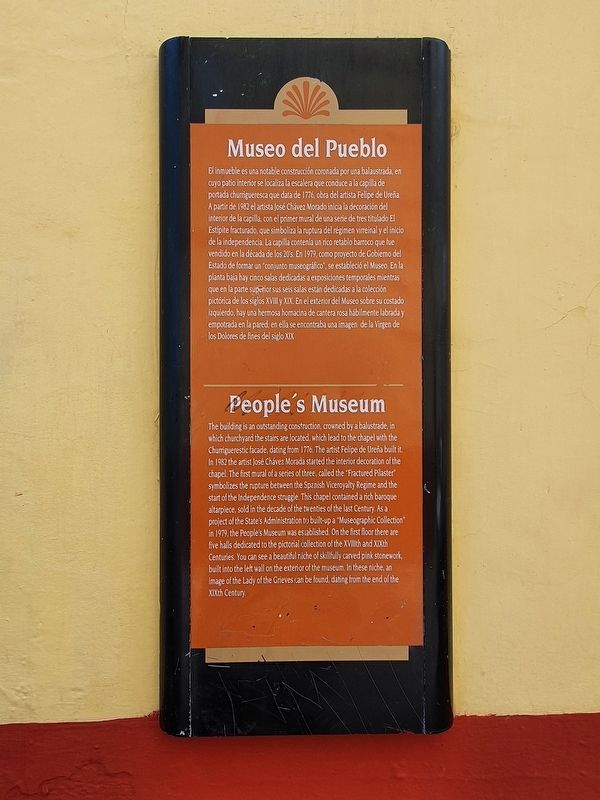
El inmueble es una notable construcción coronada por una balaustrada, en cuyo patio interior se localiza la escalera que conduce a la capilla de portada churrigueresca que data de 1776, obra del artista Felipe de Ureña. A partir de 1982 el artista José Chávez Morado inicia la decoración del interior de la capilla, con el primer mural de una serie de tres titulado El Estípite fracturado, que simboliza la ruptura del régimen virreinal y el inicio de la independencia. La capilla contenía un rico retablo barroco que fue vendido en la década de los 20's. En 1979, como proyecto de Gobierno del Estado de formar un "conjunto museográfico", se estableció el Museo. En la planta baja hay cinco salas dedicadas a exposiciones temporales mientras que en la parte superior sus seis salas están dedicadas a la colección pictórica de los siglos XVIII y XIX. En el exterior del Museo sobre su costado izquierdo, hay una hermosa hornacina de cantera rosa hábilmente labrada y empotrada en la pared; en ella se encontraba una imagen de la Virgen de los Dolores de fines del siglo XIX.
People's Museum
The
this page online
Topics. This historical marker is listed in these topic lists: Architecture
Photographed by J. Makali Bruton, May 29, 2022
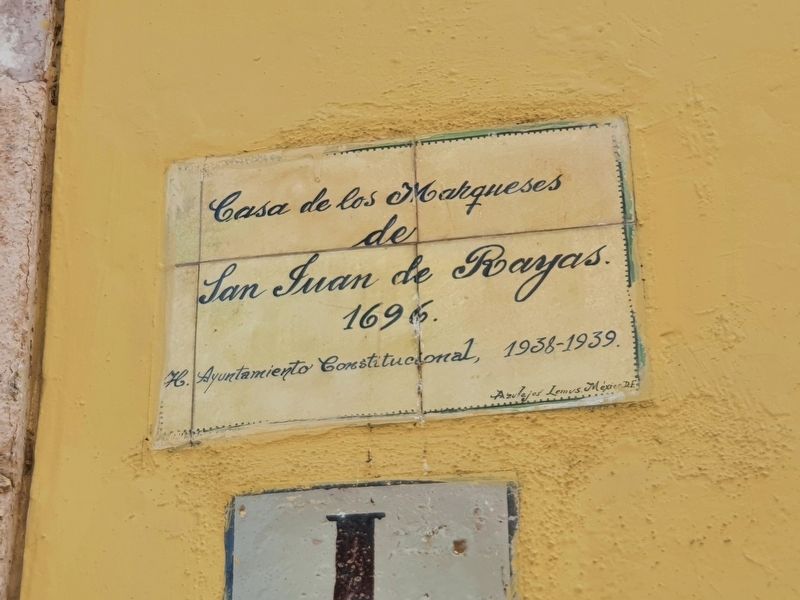
2. An additional earlier House of the Marquis de San Juan de Rayas Tablet
H. Ayuntamiento Constitucional, 1938-1939.
House of the Marquis de San Juan de Rayas. 1696.
Honorable Constitutional City Hall, 1938-1939.
Location. 21° 1.03′ N, 101° 15.236′ W. Marker is in Guanajuato. It is in Zona Centro. It is on Positos just west of Del Estudiante, on the right when traveling west. Touch for map. Marker is at or near this postal address: Del Estudiante 4H, Guanajuato 36000, Mexico. Touch for directions.

Regionally, this marker is in Central Mexico and in the Bajío. Globally, it is in North America, on the Ring of Fire, and in the Western Hemisphere. Historically, it finds itself in what was once New Spain, a Spanish colony, and the Aztec Empire.
Other nearby markers. At least 8 other markers are within walking distance of this marker: University of Guanajuato (within shouting distance of this marker); House of Count Rul (within shouting distance of this marker); Von Humboldt in Guanajuato (within shouting distance of this marker); Plaza de la Paz (within shouting distance of this marker); The Basilica of Guanajuato (within shouting distance of this marker); The Collegiate Basilica of Our Lady of Guanajuato (within shouting distance of this marker);
Photographed by J. Makali Bruton, May 29, 2022
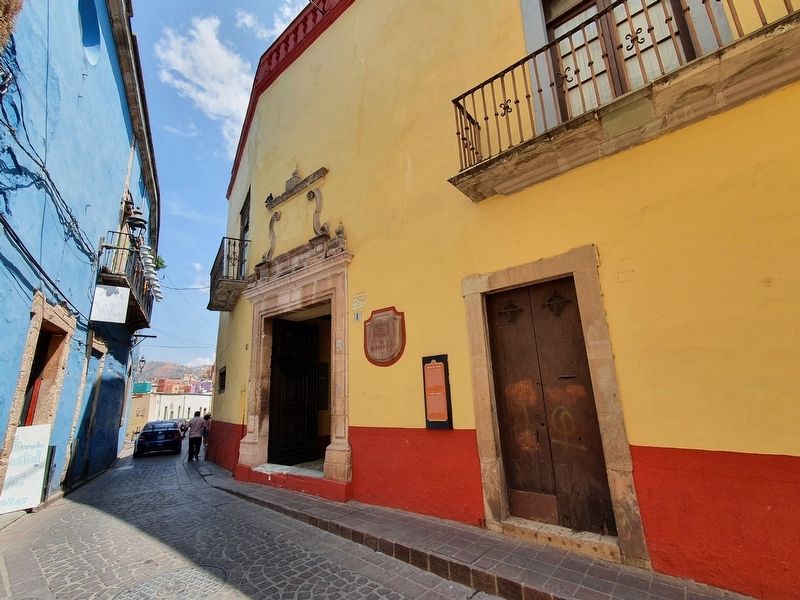
3. People's Museum and Marker
Photographed by J. Makali Bruton, May 29, 2022
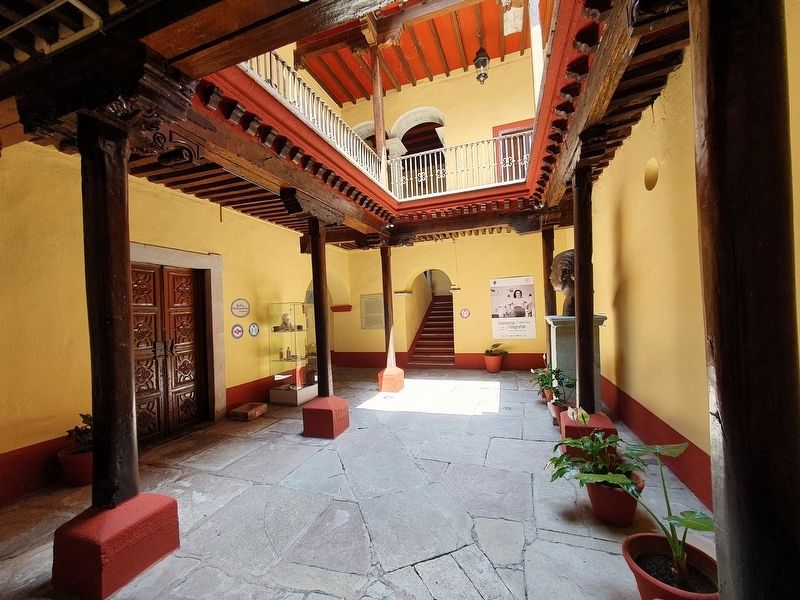
4. People's Museum Interior
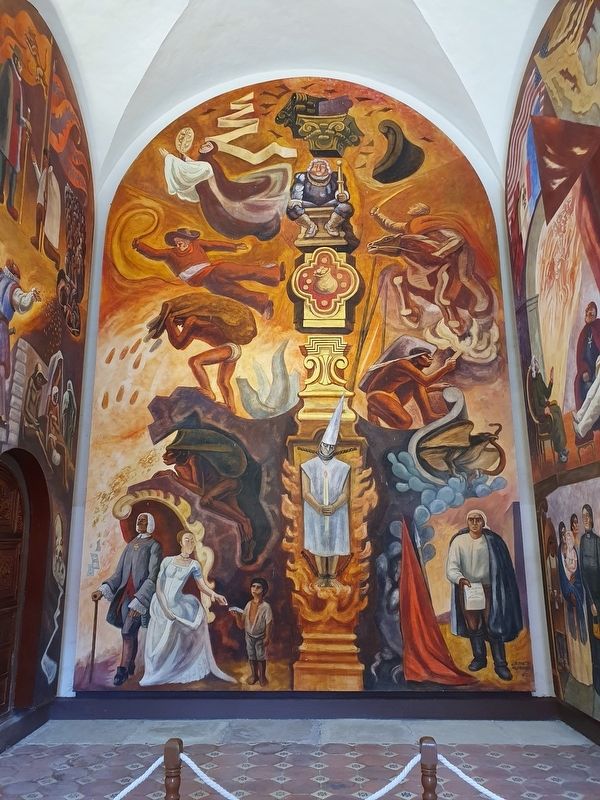
Photographed by J. Makali Bruton, May 29, 2022
5. José Chávez Morado Mural at the People's Museum
Credits. This page was last revised on June 12, 2022. It was originally submitted on June 12, 2022, by J. Makali Bruton of Washington, District of Columbia. This page has been viewed 187 times since then and 21 times this year. Photos: 1, 2, 3, 4, 5. submitted on June 12, 2022, by J. Makali Bruton of Washington, District of Columbia.
