
Centro Histórico in Ciudad de México, Mexico — The Valley of Mexico (The Central Highlands)
The Huitzilopochtli Braziers
Etapa IV
Photographed by J. Makali Bruton, May 24, 2022
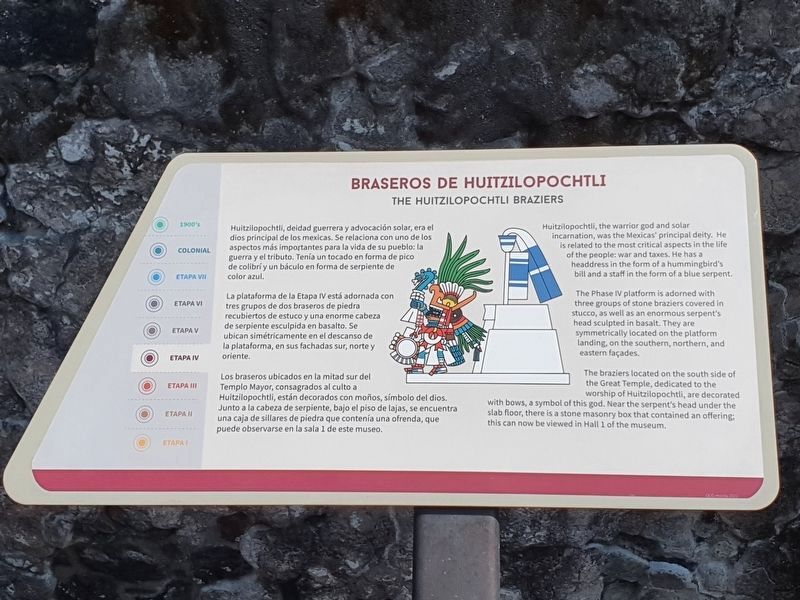
1. The Huitzilopochtli Braziers Marker

Huitzilopochtli, deidad guerrera y advocación solar, era el dios principal de los mexicas. Se relaciona con uno de los aspectos más importantes para la vida de su pueblo: la guerra y el tributo. Tenía un tocado en forma de pico de colibrí y un báculo en forma de serpiente de color azul.
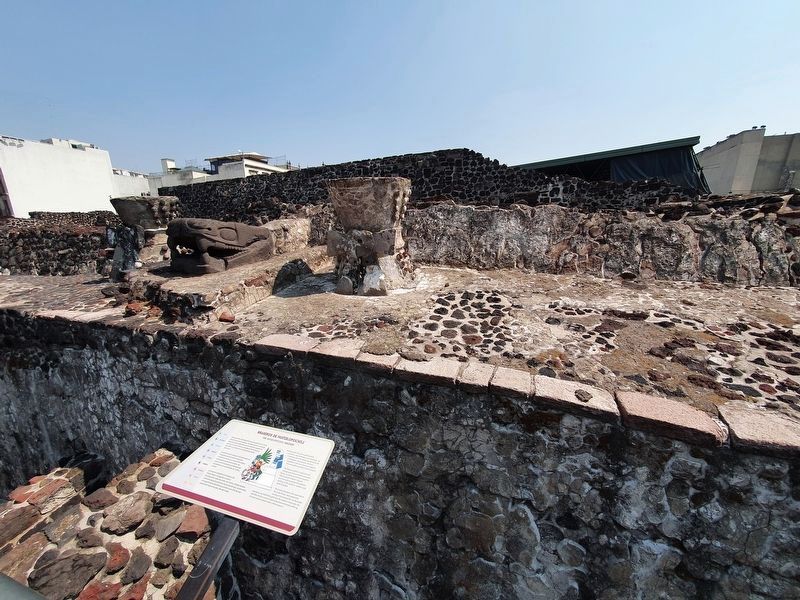
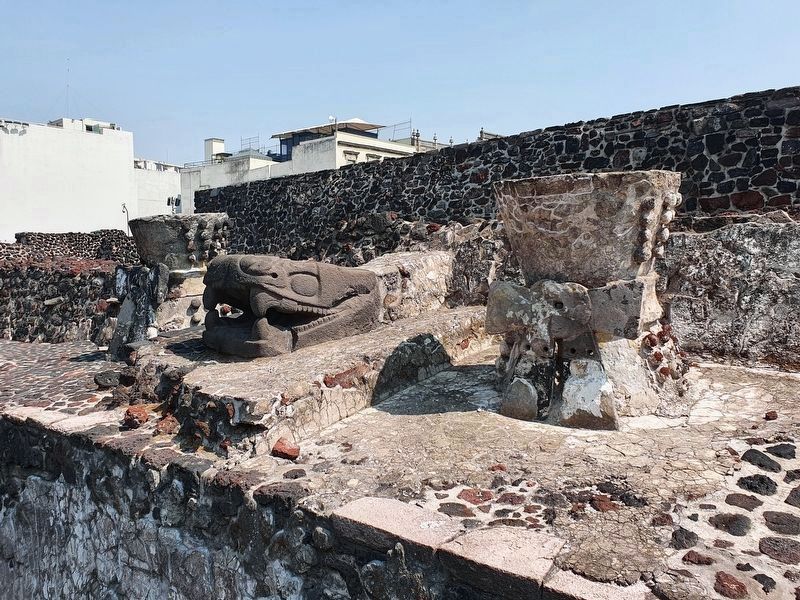
La plataforma de la Etapa IV está adornada con tres grupos de dos braseros de piedra recubiertos de estuco y una enorme cabeza de serpiente esculpida en basalto. Se ubican simétricamente en el descanso de la plataforma, en sus fachadas sur, norte y oriente.
Los braseros ubicados en la mitad sur del Templo Mayor, consagrados al culto a Huitzilopochtli, están decorados con moños, símbolo del dios. Junto a la cabeza de serpiente, bajo el piso de lajas, se encuentra una caja de sillares de piedra que contenía una ofrenda, que puede observarse en la sala 1 de este museo.
The Huitzilopochtli Braziers
Huitzilopochtli, the warrior god and solar incarnation, was the Mexicas' principal deity. He is related to the most critical aspects in the life of the people: war and taxes. He has a headdress
this page online
The Phase IV platform is adorned with three groups of stone braziers covered in stucco, as well as an enormous serpent's head sculpted in basalt. They are symmetrically located on the platform landing, on the southern, northern, and eastern façades.
The braziers located on the south side of the Great Temple, dedicated to the worship of Huitzilopochtli, are decorated with bows, a symbol of this god. Near the serpent's head under the slab floor, there is a stone masonry box that contained an offering; this can now be viewed in Hall 1 of the museum.
Erected by Secretaría de Cultura.
Topics. This historical marker is listed in these topic lists: Anthropology & Archaeology • Indigenous Peoples and Communities.
Location. 19° 26.078′ N, 99° 7.884′ W. Marker is in Ciudad de México. It is in Centro Histórico. It can be reached from Licenciado Verdad just north of Moneda, on the left when traveling north. Touch for map. Marker is in this post office area: Ciudad de México 06000, Mexico. Touch for directions.

Regionally,
Photographed by J. Makali Bruton, May 24, 2022
2. The Huitzilopochtli Braziers and Marker
Other nearby markers. At least 8 other markers are within walking distance of this marker: South Red Temple (a few steps from this marker); Colonial Arch and Platform from Phase V (within shouting distance of this marker); Eastern Border of the Sacred Center (within shouting distance of this marker); Commemorative Dates in the Great Temple (within shouting distance of this marker); Offering 17 (within shouting distance of this marker); The Tláloc Braziers (within shouting distance of this marker); The Mexica People (within shouting distance of this marker); The Templo Mayor and its Seven Construction Stages (within shouting distance of this marker). Touch for a list and map of all markers in Ciudad de México.
Photographed by J. Makali Bruton, May 24, 2022
3. A Serpent's Head in Basalt and a Huitzilopochtli Brazier
Credits. This page was last revised on February 7, 2023. It was originally submitted on June 25, 2022, by J. Makali Bruton of Washington, District of Columbia. This page has been viewed 643 times since then and 34 times this year. Photos: 1, 2, 3. submitted on June 25, 2022, by J. Makali Bruton of Washington, District of Columbia.
