Mercersburg in Franklin County, Pennsylvania — The American Northeast (Mid-Atlantic)
James Buchanan
15th President of the United States 1857 - 1861
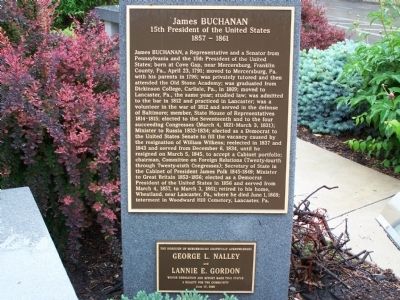
Photographed by Beverly Pfingsten, May 18, 2008
1. James Buchanan Statue
this page online
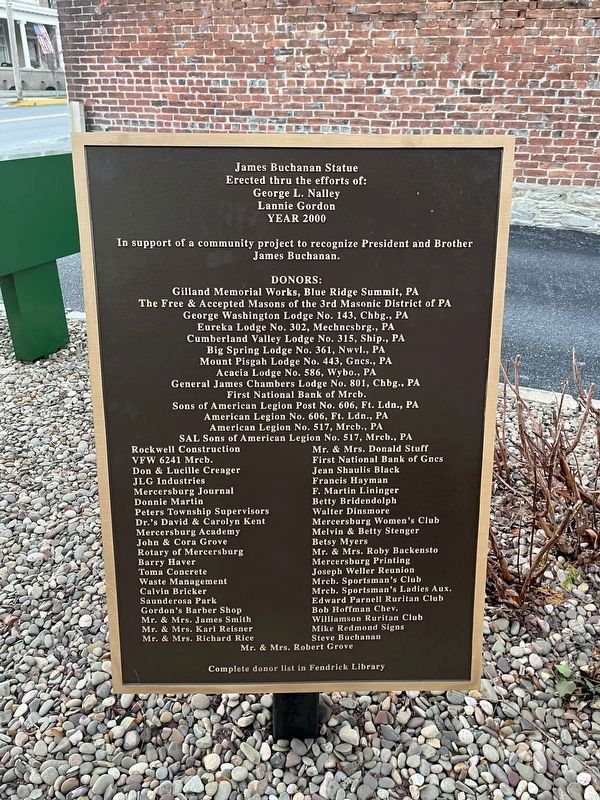
The Borough of Mercersburg gratefully acknowledges George L. Nalley and Lannie E. Gordon whose dedication and effort made this statue a reality for the community. June 17, 2000
Erected 2000 by George L. Nalley and Lannie Gordon.
Topics and series. This historical marker is listed in this topic list: Government & Politics. In addition, it is included in the Former U.S. Presidents: #11 James K. Polk, and the Former U.S. Presidents: #15 James Buchanan series lists. A significant historical month for this entry is March 1770.
Location. 39° 49.669′ N, 77° 54.233′ W. Marker is in Mercersburg, Pennsylvania, in Franklin County. It is on S. Main Street near Seminary Street, on the right when traveling south. Touch for map. Marker is in this post office area: Mercersburg PA 17236, United States of America. Touch for directions.

Regionally, this marker is in South-Central Pennsylvania. It is also in the American Northeast, in the Mid-Atlantic,
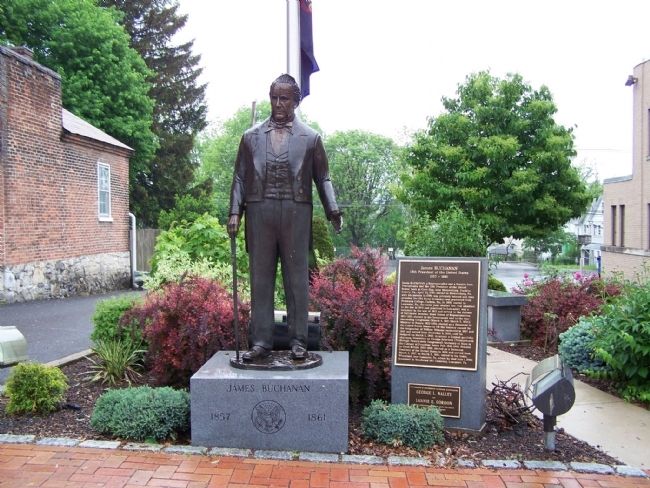
Photographed by Beverly Pfingsten, May 18, 2008
2. James Buchanan Statue
Other nearby markers. At least 8 other markers are within walking distance of this marker: John Darby, Lot 14, 1786 (within shouting distance of this marker); The Irwin House (within shouting distance of this marker); Col. Murphy's Hotel (within shouting distance of this marker); The Archibald Irwin House (within shouting distance of this marker); Ambush at Mercersburg (within shouting distance of this marker); Citizens Seized (within shouting distance of this marker); Lot 35 (within shouting distance of this marker); Buchanan House (about 300 feet away, measured in a direct line). Touch for a list and map of all markers in Mercersburg.
Also see . . . James Buchanan at FindAGrave.com. (Submitted on July 19, 2011, by Mike Wintermantel of Pittsburgh, Pennsylvania.)
Additional commentary.
1. About James Buchanan
In addition
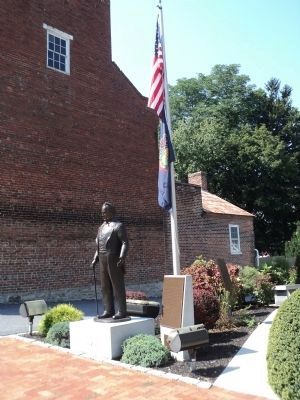
Photographed by Bill Coughlin, August 22, 2012
3. James Buchanan Marker
— Submitted February 20, 2022, by Devry Becker Jones of Washington, District of Columbia.
Additional keywords. LGBT, LGBTQ, 🏳️🌈
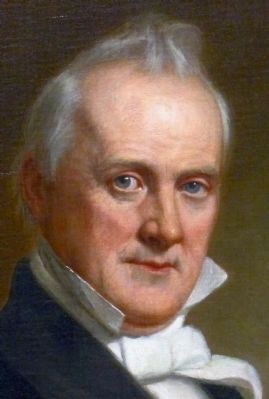
Photographed by Allen C. Browne, February 16, 2015
4. James Buchanan
This 1859 portrait of James Buchanan hangs in the National Portrait Gallery in Washington DC.
“James Buchanan entered the White House in 1857 hoping to quell the mounting sectional rancor over slavery. But the events of his administration often had the opposite effect. The Supreme Court's Dred Scott decision, which denied Congress's power to ban slavery in the western territories, unleashed an unprecedented wave of anger in the North. When Buchanan supported proslavery forces in the Kansas Territory, that anger rose to a fever pitch. In response, the south's militance in defending slavery waxed ever stronger, and by the end of Buchanan's term, the long-feared specter of war was turning into a reality.
With the outbreak of hostilities in the spring of 1861, Buchanan became the object of vilification in many quarters. Among the milder expressions of antiBuchanan feeling was the disposition of the version of this portrait that had been painted for the White House. When artist George Healy presented his bill for the picture, Congress refused to pay it, and many years passed before the White House acquired a portrait of Buchanan.” — National Portrait Gallery
“James Buchanan entered the White House in 1857 hoping to quell the mounting sectional rancor over slavery. But the events of his administration often had the opposite effect. The Supreme Court's Dred Scott decision, which denied Congress's power to ban slavery in the western territories, unleashed an unprecedented wave of anger in the North. When Buchanan supported proslavery forces in the Kansas Territory, that anger rose to a fever pitch. In response, the south's militance in defending slavery waxed ever stronger, and by the end of Buchanan's term, the long-feared specter of war was turning into a reality.
With the outbreak of hostilities in the spring of 1861, Buchanan became the object of vilification in many quarters. Among the milder expressions of antiBuchanan feeling was the disposition of the version of this portrait that had been painted for the White House. When artist George Healy presented his bill for the picture, Congress refused to pay it, and many years passed before the White House acquired a portrait of Buchanan.” — National Portrait Gallery
Credits. This page was last revised on July 27, 2022. It was originally submitted on May 31, 2008, by Bill Pfingsten of Bel Air, Maryland. This page has been viewed 2,281 times since then and 94 times this year. Last updated on July 26, 2022, by Carl Gordon Moore Jr. of North East, Maryland. Photos: 1, 2. submitted on May 31, 2008, by Bill Pfingsten of Bel Air, Maryland. 3. submitted on August 23, 2012, by Bill Coughlin of Woodland Park, New Jersey. 4. submitted on July 18, 2015, by Allen C. Browne of Silver Spring, Maryland. 5. submitted on February 20, 2022, by Devry Becker Jones of Washington, District of Columbia. • J. Makali Bruton was the editor who published this page.
