Waco in McLennan County, Texas — The American South (West South Central)
Waco
Photographed by James Hulse, August 4, 2022
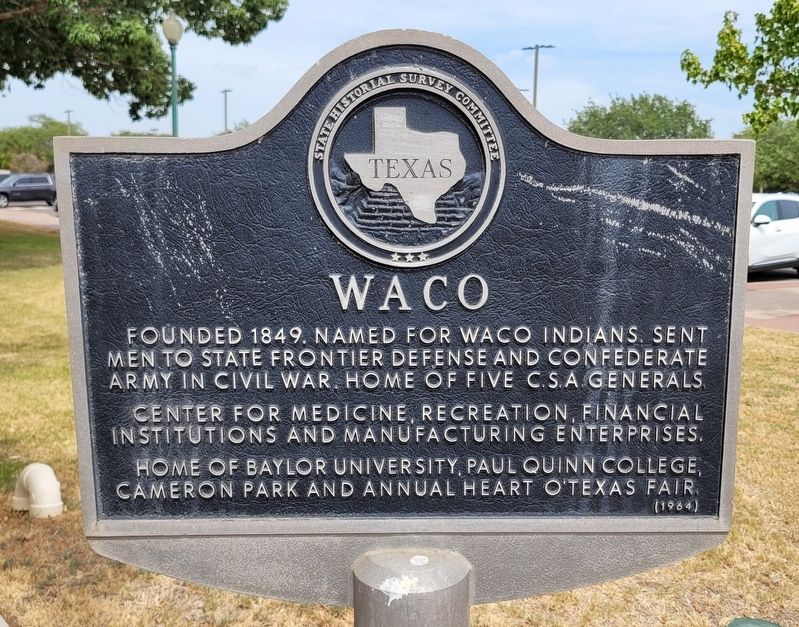
1. Waco Marker
Founded 1849. Named for Waco Indians. Sent men to state frontier defense and Confederate Army in Civil War, home of five C.S.A Generals.
Center for medicine, recreation, financial institutions and manufacturing enterprises.
Home of Baylor University, Paul Quinn College, Cameron Park and annual Heart O'Texas Fair.
Erected 1964 by State Historical Survey Committee. (Marker Number 5688.)
Topics. This historical marker is listed in these topic lists: Education • Indigenous Peoples and Communities • Settlements & Settlers • War, US Civil. A significant historical year for this entry is 1849.
Location. 31° 33.502′ N, 97° 7.785′ W. Marker is in Waco, Texas, in McLennan County. It is at the intersection of South 3rd Street and Austin Avenue, on the right when traveling north on South 3rd Street. The marker is located at the southeast corner of the Waco City Hall grounds. Touch for map. Marker is at or near this postal address: 300 Austin Avenue, Waco TX 76702, United States of America. Touch for directions.

Regionally, this marker is in the Prairies & Lakes Region. It is also in the American South.
this page online
Other nearby markers. At least 8 other markers are within walking distance of this marker: "The Waco Horror": The Lynching of Jesse Washington (within shouting distance of this marker); Gerald-Harris Shooting (about 400 feet away, measured in a direct line); Brann-Davis Shootings (about 500 feet away); The Waco Tornado (about 700 feet away); Alico Building (approx. 0.2 miles away); Waco Suspension Bridge (approx. 0.2 miles away); a different marker also named The Waco Suspension Bridge (approx. 0.2 miles away); Waco Spring (approx. 0.2 miles away). Touch for a list and map of all markers in Waco.
Also see . . .
1. Waco, Texas. Wikipedia
Indigenous peoples occupied areas along the river for thousands of years. In historic times, the area of present-day Waco was occupied by the Wichita Indian tribe known as the "Waco" (Spanish: Hueco or Huaco).(Submitted on August 7, 2022, by James Hulse of Medina, Texas.)
2. Waco Indian Village.
Photographed by James Hulse, August 4, 2022
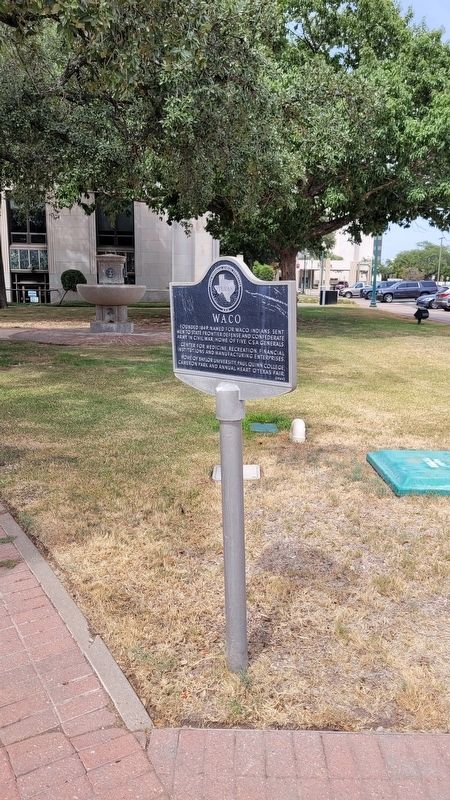
2. Waco Marker
The city of Waco derives its name from the agrarian Indian tribe that originally resided in the area. The Hueco, or Waco Indians were a band of the Wichita tribe that arrived in Central Texas in the 1700s. The tribe’s early history is difficult to establish because of a lack of written records due to their oral tradition. Spanish settlers first wrote of an encounter with the Waco Indians in 1772, when Athanase de Mésière noticed two villages during his trek up the Brazos River. Source: Amanda Sawyer(Submitted on August 7, 2022, by James Hulse of Medina, Texas.)
Photographed by James Hulse, August 4, 2022
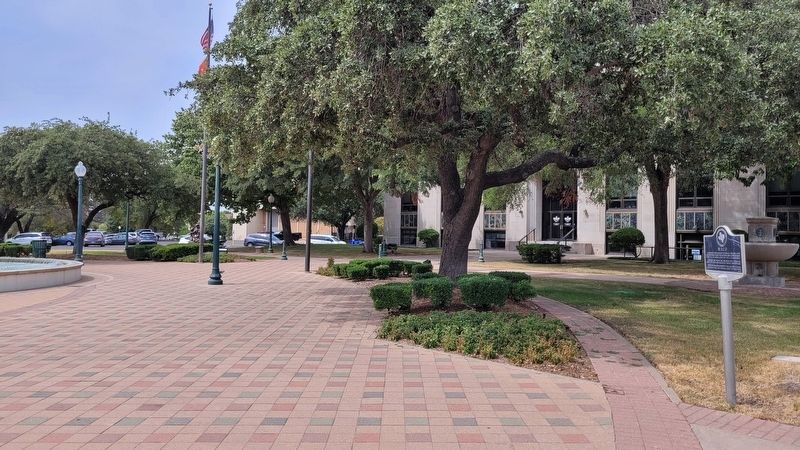
3. The view of the park Waco Marker from the street
Credits. This page was last revised on December 1, 2024. It was originally submitted on August 7, 2022, by James Hulse of Medina, Texas. This page has been viewed 903 times since then and 37 times this year. Photos: 1, 2, 3. submitted on August 7, 2022, by James Hulse of Medina, Texas.
