Westwood Place in Asheville in Buncombe County, North Carolina — The American South (South Atlantic)
Lynching in America ⎯⎯⎯ The Lynching of Hezekiah Rankin
Community Remembrance Project
Photographed by Dave W, August 27, 2022
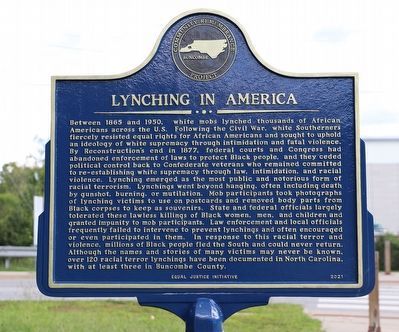
1. Lynching in America marker
Inscription.
Lynching in America
Between 1865 and 1950, white mobs lynched thousands of African Americans across the U.S. Following the Civil War, white Southerners fiercely resisted equal rights for African Americans and sought to uphold an ideology of white supremacy through intimidation and fatal violence. By Reconstruction's end in 1877, federal courts and Congress had abandoned enforcement of laws to protect Black people, and they ceded political control back to Confederate veterans who remained committed to re-establishing white supremacy through law, intimidation, and racial violence. Lynching emerged as the most public and notorious form of racial terrorism. Lynchings went beyond hanging, often including death by gunshot, burning, or mutilation. Mob participants took photographs of lynching victims to use on postcards and removed body parts from Black corpses to keep as souvenirs. State and federal officials largely tolerated these lawless killings of Black women, men, and children and granted impunity to mob participants. Law enforcement and local officials frequently failed to intervene to prevent lynchings and often encouraged
Click or scan to see this page online
or even participated in them. In response to this racial terror and violence, millions of Black people fled the South and could never return. Although the names and stories of many victims may never be known, over 120 racial terror lynchings have been documented in North Carolina, with at least three in Buncombe County.
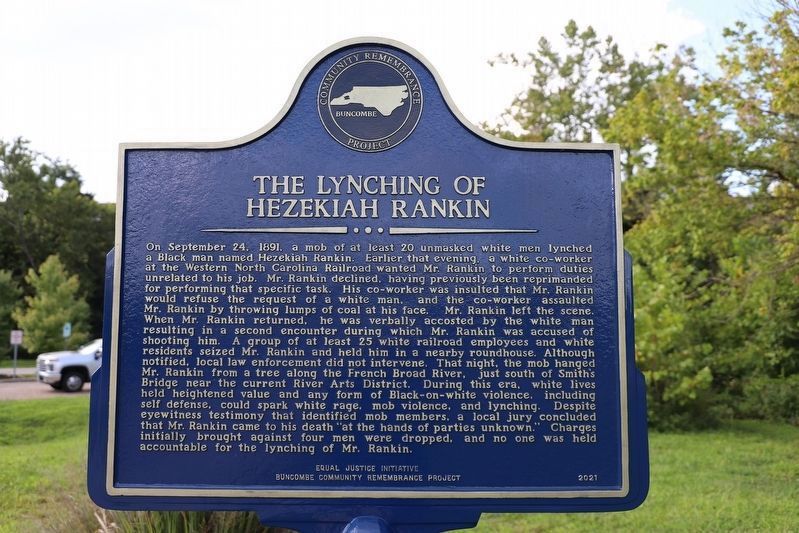
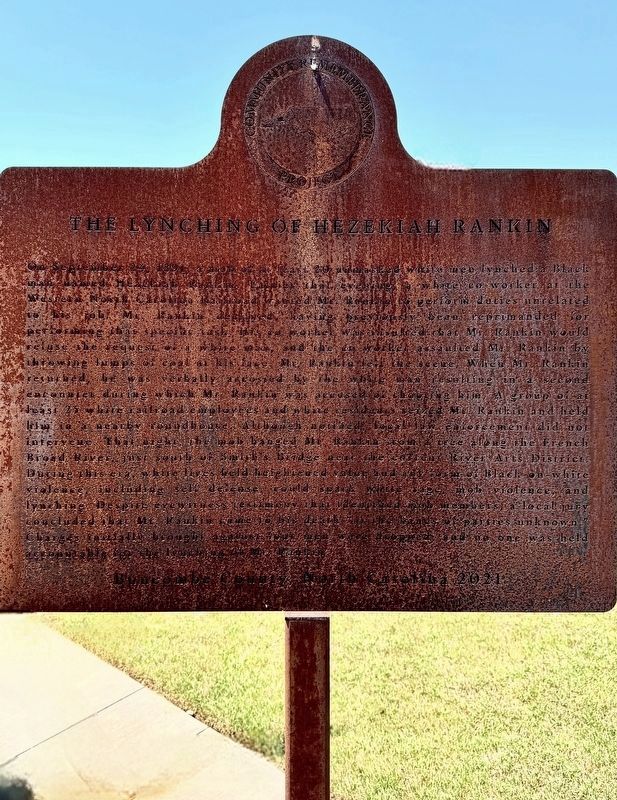
The Lynching of Hezekiah Rankin
On September 24, 1891, a mob of at least 20 unmasked white men lynched a Black man named Hezekiah Rankin. Earlier that evening, a white co-worker at the Western North Carolina Railroad wanted Mr. Rankin to perform duties unrelated to his job. Mr. Rankin declined, having previously been reprimanded for performing that specific task. His co-worker was insulted that Mr. Rankin would refuse the request of a white man, and the co-worker assaulted Mr. Rankin by throwing lumps of coal at his face. Mr. Rankin left the scene. When Mr. Rankin returned, he was verbally accosted by the white man resulting in a second encounter during which Mr. Rankin was accused of shooting him. A group of at least 25 white railroad employees and white residents seized Mr. Rankin and held him in a nearby roundhouse.
Photographed by Dave W, August 27, 2022
2. The Lynching of Hezekiah Rankin Marker
Although notified, local law enforcement did not intervene. That night, the mob hanged Mr. Rankin from a tree along the French Broad River, just south of Smith's Bridge near the current River Arts Disrict. During this era, white lives held heightened value and any form of Black-on-white violence, including self defense, could spark white rage, mob violence, and lynching. Despite eyewitness testimony that identified mob members, a local jury conclude that Mr. Rankin came to his death "at the hands of parties unknown.” Charges initially brought against four men were dropped, and no one was held accountable for the lynching of Mr. Rankin.
Erected 2021 by Equal Justice Initiative, Buncombe Community Remembrance Project.
Topics and series. This historical marker is listed in these topic lists: African Americans • Civil Rights. In addition, it is included in the Lynching in America series list. A significant historical date for this entry is September 24, 1891.
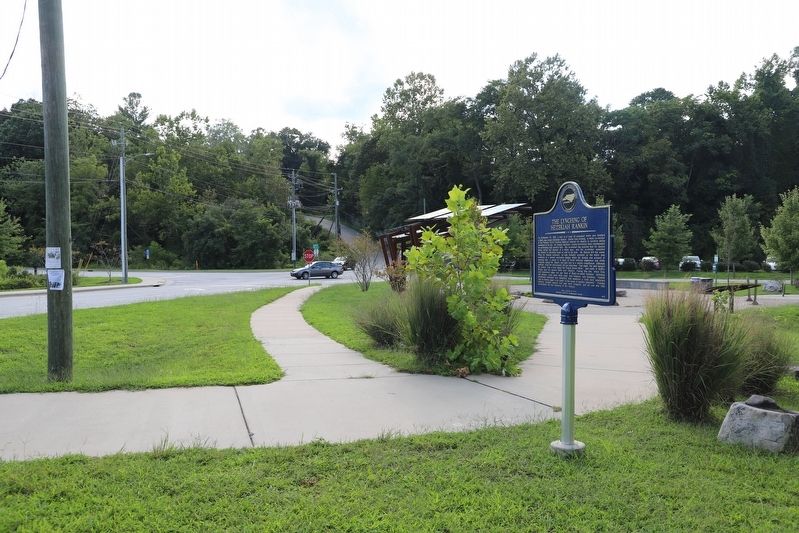
Location. 35° 35.366′ N, 82° 34.356′ W. Marker is in Asheville, North Carolina, in Buncombe County. It is in Westwood Place. It is at the intersection of Craven Street and Emma Road (County
Photographed by Dave W, August 27, 2022
3. Lynching in America / The Lynching of Hezekiah Rankin Marker
Road 1338), on the left when traveling east on Craven Street. Touch for map. Marker is at or near this postal address: 162 Craven St, Asheville NC 28806, United States of America. Touch for directions.
Regionally, this marker is in the Mountains. It is also in the American South, specifically in the Upper South, in Appalachia, and specifically in Southern Appalachia. Globally, it is in North America, the Western Hemisphere, the Western World, and the Anglosphere. Historically, it finds itself in what was once the original Cherokee Nation, the territory of the Mississippian Culture, one of the original Thirteen Colonies, one of the Confederate States of America, and the Antebellum South.
“A Replica marker of one side is located at the Equal Justice Initiatives' National Memorial for Peace and Justice in Montgomery, Alabama. The Equal Justice Initiative supports efforts to locally memorialize documented victims of racial violence and to educate communities about the history of racial injustice.” Mark Hilton
Another marker is no longer nearby. Daniel K. Moore (was approx. ¾ mile away but has been confirmed missing).
Credits. This page was last revised on June 1, 2025. It was originally submitted on August 27, 2022, by Dave W of Co, Colorado. This page has been viewed 1,175 times since then and 129 times this year. Last updated on August 28, 2022, by Bradley Owen of Morgantown, West Virginia. Photos:1, 2, 3. submitted on August 28, 2022, by Dave W of Co, Colorado. 4. submitted on October 27, 2024, by Brandon D Cross of Flagler Beach, Florida. • Bernard Fisher was the editor who published this page.