
Downtown Austin in Travis County, Texas — The American South (West South Central)
Tejanos and Texas in the U.S.
1848-1920
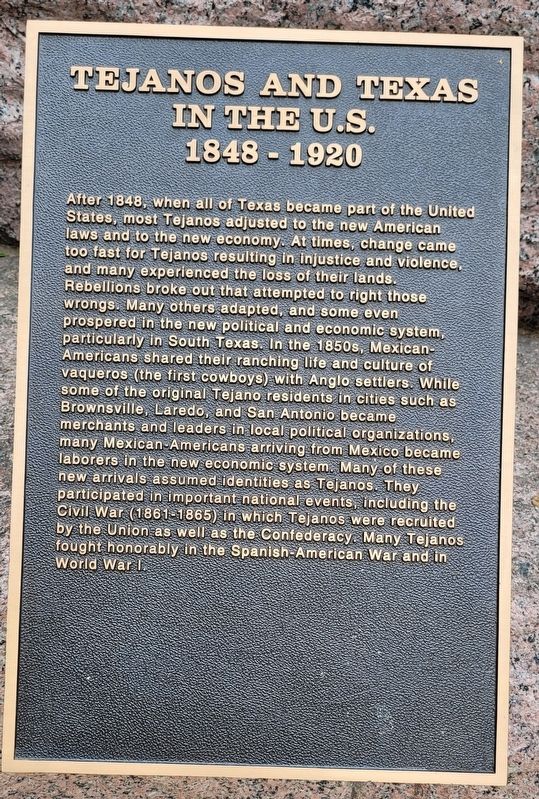
Photographed by James Hulse, August 30, 2022
1. Tejanos and Texas in the U.S. Marker
Erected 2012 by Tejano Monument Committee.
Topics. This historical marker is listed in these topic lists: Hispanic Americans • War, Spanish-American • War, US Civil • War, World I. A significant historical year for this entry is 1848.
Location. 30° 16.378′ N, 97° 44.419′ W. Marker is in Austin, Texas, in Travis County. It is in Downtown Austin. It can be reached from the intersection of East 11th Street and Congress Avenue. The marker is located in the southeast section of the Texas State Capitol grounds by the south entrance gate on the Tejano Monument. Touch for map. Marker is at or near this postal address: 100 East 11th Street, Austin TX 78701, United States of America. Touch for directions.

Regionally,
this page online
Other nearby markers. At least 8 other markers are within walking distance of this marker: Tejanos in the Republic of Texas (here, next to this marker); Mexican Americans in 20th Century America (here, next to this marker); Tejanos Under the Mexican Flag (here, next to this marker); Spanish Tejanos (here, next to this marker); Bicentennial Fountain (within shouting distance of this marker); Southern Confederacy Monument (within shouting distance of this marker); Capitol Fence (within shouting distance of this marker); Texas Highway Department (within shouting distance of this marker). Touch for a list and map of all markers in Austin.
Another marker is no longer nearby. Texas State Capitol (was within shouting distance of this marker but has been permanently removed).
Also see . . . History of Mexican Americans.
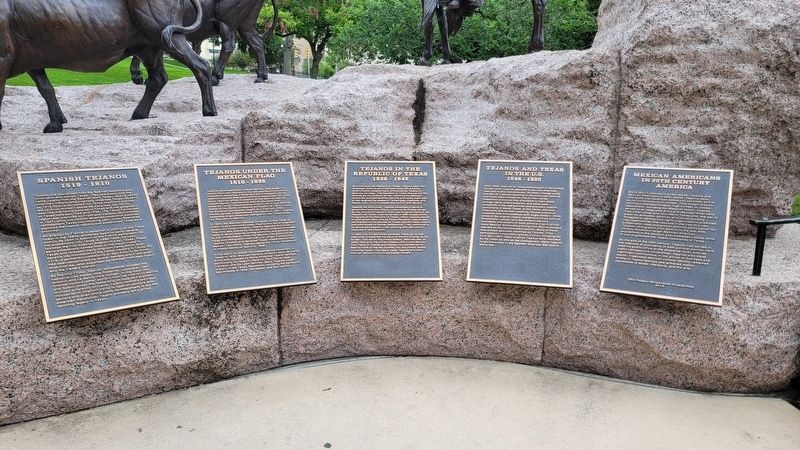
Photographed by James Hulse, August 30, 2022
2. The Tejanos and Texas in the U.S. Marker is the 2nd marker from the right
Mexican American history, or the history of American residents of Mexican descent, largely begins after the annexation of Northern Mexico in 1848, when the nearly 80,000 Mexican citizens of California, Nevada, Utah, Arizona, Colorado, and New Mexico became U.S. citizens. Large-scale migration increased the U.S.’ Mexican population during the 1910s, as refugees fled the economic devastation and violence of Mexico’s high-casualty revolution and civil war. Until the mid-20th century, most Mexican Americans lived within a few hundred miles of the border, although some resettled along rail lines from the Southwest into the Midwest.(Submitted on September 13, 2022, by James Hulse of Medina, Texas.)
Additional keywords. Injustice, Violence, Vaqueros
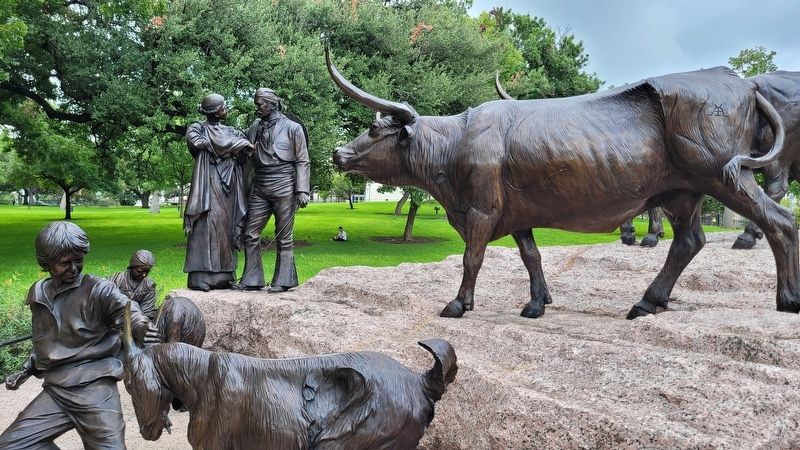
Photographed by James Hulse, August 30, 2022
3. Closeup of the Tejano Monument
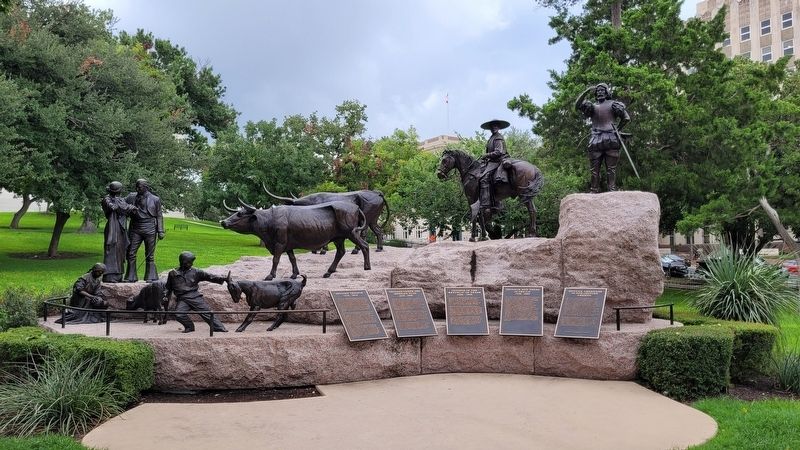
Photographed by James Hulse, August 30, 2022
4. The view of the Tejanos and Texas in the U.S. Marker
Credits. This page was last revised on February 1, 2023. It was originally submitted on September 12, 2022, by James Hulse of Medina, Texas. This page has been viewed 456 times since then and 44 times this year. Photos: 1, 2, 3, 4. submitted on September 13, 2022, by James Hulse of Medina, Texas.
