
Winchester in Franklin County, Tennessee — The American South (East South Central)
Tullahoma Campaign
June 24-July 4, 1863
| — | The Confederate Retreat | — |
Photographed by Don Morfe, April 24, 2014
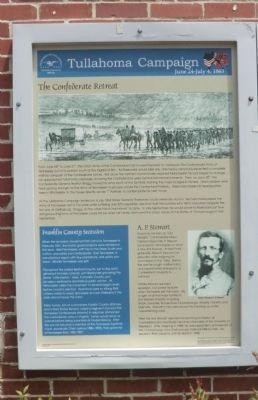
1. Tullahoma Campaign Marker
As the Tullahoma Campaign ended on 4 July 1863 Major General Rosecrans could celebrate victory. He had maneuvered the Army of Tennessee out of the state while suffering only 570 casualties, less than half the number who fell in one Union brigade the first day at Gettysburg. Bragg, on the other hand, had saved his army. In late September, he would prove to Rosecrans just how dangerous the Army of Tennessee could still be when he nearly destroyed the Union forces at the Battle of Chickamauga in mid-September.
A.P. Stewart
Known by his men as “Old Straight,” Confederate Major General Alexander P. Stewart once lived in Winchester on what is now 3rd Avenue. A West Point graduate, Stewart became an educator after resigning his commission in the 1840s. Before the war he taught mathematics and experimental philosophy at Cumberland University in Lebanon.
Initially Stewart opposed secession, but joined his state when Tennessee left the Union. He fought at all the major battles in the Western
this page online
After the war Stewart resumed his teaching profession at Cumberland and eventually became chancellor of the University of Mississippi. After resigning in 1888, he was appointed commissioner of the Chickamauga and Chattanooga National Military Park. He served in that capacity until his death in 1908.
(sidebar)
Franklin County Secession
When the secession movement first came to Tennessee in February 1861, the state’s grand divisions were divided on the issue. West Tennessee, with ties to the Deep South and cotton, was solidly pro-Confederate. East Tennessee, a mountainous region with few plantations, was solidly pro-Union. Middle Tennessee was split.
Throughout the ordeal Bedford County, just to the north, remained intensely Unionist, with Shelbyville garnering the name “Little Boston.” Here, in Franklin County, pro-secession sentiments dominated public opinion. At Winchester rallies the movement to secede began even before Lincoln’s election. Reactions were so
Photographed by Don Morfe, April 24, 2014
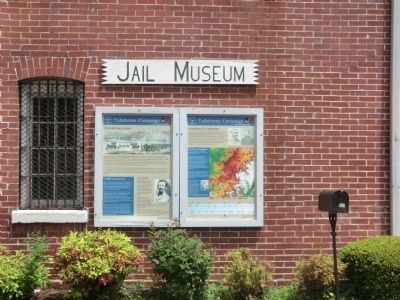
2. Tullahoma Campaign Markers
Peter Turney, son of a prominent Franklin County attorney and Unites States Senator, raised a regiment (Turney’s First Tennessee Confederate Infantry) in response and joined the Confederate army in Virginia. Turney would serve as colonel before being wounded at Fredericksburg. After the war he became a member of the Tennessee Supreme Court, eventually Chief Justice (1886-1893), then governor of Tennessee from 1893-1897.
(caption)
(lower right) Major General A. P. Stewart
Erected by Tennessee's Backroads Heritage.
Topics. This historical marker is listed in this topic list: War, US Civil. A significant historical month for this entry is February 1861.
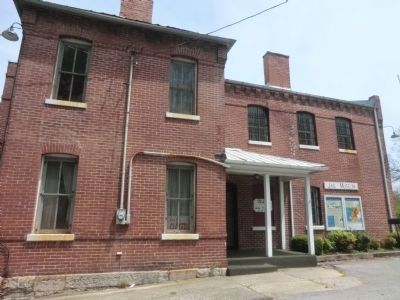
Location. Marker has been reported permanently removed. It was located near 35° 11.279′ N, 86° 6.57′ W. Marker was in Winchester, Tennessee, in Franklin County. It was at the intersection of Bluff Street and Dinah Shore Boulevard (Tennessee Route 50), on the right when traveling north on Bluff Street. The marker is on the wall of the Franklin County Old Jail Museum. Touch for map. Marker
Photographed by Don Morfe, April 24, 2014
3. Old Jail Museum
We have been informed that this marker is no longer there and will not be replaced. This page is an archival view of what was.
Regionally, this marker was in Middle Tennessee and in the Highland Rim. It was also in the American South and specifically in the Upper South. Globally, it was in North America, the Western Hemisphere, the Western World, and the Anglosphere. Historically, it found itself in what was once the territory of the Mississippian Culture, one of the Confederate States of America, and the Antebellum South.

Other nearby markers. At least 8 other markers are within walking distance of this location: Bridge Construction / Franklin County Old Jail Museum (within shouting distance of this marker); Bates Foods / Franklin County Library (about 300 feet away, measured in a direct line); Built 1912 (about 800 feet away); Oldham Theatre / Masonic Lodge #158 (about 800 feet away); Built 1896 (about 800 feet away); Built 1916 (about 800 feet away); Built 1890 (about 800 feet away); Built 1889 (about 800 feet away).
Photographed by Don Morfe, April 24, 2014
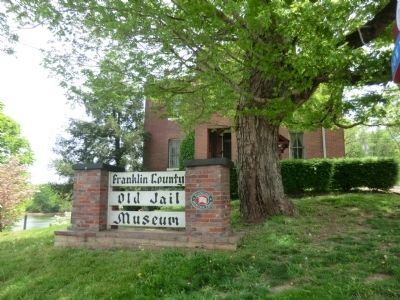
4. Old Jail Museum-Entrance sign
Another marker is no longer nearby. Tullahoma Campaign (was here, next to this marker but has been permanently removed).
Also see . . . Tennessee's Backroads. (Submitted on July 12, 2014.)
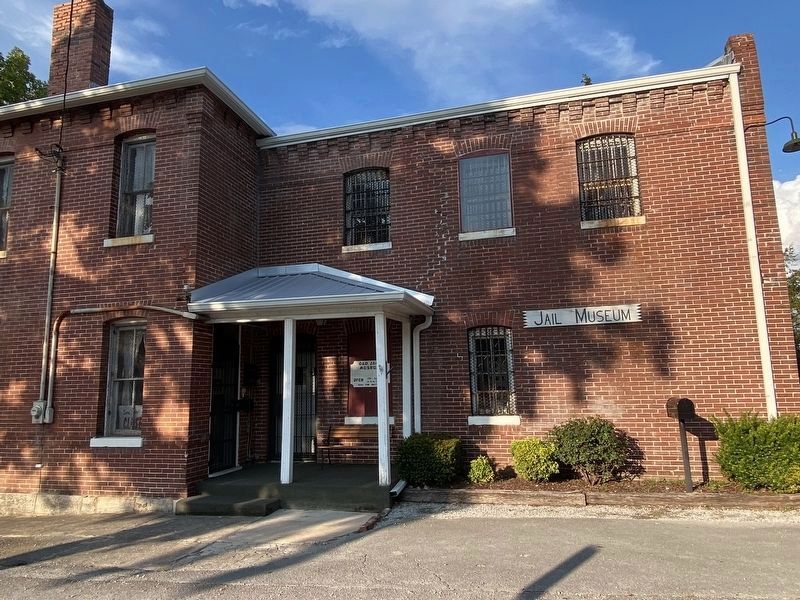
Photographed by Darren Jefferson Clay, September 25, 2022
5. Tullahoma Campaign Marker
Credits. This page was last revised on October 6, 2022. It was originally submitted on July 10, 2014, by Don Morfe of Baltimore, Maryland. This page has been viewed 863 times since then and 47 times this year. Last updated on October 5, 2022, by Darren Jefferson Clay of Duluth, Georgia. Photos: 1, 2, 3, 4. submitted on July 10, 2014, by Don Morfe of Baltimore, Maryland. 5. submitted on October 5, 2022, by Darren Jefferson Clay of Duluth, Georgia. • J. Makali Bruton was the editor who published this page.
