Mantua in Portage County, Ohio — The American Midwest (Great Lakes)
The Underground Railroad
⎯⎯⎯
Escaping Slavery In Eastern Ohio

Photographed by Mike Wintermantel, October 7, 2022
1. The Underground Railroad Marker
The Underground Railroad
The Underground Railroad was neither underground nor a railroad, but a system of loosely connected safe havens where those escaping the brutal conditions of slavery were sheltered, fed, clothed, nursed, concealed, disguised, and instructed during their journey to freedom. Although this movement was one of America's greatest social, moral, and humanitarian endeavors, the details about it were often cloaked in secrecy to protect those involved from the retribution of civil law and slave-catchers. Ohio's history has been permanently shaped by the thousands of runaway slaves passing through or finding permanent residence in this state.
Escaping Slavery In Eastern Ohio
On their perilous journey north to freedom, enslaved people encountered a diverse mix of allies in eastern Ohio motivated by deeply held religious beliefs. The Quaker communities in Stark, Carroll. and Wayne counties provided refuge and offered assistance. The implacable Congregational mind-set of the Connecticut Western Reserve translated into fierce antislavery activism of residents in Medina, Portage, and Summit counties.
John
this page online
J. Ridgeway Haines, a prominent member of the Quaker Community in Alliance, Stark County, was one of the most active conductors on the Underground Railroad. He stood guard at night when freedom seekers sheltered in an upper room in the rear of his house. Haines was acquainted with many figures of the national antislavery movement, including Abby Kelley Foster. She and other like-minded abolitionists were frequent house guests of Haines. Today, this house is listed on the National Register of Historic Places.
Erected by Ohio Turnpike and Infrastructure Commission and Friends of Freedom Society.
Topics and series. This historical marker is listed in these topic lists: Abolition & Underground RR • African Americans.

Photographed by Mike Wintermantel, October 7, 2022
2. Escaping Slavery In Eastern Ohio Marker
Location. 41° 14.573′ N, 81° 10.663′ W. Marker is in Mantua, Ohio, in Portage County. It can be reached from Interstate 80. Marker is located at the Brady's Leap Travel Plaza off of Interstate 80 Eastbound. Touch for map. Marker is in this post office area: Mantua OH 44255, United States of America. Touch for directions.

Regionally, this marker is in Greater Cleveland and in the Western Reserve. It is also in the American Midwest. Globally, it is in North America, the Western Hemisphere, the Western World, and the Anglosphere. Historically, it finds itself in what was once the Haudenosaunee (Iroquois) Confederacy, the territory of the Mississippian Culture, and the Northwest Territory.
Other nearby markers. At least 8 other markers are within 5 miles of this marker, measured as the crow flies: A different marker also named The Underground Railroad / Escaping Slavery In Eastern Ohio (about 700 feet away, measured in a direct line); Bowery Site (approx. 3.7 miles away); War Memorial
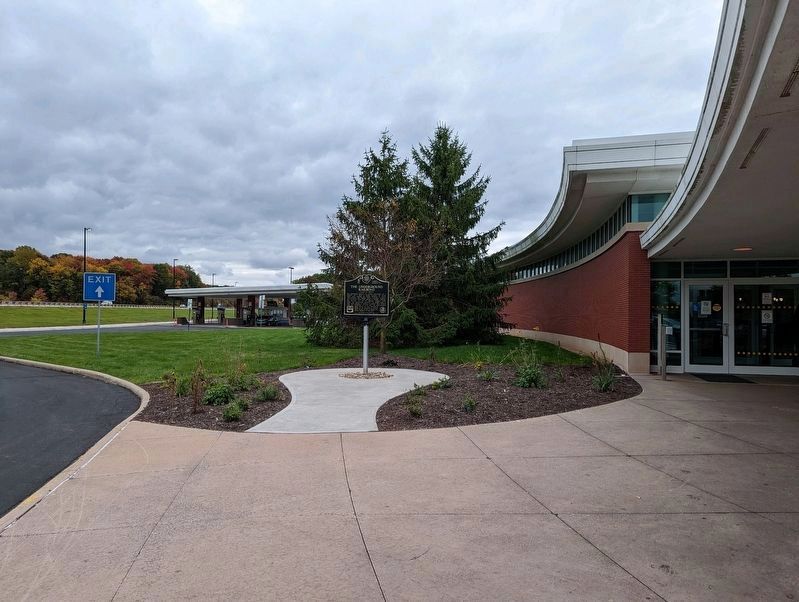
Photographed by Mike Wintermantel, October 7, 2022
3. The Underground Railroad Marker
More about this marker. There is a similar marker at the Westbound Travel Plaza across Interstate 80.
Related marker. Click here for another marker that is related to this marker.
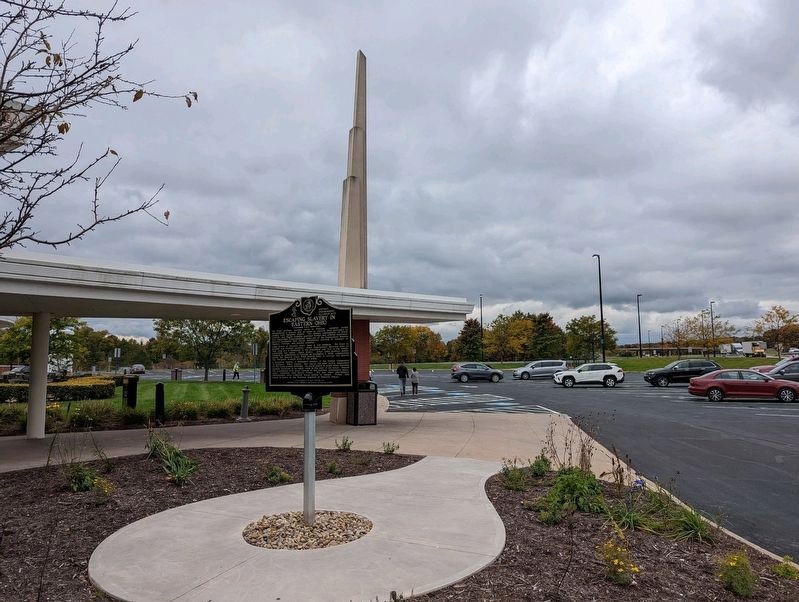
Photographed by Mike Wintermantel, October 7, 2022
4. Escaping Slavery In Eastern Ohio Marker
Credits. This page was last revised on October 11, 2022. It was originally submitted on October 11, 2022, by Mike Wintermantel of Pittsburgh, Pennsylvania. This page has been viewed 898 times since then and 51 times this year. Photos: 1, 2, 3, 4. submitted on October 11, 2022, by Mike Wintermantel of Pittsburgh, Pennsylvania.
