Warm Springs in Bath County, Virginia — The American South (Mid-Atlantic)
Warm Springs Baths
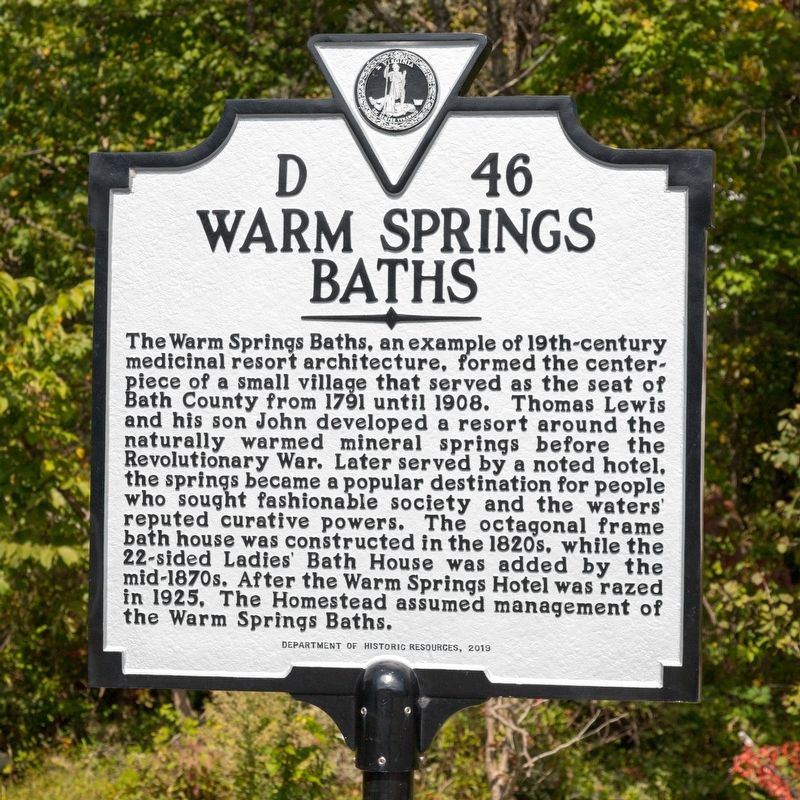
Photographed by J. J. Prats, September 25, 2022
1. Warm Springs Baths Marker
Erected 2019 by Department of Historic Resources. (Marker Number D-46.)
Topics. This historical marker is listed in these topic lists: Architecture • Natural Features • Notable Buildings • Notable Places. A significant historical year for this entry is 1791.
Location. 38° 3.18′ N, 79° 46.852′ W. Marker is in Warm Springs, Virginia, in Bath County. It is on Sam Snead Highway (U.S. 220) just south of Mountain Valley Road
this page online

Regionally, this marker is in the Shenandoah Valley, in the Alleghany Highlands, and specifically in the Potomac Highlands. It is also in the American South, specifically in the Upper South, in Appalachia, and specifically in Southern Appalachia. Globally, it is in North America, the Western Hemisphere, the Western World, and the Anglosphere. Historically, it finds itself in what was once the territory of the Mississippian Culture, one of the original Thirteen Colonies, one of the Confederate States of America, and the Antebellum South.
Other nearby markers. At least 8 other markers are within walking distance of this marker: Welcome (a few steps from this marker); Early Bath County Courthouses (within shouting distance of this marker); The Rev. Dr. William H. Sheppard (about 500 feet away, measured in a direct line); Terrill Hill (approx. ¼ mile away); Mary Johnston (approx.
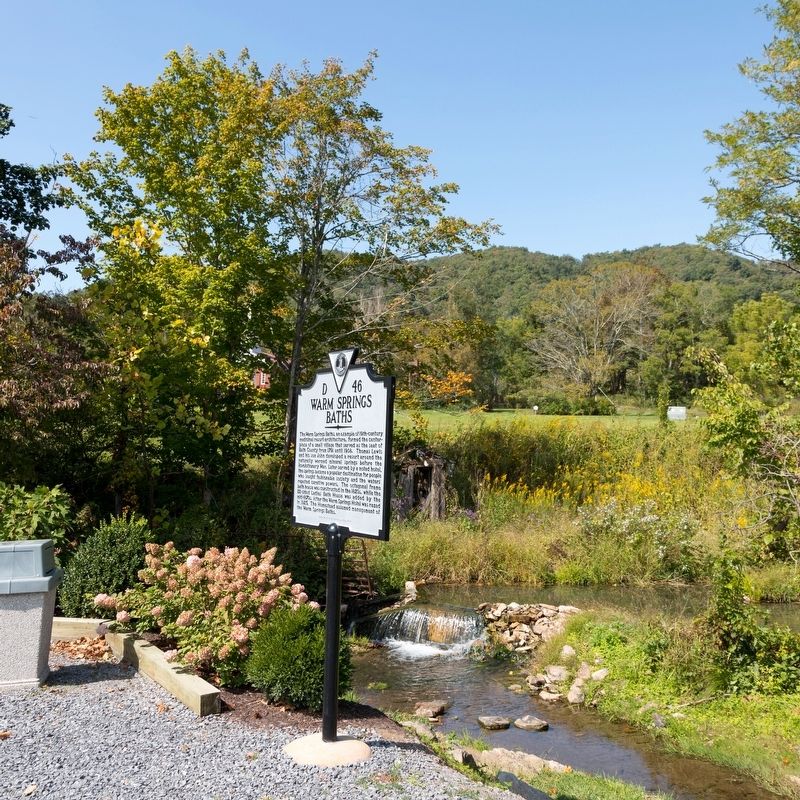
Photographed by J. J. Prats, September 25, 2022
2. Warm Springs Baths Marker
Also see . . . Warm Spring Pools. Atlas Obscura article. Excerpt:
These magnificent crystal springs were discovered centuries ago by Native Americans journeying through the valley. Archaeological evidence suggests that humans have been in the area for at least 9,000 years. According to Native American stories, people were instantly rejuvenated after bathing in the warm waters of the spring, and it was considered a sacred place.(Submitted on October 23, 2022.)
Soon after, spa houses began being built throughout the 16th century following the European style. These spa houses become even more popular in the following century in places where wealthy southerners would “take the waters” for relaxation.
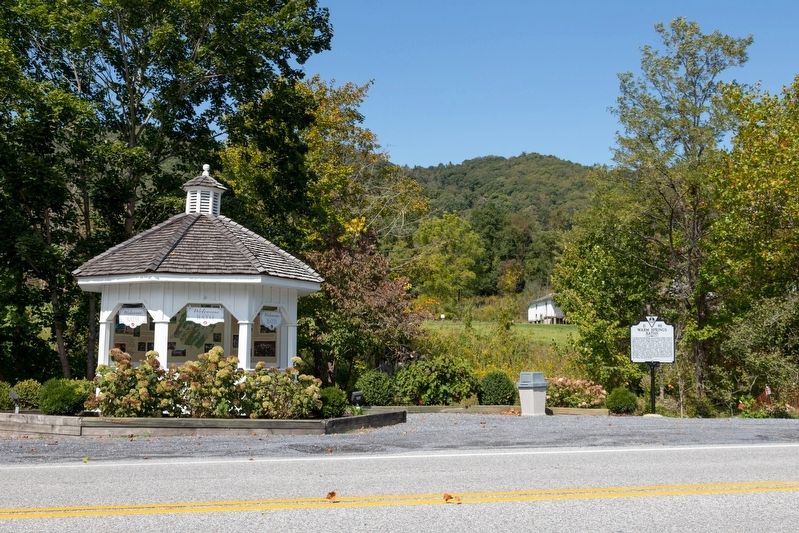
But it was the healing promises of the mineral-rich waters that brought Thomas Jefferson to the pools, where he soaked daily for three weeks to try and help his rheumatism. It’s ironic that the pools were named after him, though, as localhistorians claimed he found the spa quite boring.Photographed by J. J. Prats, September 25, 20223. Bath County Welcome Center Gazebo and Marker
Credits. This page was last revised on September 8, 2024. It was originally submitted on October 23, 2022, by J. J. Prats of Powell, Ohio. This page has been viewed 490 times since then and 47 times this year. Photos: 1, 2, 3. submitted on October 23, 2022, by J. J. Prats of Powell, Ohio.
