New Braunfels in Comal County, Texas — The American South (West South Central)
Comal County Fair
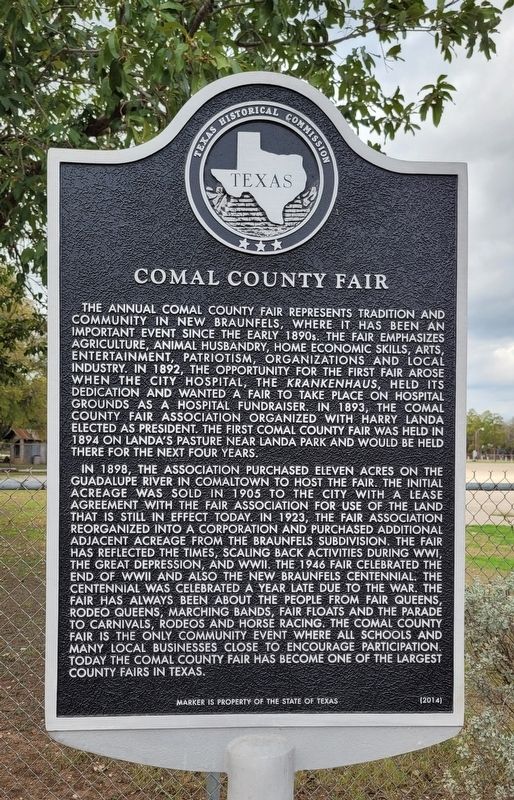
Photographed by James Hulse, November 9, 2022
1. Comal County Fair Marker
In 1898, the association purchased eleven acres on the Guadalupe River in Comaltown to host the fair. The initial acreage was sold in 1905 to the city with a lease agreement with the fair association for use of the land that is still in effect today. In 1923, the fair association reorganized into a corporation and purchased additional adjacent acreage from the Braunfels subdivision. The fair has reflected the times, scaling back activities during WWI, the Great Depression, and WWII. The 1946 fair celebrated the end of WWII and also the New Braunfels Centennial. The centennial was celebrated a year late due to the war. The fair has always been about the people from fair queens, rodeo queens, marching bands, fair floats and the parade to carnivals, rodeos and horse racing. The Comal County Fair is the only community event where all schools and many local businesses close to encourage participation. Today the Comal County Fair has become one of the largest county fairs in Texas.
Erected 2014 by Texas Historical Commission. (Marker Number 17844.)
Topics. This historical marker is listed in these topic lists: Agriculture
this page online
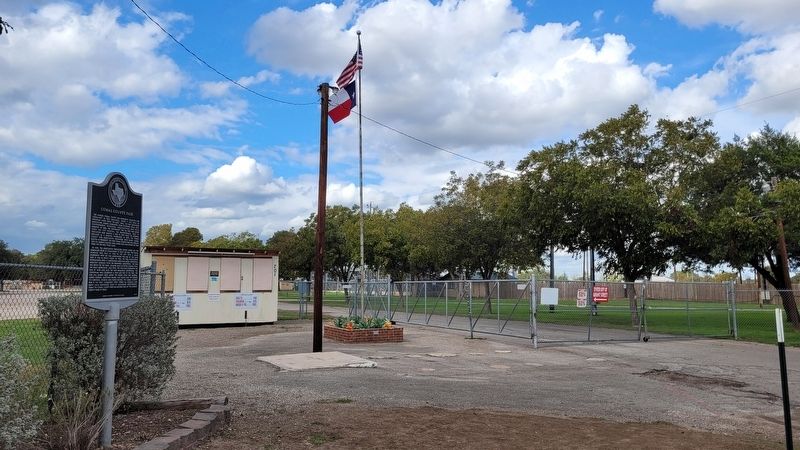
Location. 29° 42.788′ N, 98° 6.829′ W. Marker is in New Braunfels, Texas, in Comal County. It is at the intersection of Common Street and S East Avenue, on the right when traveling west on Common Street. The marker is located at the south entrance gate to the Comal County Fair grounds. Touch for map. Marker is at or near this postal address: 701 Common Street, New Braunfels TX 78130, United States of America. Touch for directions.

Regionally, this marker is in the Hill Country and in the San Antonio Metropolitan Area. It is also in the American South. Globally, it is in North America, a Gulf of Mexico state, the Western Hemisphere, the Western World, and the Anglosphere. Historically, it finds itself in what was once New Spain, the Republic of Texas, and one of the Confederate States of America.
Other nearby markers. At least 8 other markers are within walking distance of this marker: Ferdinand Jacob Lindheimer (approx. ¼ mile away); Ferdinand J. Lindheimer (approx. ¼ mile away); Panteón Hidalgo (Hidalgo Cemetery)
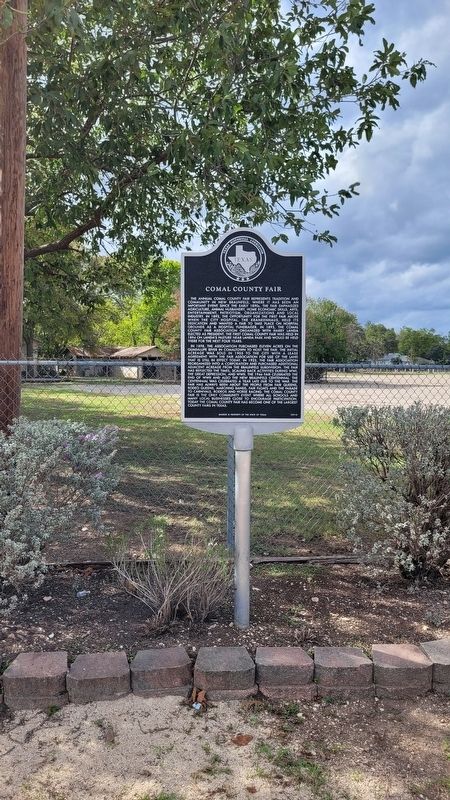
Photographed by James Hulse, November 9, 2022
2. Comal County Fair Marker
Also see . . . Festivals. New Braunsfel Chamber
Spass, the German word for “fun”, is also an important word in German philosophy. So it was no surprise that music, athletic events, carnivals, dances, and celebrations for just about everything else became more and more important. One parade float sign in the 1890s summed up the mood of many festivals: “Strength and Cheer are given you by the foaming of noble City Beer”.(Submitted on November 10, 2022, by James Hulse of Medina, Texas.)
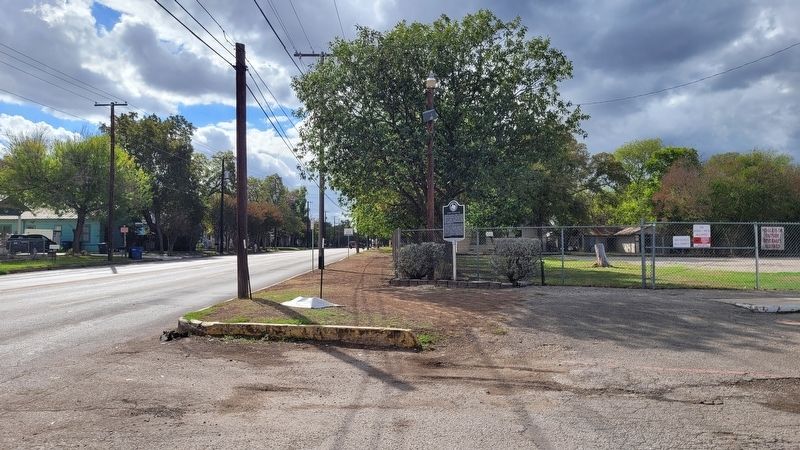
On October 17, 1853, the first Texas Sangerfest (singers festival) was held at Hermann Seele’s farm on the banks of the Guadalupe River. The love of music was passed on generationally through old songs sung in German, and new songs in English. Seele also organized the Kindermasken Ball and Parade in 1857. It is the oldest children’s festival and parade in the country, and is stillcelebrated each spring in New Braunfels.Photographed by James Hulse, November 9, 20223. Viewing the Comal County Fair Marker looking west
Photographed by James Hulse, November 9, 2022
4. The Comal County Fair Marker at the South Gate to the fair grounds
Credits. This page was last revised on November 10, 2022. It was originally submitted on November 10, 2022, by James Hulse of Medina, Texas. This page has been viewed 1,456 times since then and 223 times this year. Photos: 1, 2, 3, 4. submitted on November 10, 2022, by James Hulse of Medina, Texas.
